Living situation for elder in Behchokǫ̀, N.W.T. reflects the community’s housing crisis

There’s a constant hum from the furnace in Celine Whane’s house in Behchokǫ̀, N.W.T., as it runs non-stop to counter the cold air flowing in from door stuck ajar.
The door doesn’t have a handle and needs to be propped shut with a chair, though it’s not the only source of cold. One of her windows is sealed by duct tape. Whane, who’s in her late 70s, thinks both of these, along with the cracks in her wall, are the result of shifting ground that damages the infrastructure of the home she’s lived in for over 40 years.
Her living conditions reflect a larger issue: a shortage of adequate housing in Behchokǫ̀, the Tłı̨chǫ, and the N.W.T. as a whole.
At any time there might be two to seven people living with her in the three-bedroom home. Mattresses are laid out to accommodate them all. At one time there were 13 people there, she said.
“Sometimes I cry a lot by myself when it’s cold,” Whane said.
A 2024 report from the N.W.T. Bureau of Statistics deems about 36 per cent of the homes in Behchokǫ̀ as not adequate for living. This is the highest across the N.W.T. and nearly five times the 2022 national average of homes needing major repairs. A further 26 per cent of homes in Behchokǫ̀ are considered not suitable for living.
“We are in a housing crisis,” said Jane Weyallon Armstrong, the MLA for Monfwi which includes Behchokǫ̀.
“We have more people than houses in [the] Tłı̨chǫ region and in other regions as well; in other small communities they are going through the same thing.”
According to that report, the Tłı̨chǫ region has the highest percentage of inadequate and unsuitable houses for any region in the N.W.T. The percentage of inadequate homes in N.W.T. communities outside Yellowknife sits at about 28 per cent, almost four times the national average.

Behchokǫ̀ Chief Bertha Rabesca Zoe said those numbers don’t surprise her and might even be less than what they’re actually dealing with.
She said the community conducted its own analysis that found it would cost over $200-$300 million to repair all the existing homes.
“That’s not even to bring in new housing stock,” she said.
In an emailed statement, Vivian Mak, a spokesperson for the Tłı̨chǫ Government, wrote that it is “committed to providing necessary repairs and maintenance for citizens, which we continue to deliver.”
“Of course, we advocate for increased support from federal and territorial governments, as you can see the cost and time required is ongoing and increasing, for just one house.”
Repair programs exist, but Whane just wants a new home
As for repair programs that are available for people in Whane’s situation, Micheal Dawodu, programs manager at the Housing N.W.T. North Slave District Office, says there are several.
These include:
- The emergency repair program that offers a forgivable loan of up to $15,000.
- The seniors home repair program that offers a forgivable loan of up to $50,000.
- The seniors aging in place program that offers a forgivable loan of up to $15,000 to residents over 60 and aims to help lower energy costs.
- The mobility modification program that offers a forgivable loan of up to $50,000 to make accessible repairs to homes for residents.
When asked what she plans to do about the issues, Whane said she didn’t know. But the problems with her home are nothing new for her. Her pipes have frozen and cracked in the past and been dealt with, but then other issues arise.
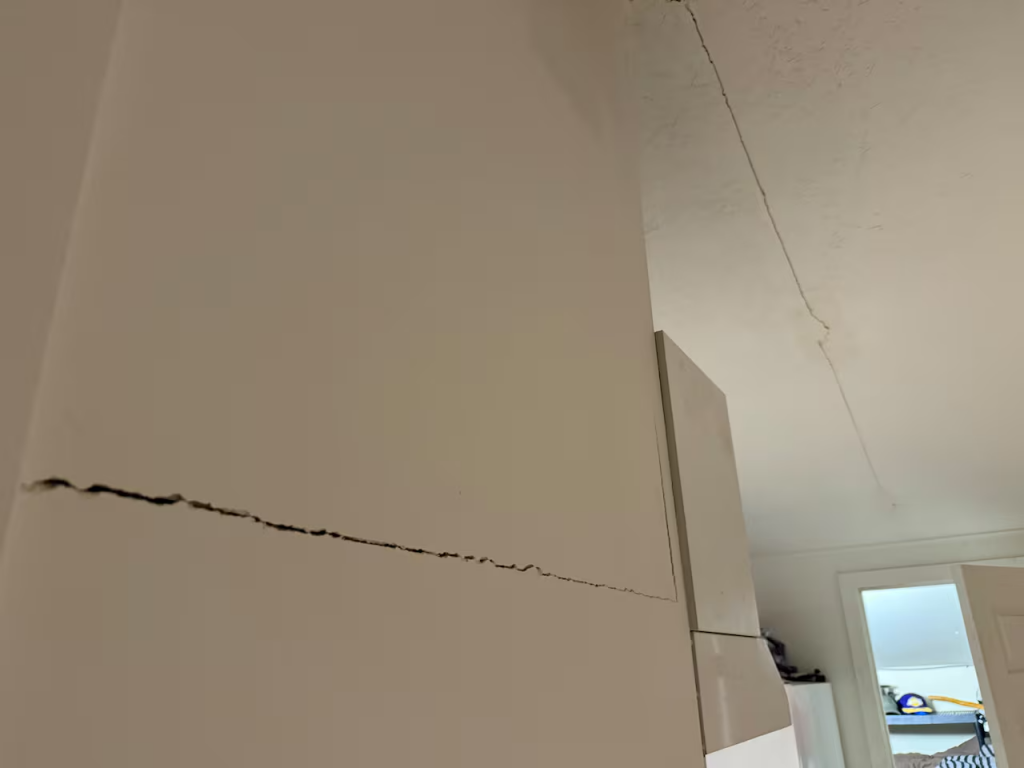
For example, Whane said she needs to use the chair to prop her door shut because when a doorknob was installed on the door after some repairs, the shifting ground resulted in it breaking, trapping her in her home. Her son had to climb out the window to take off the doorknob and free her.
She blames it on shifting muskeg under her home. She wants a new home but there are few other options for her.
“If I had that [a home], I wouldn’t be complaining, I’m not complaining, I’m telling how it is and how I live,” Whane said.
N.W.T. needs a more ambitious housing plan
Alayna Ward is the executive director of Habitat for Humanity N.W.T. She spoke with CBC News about the general housing crisis in the territory and what programs could alleviate it.
She says the territory needs a big goal to drastically increase its housing stock, something like Nunavut is doing with Nunavut 3000 — which aims to build 3,000 homes by 2030.
“That’s real action that is going to move the needle on housing,” Ward said.

“Building 20 or 30 or even 100 homes a year, with the housing crisis what it is in the Northwest Territories, it’s not really going to do much towards improving the status of living for people that are here, not with the cost of living, not with the crisis that it is.”
Dawodu said there are initiatives in place including construction planning for 10 more social housing replacements in Behchokǫ̀ expected to be completed in 2026-27.
“While there’s been a lot of investments … the demand is more than the corporation — Housing N.W.T. as an organization — can provide alone,” he said.
“So we rely on sustainable funding from the federal government and that’s the only way we can create lasting improvements across the territory as a whole.”
Related stories from around the North:
Canada: Auditor general gives Housing N.W.T. a bad grade, again, CBC News
Greenland: Despite housing shortages, Greenland razes colonial apartment blocks, Blog by Mia Bennett