Alaskan tribes sue B.C. gov’t over mines in far northwest
Southeast Alaska Indigenous Transboundary Commission says impacts and rights don’t stop at border
A group of tribal nations in Alaska has gone to B.C. Supreme Court demanding their voice be heard on major mining projects in the province’s northwest.
They claim the British Columbia government has failed to consult them on major mining projects proposed for the region — some of which have been identified for fast-tracking by the provincial and federal governments against the backdrop of the trade war with the United States.
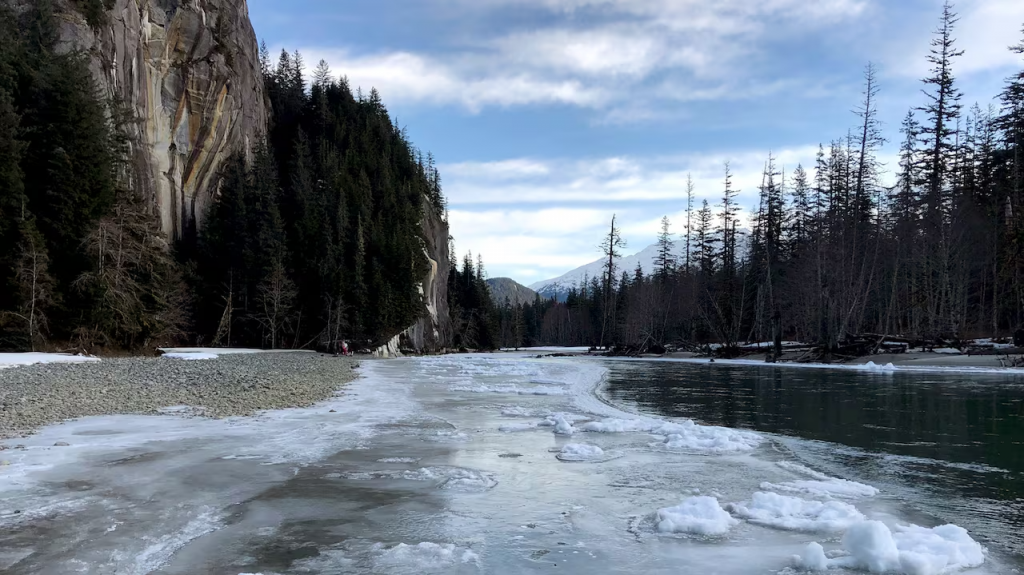
“Our main goal is protect the rivers, protect the salmon, protect the culture,” said Guy Archibald, executive director of the Southeast Alaska Indigenous Transboundary Commission (SEITC).
The commission represents 14 tribes, which include members of the Tlingit, Haida and Tsimshian, whose territory extends across both B.C. and Alaska.
One of the projects the tribes are concerned about is the expansion of the Red Chris copper and gold mine, 160 kilometres east of the Alaska border, which has the support of the Tahltan Nation in B.C.
“Nation-building” project
The expansion has been designated by Prime Minister Mark Carney as one of the “nation-building” projects he wishes to accelerate.
Also of concern to SEITC is the Eskay Creek Gold/Silver project, which seeks to revive a historic mine site in the same area, south of Red Chris and 80 kilometres from the Alaskan border.
SEITC also took the B.C. government to court over the Seabridge Gold mine near Stewart, B.C., in a separate lawsuit filed last year, which it later withdrew to focus on a case it considered strategically more important.
The new petition for judicial review, filed in November, seeks to force the province to consult with SEITC members on any mining project that could impact their land on either side of the border.
At the centre of the complaints is SEITC’s contention that they should be treated the same as Indigenous nations in Canada, given that they historically used land on both sides of the border.
Archibald said it makes no sense that tribes in Alaska would not be consulted on projects that have implications for their territory.
“These are single, intact watersheds that need to be managed as such — not cut in half by some jurisdictional border,” he told CBC News.
No comment from B.C.’s Environmental Assessment Office
In a statement provided to CBC News, B.C.’s Environmental Assessment Office said it could not comment on the specifics of the case.
But the statement said the B.C. government “takes its obligations to consult with First Nations who may be impacted by a proposed project very seriously – including with tribes in the U.S.”
“The Environmental Assessment Office will continue to fulfill its constitutional obligations by consulting with U.S. Tribes when there is a credible assertion of Aboriginal rights under the Canadian Constitution and a potential for these rights to be impacted by a proposed project,” the statement said.
Related stories from around the North:
Canada: PM, Manitoba reaffirm Arctic Gateway push, though project absent from recent federal priority list, CBC News
Greenland: Greenland’s leader hails EU as trusted friend and urges investment in its minerals, The Associated Press
Norway: Lawmakers in Norway make a deal opening up for deep sea mining in Arctic Ocean, The Associated Press
Russia: Putin in Arkhangelsk: Arctic industry and infrastructure on agenda, The Independent Barents Observer
Sweden: Just how significant is the discovery of rare earth metals in Arctic Sweden?
United States: Alaska Ambler Road project back in focus as company outlines vision for work ahead, Reuters