Carney announces $35B for defence, infrastructure in Canada’s North
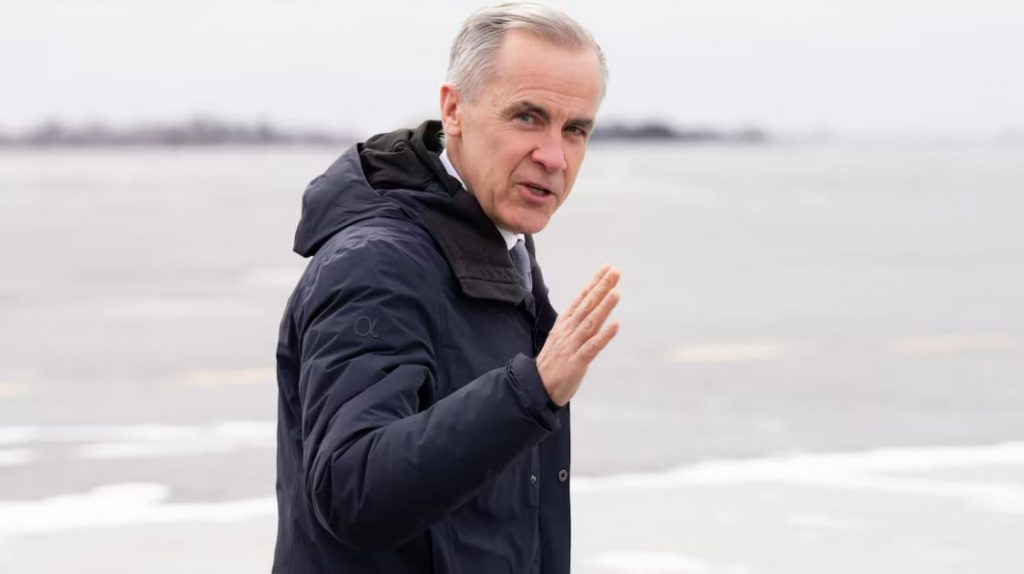
The Liberal government has unveiled a detailed, multibillion-dollar proposal to modernize and expand Canada’s military footprint in the country’s Far North.
The comprehensive $35-billion plan, which also includes improvements to civilian infrastructure, is expected to see northern base upgrades, including runway improvements and expansions, as well as hangar and road construction, in a number of locations across the Arctic.
Most of the investment — approximately $32 billion — is being drawn from a pool of money set aside almost four years ago by former prime minister Justin Trudeau’s government to modernize NORAD, the binational North American air defence command shared with the United States.
That plan was originally pegged at $38 billion in 2022 and Thursday’s announcement in Yellowknife almost certainly means that figure will likely be revised upward.
Prime Minister Mark Carney wouldn’t speculate how the spending will unfold. He underlined the difference between project estimates and actual funding that’s being allocated.
He said some aspects of the modernization program might change, depending on how threats in the world evolve.
The investments are expected to roll out over the next dozen years.
Breaking down the spending
The initial $38 billion estimate, as with other Defence Department spending, is presented on an accrual basis — basically accounting for the expense when it occurs. On a cash basis, the NORAD investment represents roughly $87 billion, according to officials in the prime minister’s office.
Northern infrastructure improvements at four forward operating locations in Canada’s North (Inuvik, N.W.T., Yellowknife, Iqaluit and Goose Bay, N.L.) were part of the original announcement made by former defence minister Anita Anand. Improvements in each location are necessary in order for them to host the air force’s new F-35 stealth fighters.
Other items on the modernization list and already in the planning or purchasing stages include the recently announced Arctic over-the-horizon radar ($6.7 billion for phase one); the acquisition of new air-to-air refuelling planes and the purchase of short-, medium- and long-range air-to-air missiles; along with other command and communications upgrades.
The announcement at the Canadian military’s joint northern headquarters in Yellowknife lays out the details of the long-planned infrastructure investments only and expands upon the original four-base concept.
Carney said two additional operational support hubs — where the military can store equipment and ammunition as well as stage troops — will be created in Whitehorse and Resolute, Nunavut.
Another two operational support nodes — smaller bases and fuelling stations — will be established in Nunavut’s Cambridge Bay and Rankin Inlet.
The network of bases will enable the Canadian military to deploy rapidly and support year-round response across the North, no matter how remote.
Carney calls past Arctic investments ‘piecemeal’
Carney described attempts by previous governments — both Liberal and Conservative — to secure the Arctic as “piecemeal investments” and he noted his government is setting ambitious targets.
“Over my lifetime, successive governments have helped make investments in new mines and ports. Roads and bridges, outposts and satellite systems,” Carney said. “But too often these steps have been taken with great caution or after long delays. Too often, investments were made one at a time — piecemeal and not connected.”
“We are securing every corner of this terrain, unlocking its vast resources and delivering the strong, connected network of communities that northerners deserve,” he said.
In keeping with Carney’s emphasis on leveraging defence spending to boost the economy and investment, the package announced Thursday contains a series of civilian airport improvements — Rankin Inlet and Inuvik — and major road construction projects that will have to be approved by the Liberal government’s Major Projects Office.
The roadwork includes a further extension of the Mackenzie Highway, connecting Yellowknife to Inuvik with the intention of opening up commercial opportunities along the route. In addition, the federal government plans on developing the Grays Bay road and port in order to connect it to the national highway system.
When completed, the government said, the 227-kilometre, all-season road will become Canada’s first overland connection to a deepwater port on the Arctic Ocean and help smooth the movement of strategic minerals to market.
When approved, the project could represent another $11 billion in spending.
Related stories from around the North:
Canada: Canada bets on ‘Build at Home’ defence strategy to reclaim sovereignty — and revive readiness, CBC News
Denmark: Denmark to provide four F-35 fighter jets to NATO’s Arctic Sentry, Reuters
Finland: Greenland clash left a mark on EU-US relations says Finnish PM, Yle News
Greenland: New Italy Arctic policy adds U.S. Greenland ambitions to growing Arctic competition narrative, Eye on the Arctic
Iceland: NATO chief to Arctic Allies: “We’re all frontline states now,” as Iceland’s role grows, Eye on the Arctic
Norway: Europeans step up submarine hunting in the North, The Independent Barents Observer
Russia: Russia claims first-ever North Pole aerial refuelling, TASS reports, Reuters
Sweden: Swedish military intelligence on the great power rivalry over Greenland, Radio Sweden
United States: Rubio says technical talks with Denmark, Greenland officials over Arctic security have begun, The Associated Press