
N.W.T. water needs greater protection as Alberta merges major river basins, says MLA
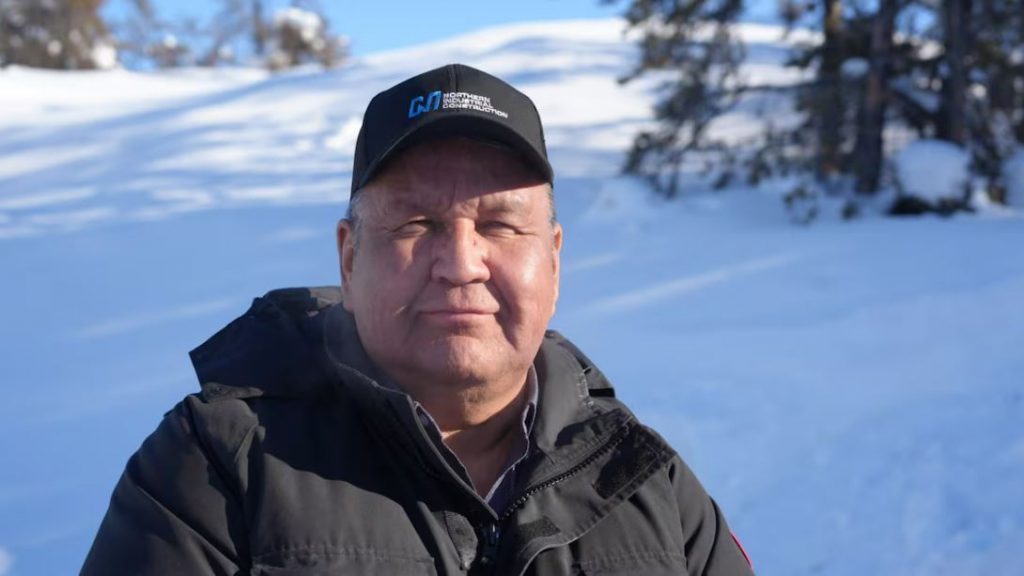
An N.W.T. MLA says the territory needs to fiercely protect treaty rights and territorial waters, amid Alberta’s merger of two major river basins and the proposed treatment and release of oilsands tailings into the environment.
Tu Nedhé-Wiilideh MLA Richard Edjericon successfully proposed a motion in the N.W.T. Legislative Assembly this month, calling for protection of transboundary waters, in response to Alberta’s consolidation of the Peace/Slave and Athabasca River basins into a single management zone.
Alberta’s Water Amendment Act came into force on March 11, and makes it easier to authorize “low-risk” transfers between basins through a ministerial order.
Northwest Territories Environment Minister Jay Macdonald said in an interview Wednesday that while Alberta has jurisdiction to merge its waters, the definition of “low-risk” transfer remains “open to interpretation.”
During the act’s development, Macdonald said he was in touch with Alberta’s then-minister Rebecca Schulz. N.W.T. officials have reached out to Alberta’s Environment and Protected Areas Minister Grant Hunter, who took his post in January.
“We are working on a conversation with the current minister,” Macdonald said.
He was more stern in his opposition to treated tailings water release.
“The science does not, in our opinion, support treat-and-release at this time. We feel that there’s gaps in the work that’s been done,” he said.
Alberta, the N.W.T. and the federal government all need to be in tri-lateral discussions on tailings management, said Macdonald.
The Alberta government has billed treat-and-release as a measure to alleviate its growing tailings management problem and allow for expansion of the oilsands.
Alberta’s environment department declined an interview, and did not respond to the CBC’s request for comment.
Whether the treated tailings water will flow is a federal decision, but N.W.T. Premier R.J. Simpson has made it clear to Ottawa and to Alberta Premier Danielle Smith that the territory is “very entrenched” in its opposition to treat-and-release, said Macdonald.
“Under no circumstances would we change our position until it’s clearly proven that the science and the work that needs to be done supports this as a safe [option] beyond all doubt,” he said.
Minister Macdonald said he informed Julie Dabrusin, federal environment minister, and outgoing Alberta environment minister Schulz that they must seek alternatives to treat-and-release.
Northern delegates will be at a conference put on by the Keepers of the Water next week in Edmonton, said the organization’s executive director, Jesse Cardinal.
The organization, which focuses on treaty and water rights, is holding discussions on the treaty implications of Alberta’s legislative changes, and to discuss alternatives to releasing treated tailings water.
In a March 18 news release, the Keepers of the Water said Alberta doesn’t have First Nations’ consent to consolidate 80 per cent of the province’s flow by volume into a single basin.
Northerners need input on pipeline plans
In November, Prime Minister Mark Carney signed a deal with Alberta to build a pipeline to B.C.’s northwest coast that would transport 400,000 barrels of oil per day destined for markets in Asia.
The federal government said it will consult with west coast First Nations, but Edjericon said treaty rights holders downstream have a stake, too.
People who hunt, trap, and fish near Fort Chipewyan, Fort Smith and Fort Resolution suspect contaminated water from upstream oilsands development is causing rare cancers, sickness among youth and early deaths.
If cumulative impacts are not considered, and “if we don’t get our act together to address this issue, we’re going to have more funerals,” Edjericon said.
Edjericon said the basin merger is not as “low-risk” as Alberta officials say and that the Water Amendment Act, which would allow treatment and release of oil sands tailings water is not scientifically sound.
He is also skeptical of Alberta’s commitment to its side of the transboundary water agreement with the N.W.T.
He said the transboundary agreement with Alberta is good, but needs a “bit more teeth.” Tailings have leaked into the environment without the province adequately warning First Nations or the territorial government, he said.
Edjericon said releasing treated mine water could be comparable to the harm of Giant Mine, which contaminated swaths of land historically used for hunting, trapping and fishing.
“When decisions are made in regards to large development that happens in Alberta, as the downstream users, we know we’re heavily impacted,” Edjericon said.
If Alberta doesn’t meet its treaty obligations, it will likely face drawn out legal opposition, he said.
Focus on cumulative effects
Macdonald said he remains concerned with cumulative effects of many smaller transfers drawing on the watershed over time.
He said baseline monitoring and shared data with Alberta through the transboundary water agreement give him a measure of confidence that Alberta will meet its promise to allow 90 per cent of the basin to pass through the N.W.T.
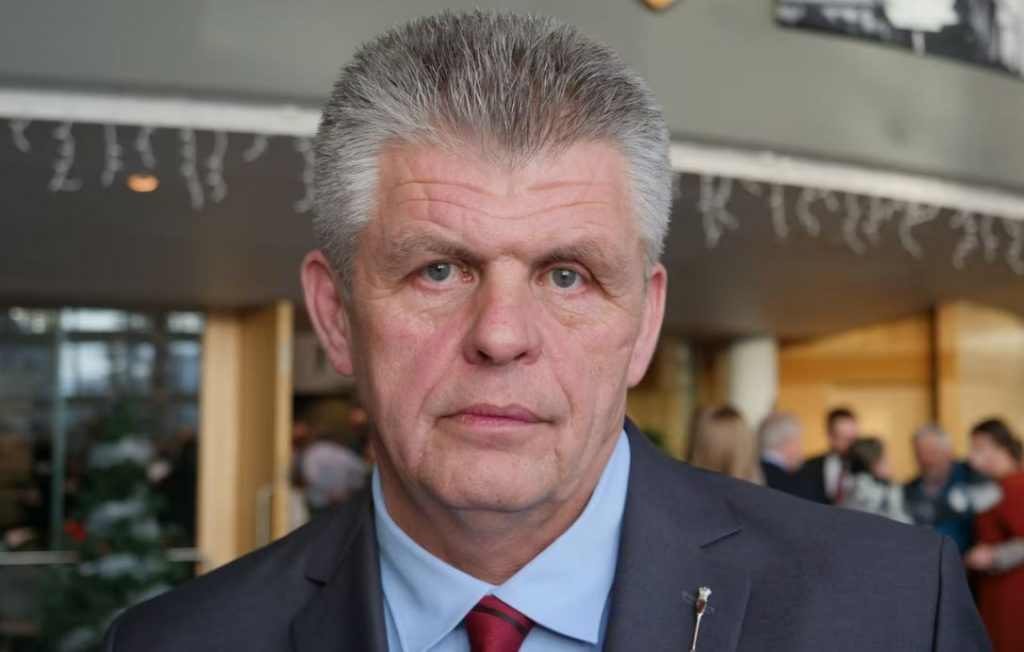
With growing interest in AI data centres, planning the future of N.W.T. water is a matter of security and “water sovereignty.”
“We need to involve ourselves and ensure that our Indigenous government partners across the N.W.T. are engaged in that conversation as well,” he said.
Macdonald said next, he’ll meet with the groups that form the Mackenzie River Basin Board, the Canada Water Agency, and later this summer, the Canadian Council of Ministers of Environment.
Related stories from around the North:
Canada: Cyanide detected in creek after Victoria Gold’s heap leach failure at Eagle gold mine, CBC News
Russia: Oil company tried to cover up large Arctic oil spill, The Independent Barents Observer
Sweden: Swedish developer GRANGEX buys iron ore mine on Norway’s border to Russia, The Independent Barents Observer
United States: Canada and U.S. make co-investment in Fortune Minerals N.W.T. project, The Canadian Press