Arctic Winter Games committee announces move to host games every 3 years
Decision comes in order to ‘support long-term sustainability’ of the games, says committee president
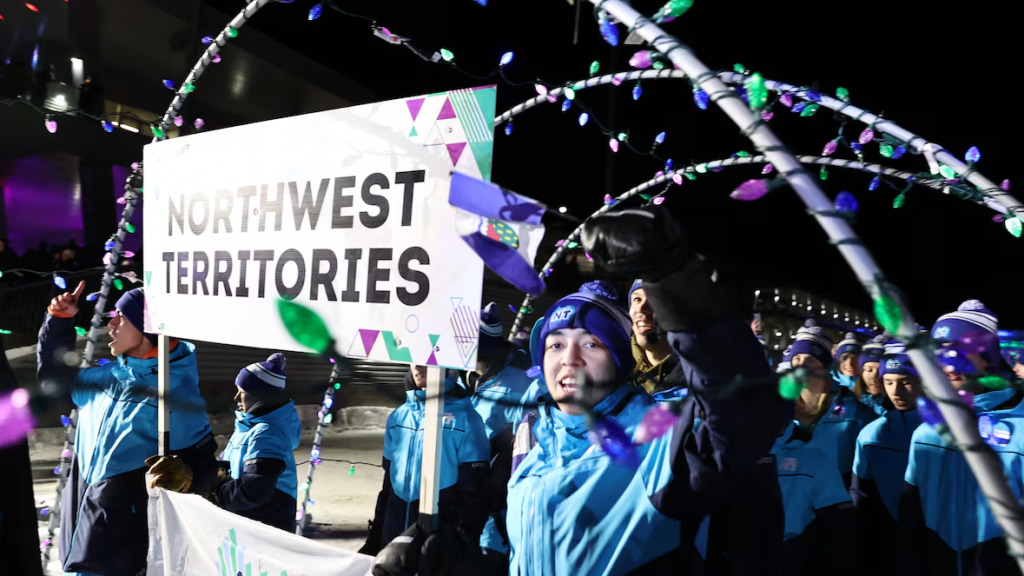
The Arctic Winter Games International Committee has approved a shift to a three-year-cycle through 2032. The games have previously been held every two years.
That means after the coming competition in the spring, which is set to take place in Whitehorse, the next games will be held in 2029.
“It’s really about supporting the long-term sustainability of the games and maintaining the quality and integrity of it,” said John Rodda, the committee’s president. “I can tell you it was not an easy decision to make.”
The competition typically sees more than 2,000 participants from northern Canada, Alaska, Greenland, and other circumpolar regions compete in a number of sports from skiing to Dene Games.
Rodda says COVID shutdowns complicated the scheduling of the games along with political factors. The 2026 games were scheduled to take place in Russia, but plans were cancelled after Russia’s invasion of Ukraine and subsequent suspension from competition.
High-level review underway
The N.W.T.’s choice to pull out of hosting the 2028 games also left the organization in a tough spot.
“It left us in the awkward position of having to examine all of our options,” Rodda said of the N.W.T.’s decision.
“Standing up a new host society, possibly with no experience, by 2028 would be a huge burden, I think both financially and on human resources, for somebody that was new.”
In a news release issued Friday, the organization said it is also working on a “high-level review” of the Arctic Winter Games’ core operational elements to promote sustainability.
At Arctic Winter Games skate skiing tryouts in Whitehorse, parents were understanding.
“It’s hard for certain ages that fall into the gaps and might only have one chance at the Arctic Winter Games, so I see how hard it is for athletes, but it’s a huge cost … it’s a hard decision,” said Aaron Donohue.
Taking news in stride
Sophie Tremblay-Morissette told CBC News she also felt it would be okay as a three-year cycle.
“It’s been really fun for kids to get to compete every second year, but at the same time, it’s not overly surprising,” she said.
“Games are super expensive, it takes a lot of volunteers … every three years is better than every four years.”
Young athletes, too, took the news in stride.
“It’s kind of sad,” said Aidan Donohue, who competed in Sunday’s tryouts. “But all right.”
“It’s kind of too bad because there will be less opportunities to travel and compete outside of the territory and with other countries,” said 12-year-old Léon Borlase.
“It’s a bummer for us, but there will be plenty of other opportunities.”
Related stories from around the North:
Canada: Snowshoeing removed from Team N.T. for 2026 AWG, other sports reduced, The Canadian Press
Finland: Ice fishing World Championships latest in Finnish series of odd sports events, Yle News
United States: Veteran musher Brent Sass wins Yukon Quest 300, CBC News