Researchers head to Nunavut to assess Arctic challenges for robots
Robots that can function in the Arctic’s extreme storms and cold will become increasingly important for everything from securing and inspecting remote facilities to ensuring northern security, say researchers
After years of testing autonomous robots in the blizzards and deep snow of Quebec’s boreal forest, a long-running research project is heading to Nunavut.
In March, a team from Université Laval will travel to the community of Cambridge Bay on Victoria Island in Canada’s Arctic Archipelago to gather information for the next stage of their research.
There, they will work on understanding how self-navigating robotic systems might function in Arctic environments, where visual landmarks are scarce, the ground slowly changes shape, and GPS signals can be disrupted by increased solar activity.
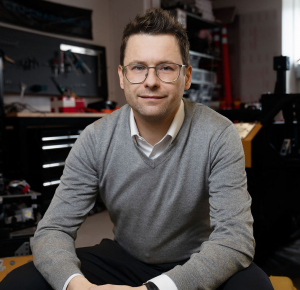
“The Arctic is like a very cold desert, and the challenges there will be very different from in Quebec,” said François Pomerleau, a professor in the department of Computer Science and Software Engineering and director of the Northern Robotics Laboratory (NorLab).
“So the team in Cambridge Bay will be there to better understand what is going on.”
Winter vs. robots
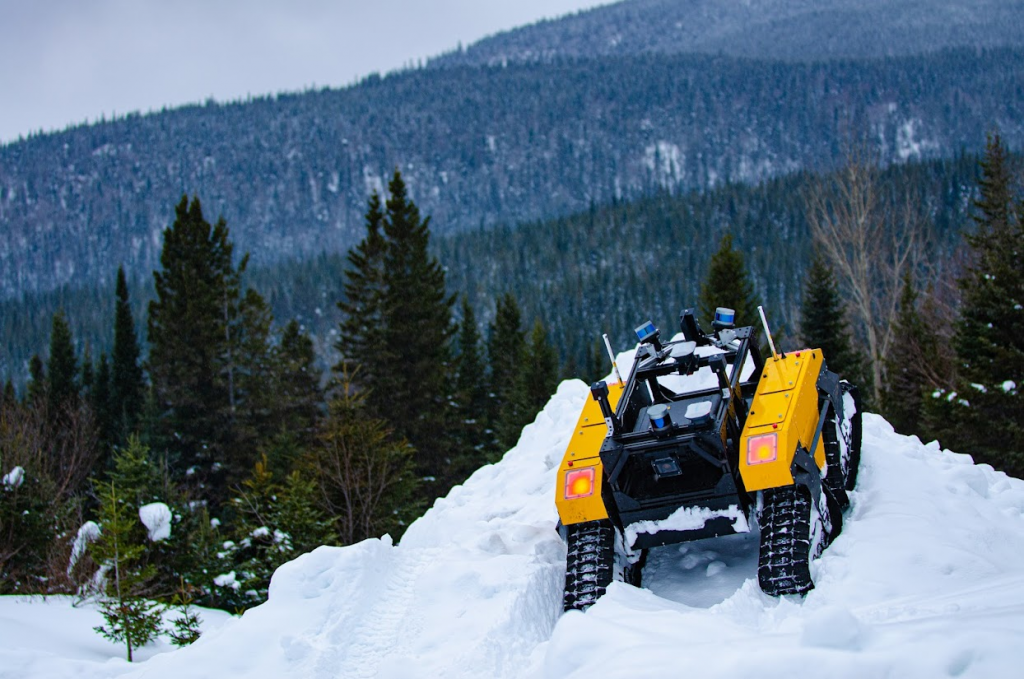
Pomerleau and his team test robotic systems in the boreal forest near Quebec City to better understand how they function in heavy snowfall and frequent storms.
“People often think autonomy is just about software,” Pomerleau said. “But winter conditions in Canada challenge every part of an autonomous system — perception, decision-making and movement.”
Autonomous robots rely on tools such as cameras, GPS and laser-based sensors like LiDAR to understand where they are and what is around them. But snow degrades signals and major snow storms are especially confusing to the technology’s systems.
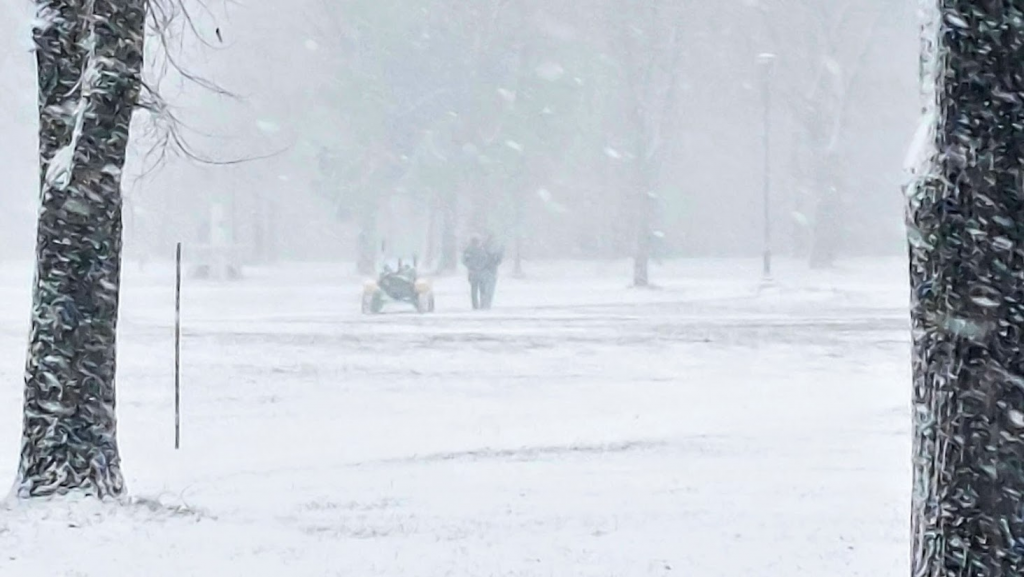
Robots are typically programmed to assume that large features in their environment are stationary. But when everything seems to be moving at once, like during a blizzard, the system can misinterpret that motion, even if the robot is standing still.
Pomerleau said the effect is similar to a person’s disorientation during whiteouts.
“You can get dizzy because your eyes are telling you one thing and your inner sense of balance is telling you another,” he said. “Robots experience a similar conflict.”
Navigating a “cold desert”
The advantage of boreal environments for robots is the trees. Even when covered in snow, they provide stable visual reference points that help robots determine whether they are moving and in which direction. In the High North, those reference points largely disappear, complicating navigation.
In contrast to Quebec’s humid, snow-heavy winters, the Arctic is closer to a cold desert, Pomerleau said. Beyond the loss of trees, the lack of stable visual features makes localization — a robot’s ability to know where it is — far more difficult. Satellite-based navigation systems can also be less reliable at high latitudes, where solar storms add additional noise.
“If the only thing you can see is the ground and the ground is sort of a slow wave of snow that slowly changes shape, this is very challenging to deal with,” Pomerleau said.
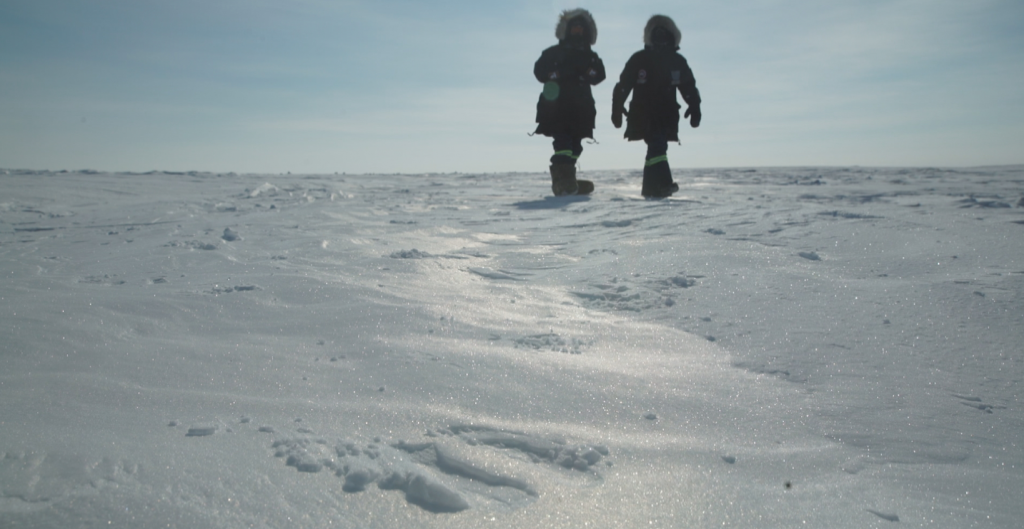
Deep snow can also quickly trap a robot if its control system doesn’t recognize that it’s lost traction. In response, the robot may just keep increasing its wheel speed, but instead of moving forward, it just ends up digging itself further and further down into the snow until it’s completely stuck.
“We’re working on detecting immobilization and trying to make sure that we don’t finish to the last point where there’s just no commands you can send that will get the robot unstuck,” Pomerleau said.
Robots as force multipliers in the North
Pomerleau said the applications for winter-capable robots are wide-ranging.
They could resupply remote camps, inspect critical infrastructure like northern hydroelectric facilities, or monitor areas during dangerous weather when sending people would be risky or impossible.
“There are places where you don’t want people outside during a storm, for example a power dam in northern Quebec — but that’s exactly when you want eyes on the ground,” Pomerleau said.
In the Arctic, where distances are vast and populations sparse, autonomous systems could extend human presence without increasing human exposure.
“The world is changing, and Russia on the other side of the Arctic is triggering concern,” Pomerleau said. “I think that robots can help with mobility and showing presence and covering the huge area in a way humans can’t.”
Technological sovereignty = Arctic sovereignty
Despite the futuristic imagery, Pomerleau emphasized that although the robots are important, it’s important not to forget the people creating and running them.
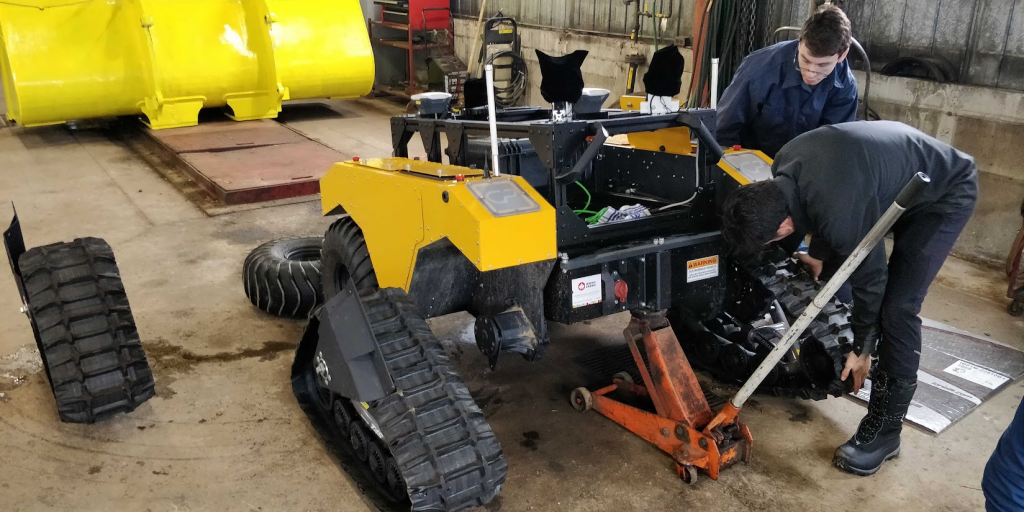
That know-how will be key as Canada increasingly looks to secure its North, Pomerleau said.
“We talk a lot about Arctic sovereignty, but technological sovereignty matters too,” he said.
“We need the knowledge to design and build systems that work in our own environment — not just buy them from elsewhere.”
Comments, tips or story ideas? Contact Eilís at eilis.quinn(at)cbc.ca
Related stories from around the North:
Canada: Wildfire-monitoring satellite system will be ‘game changer’ in North, officials say, CBC News
Greenland: NATO scrambles for drones that can survive the Arctic, Reuters