Canadian Inuit leader stresses unity across Arctic borders amid pressures on Greenland
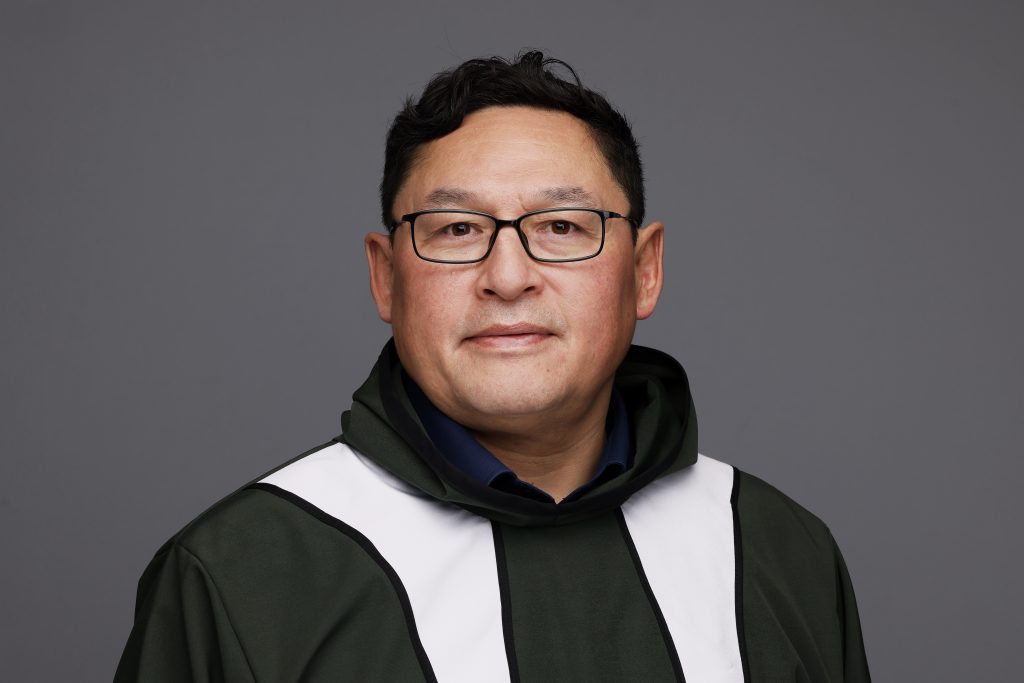
As Greenland draws renewed international attention, a Canadian Inuit leader says longstanding cooperation across the Arctic remains central to how Inuit respond to growing political and strategic interest in the region.
“Inuit are entitled to decide what’s in their own best interest,” said Herb Nakimayak, interim president of the Inuit Circumpolar Council Canada. “Nothing about us without us.”
The debate over Greenland’s future — fueled by renewed interest from Donald Trump and remarks this week by Mark Rutte about strengthening Arctic security arrangements — has once again drawn global attention to the island’s strategic importance.
Nakimayak said such discussions often overlook a core principle Inuit have spent decades working on, the right of Inuit to shape decisions affecting their homelands.
That principle, he said, applies both to Greenlanders’ right to determine their political future and to Inuit elsewhere in the Arctic, many of whom have negotiated modern treaties and self-governance arrangements with national governments.
“We want the Arctic to remain peaceful and a place of cooperation,” Nakimayak said. “That means respecting international rules — and respecting Inuit.”
A homeland divided by borders, not identity
Historically, Inuit migrated eastwards across the Arctic from Russia to Greenland, forming a continuous traditional Inuit homeland.
Today, Inuit live within four political systems — Canada, Greenland within the Kingdom of Denmark, the United States and Russia — but Nakimayak says the political divisions have not erased the shared Inuit culture, language or responsibility to the land.
The Inuit Circumpolar Council is one mechanism for that cooperation, he said, representing approximately 180,000 Inuit across Canada, Greenland, Chukotka in Russia and Alaska in the United States, and focuses on Inuit participation in international policy discussions, including on climate and environmental issues.
Governing, not reacting
Asked whether renewed geopolitical attention on Greenland came as a surprise, Nakimayak said it did not.
“The Arctic is one of the last pristine regions on Earth,” he said. “There’s always been interest, in research, in security, in development.”
But what has changed is Inuit capacity to respond, he said.
One example is at the Arctic Council, where member states and Indigenous groups work on Arctic environmental and development issues, and Inuit are represented through ICC.
ICC has also pushed for Indigenous knowledge to be recognized alongside Western science, a shift Nakimayak says recognizes Inuit experience and knowledge of the Arctic environment.
Closer to home, Inuit also work cross-border, such as conservation of the North Water Polynya, a marine area between Canada and Greenland that’s rich in marine life.
“Inuit in that region continue to thrive in that area and utilize that space,” Nakimayak said. “We’re doing our best to ensure that that conservation model works for Inuit.”
Beyond the news cycle
As attention on Greenland intensifies, Nakimayak says Inuit focus remains on ensuring that the Arctic remains their homeland, not just a strategic frontier.
“What’s being said out there does not divide us,” Nakimayak said. “If anything, it brings us closer together.”
Related stories from around the North:
Canada: Analysis: By suddenly declaring a deal on Greenland, Trump demolished his case for owning it, CBC News
Denmark: EU chief promises ‘unflinching’ response to new tariffs as Trump trolls and threatens on social media, Reuters
Finland: Greenland clash left a mark on EU-US relations says Finnish PM, Yle News
Greenland: New Italy Arctic policy adds U.S. Greenland ambitions to growing Arctic competition narrative, Eye on the Arctic
Iceland: NATO chief to Arctic Allies: “We’re all frontline states now,” as Iceland’s role grows, Eye on the Arctic
Norway: “We want to be Europe’s most integrated region in terms of defence”, The Independent Barents Observer
Russia: Russia claims first-ever North Pole aerial refuelling, TASS reports, Reuters
Sweden: Swedish military intelligence on the great power rivalry over Greenland, Radio Sweden
United States: Trump touts ‘total access’ Greenland deal as NATO asks allies to step up, Reuters