Mounties spied on ‘Father of Nunavut’ in 1970s amid fears of Inuit-Dene alliance
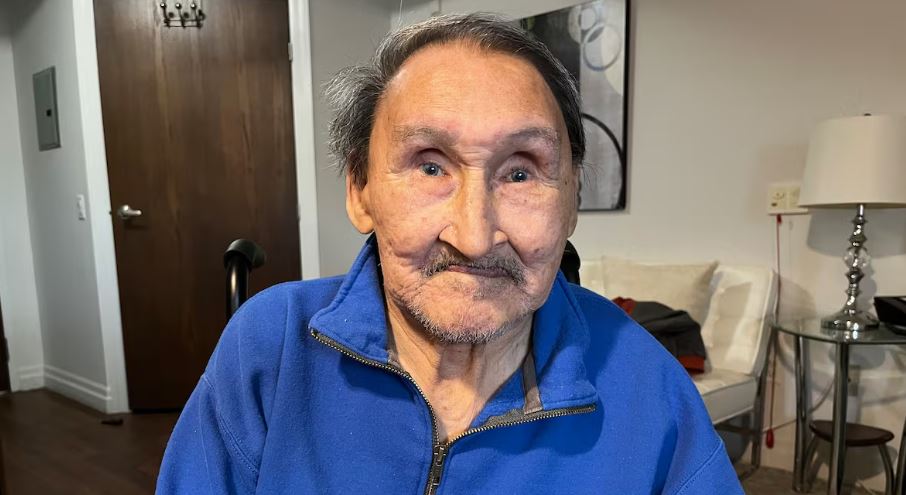
Surveillance had become so familiar to John Amagoalik it was, by the mid-1970s, something of a standing joke. From the Arctic to southern cities and back, Mounties followed the prominent Inuit rights advocate wherever he went. Day and night. Flight to flight.
The spying was so routine that Amagoalik and other Inuit Tapirisat of Canada members, when boarding those frequent north-south flights, even started smiling and waving at the men who shadowed them.
“They went where we went,” Amagoalik told CBC Indigenous in an interview last week in Ottawa. If we were to have a beer, they also had a beer. They were closely behind us all the time.”
Inuit Tapirisat of Canada (ITC), now Inuit Tapiriit Kanatami, was formed to press for Inuit land rights and political autonomy in 1971. From that moment on, Inuit leaders suspected people were watching them, Amagoalik said. Sometimes it felt almost laughable.
Once, a consultant looked out the window of ITC’s Ottawa office, where the group was refining a proposal to create the territory of Nunavut, only to see a man in the apartment across the street peering back through binoculars.
“They stuck to us like glue right through to our offices in Iqaluit. Time to go home to bed? They followed us,” Amagoalik said.
“They had rooms right across the hall from us. And we decided this must be RCMP.”
Amagoalik said he later made personal contact with the people, who confirmed they were Mounties. Eventually, he got back to his office to find a familiar-looking RCMP man waiting for him. The man said he’d been told to tell Amagoalik he was being watched and gave him a letter explaining that the RCMP had been instructed by their bosses to do this.
To the Mounties, this was no laughing matter.
A CBC Indigenous investigation found the now-disbanded RCMP Security Service snooped on Inuit politicians like Amagoalik andformer ITC president Tagak Curleyamid concerns they, in pressing their Nunavut claim, would form a “north of 60 Native alliance” with Dene leaders seeking land rights in the western Arctic.
Declassified reports show the Security Service monitored Inuit leadership changes, internal paranoia about surveillance, and conflicts between moderates and perceived hard liners. Between 1972 and 1980, Mounties compiled a three-volume intelligence dossier on ITC under the so-called “Native extremism” surveillance program, though this file remains classified.
Inuit Tapiriit Kanatami President Natan Obed said it’s completely unacceptable and unfortunate Canada’s kneejerk reaction to Inuit political organizing was to spy.
“There needs to be a reckoning from this,” he said in an interview, adding he looks forward to speaking with Library and Archives Canada about accessing the dossier.
“The government of Canada had no right to infringe upon the individual rights and freedoms of Inuit in that time period, or to try to impact and interrupt our political movement,” Obed said.
“Although it is maddening and frustrating, there were so many awful things being done by the government of Canada during this time that this is another chapter in a very dark legacy of this country’s history.”
Amagoalik told CBC Indigenous he remembers being surveilled from the late 1960s into the 1980s, a period consistent with the surveillance of other national advocacy organizations like the National Indian Brotherhood (now the Assembly of First Nations).
Amagoalik, who became ITC president in 1981, surfacesin the Mounties’ investigation into the Dene Nation, which had five paid informers and a full-time investigator in Yellowknife. Dene leaders said RCMP also used electronic surveillance and disruption tactics.
Mark Stiles, the consultant in ITC’s land claims office in 1975 who spotted the binocular-wielding man across the street, said he was disturbed to see those reports.
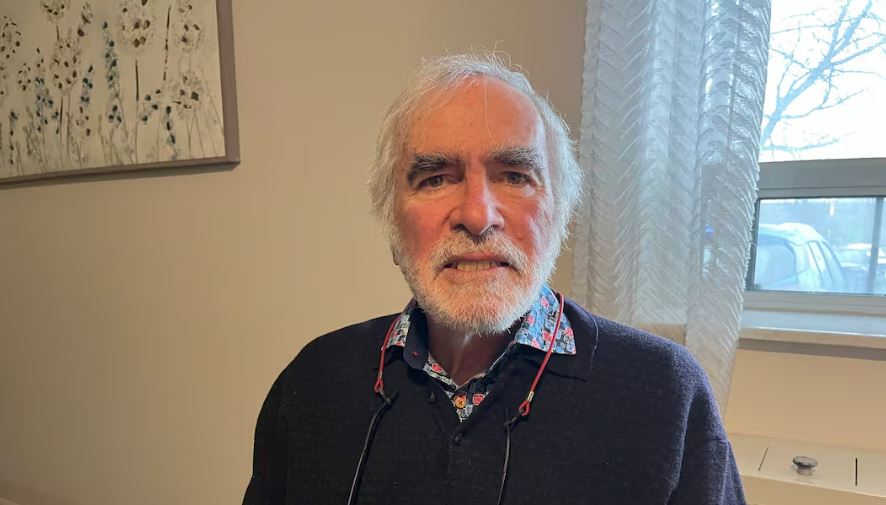
“I found them upsetting. I wasn’t too surprised, but what did catch my eye was the extent of the investigation,” Stiles said in an interview.
“I wasn’t aware that it was as extensive and as thorough as it was. I can see from the documents that they knew everything that was going on. Everything. They must’ve had a lot of inside information.”
A rocky meeting
One incident stands out as a stark example of how the RCMP Security Service tried to interfere in Indigenous politics. It occurred on Oct. 4, 1977, when Yellowknife-based investigator Sgt. R.W. (Rick) McMartin was in Iqaluit and decided to seek a meeting with Amagoalik.
Dene leaders said McMartin would sit in his car and take their pictures, or go to local bars and coffee shops looking for sources. He is said to have been about six feet tall with brown hair and always seemed to wear the same brown suit.
The meeting with Amagoalik began very badly, as McMartin wrote later: “Firstly Amagoalik seems to have developed an anti-white man sentiment, not pro-police.”
What his report doesn’t note is that Amagoalik had every reason to mistrust Mounties. In his 2007 autobiography,Changing the Face of Canada, Amagoalik recalled the day in 1953 when Mounties came to his family’s small hunting camp in Nunavik. At five years old, Amagoalik watched as the RCMP coerced his parents into moving from northern Quebecto theHigh Arcticas a Cold War show of sovereignty.
“The kind of experience we had with the RCMP was never good,” Amagoalik said.
McMartin pressed ahead, suggesting relations were poor because “no line of communication had been opened with their organization, and that he was as much at fault as we were.”
The offer to open up a line of communication was hardly benign. Starting in 1976, the Mounties were engaged in a full-scale investigation against the Dene and began snooping on Inuit after Amagoalik started meeting with Dene Nation then-president Georges Erasmus.
The Mounties were concerned about “a united Native alliance north of 60” enhancing Indigenous bargaining power, but if the intelligence officer hoped to divide Inuit and Dene, it didn’t work.
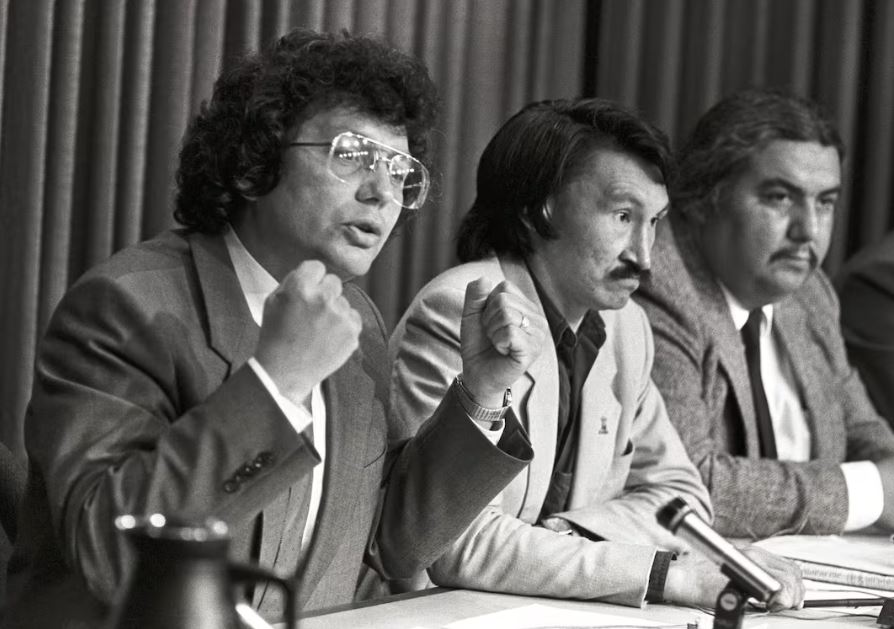
After the meeting, Amagoalik called the Dene office to tell them about the incident, but the Dene official wouldn’t say much since he was paranoid that the phone was tapped.
The Dene official hung up the phone and recounted the conversation with Amagoalik to a person in the office. Little did he know the source of the leak wasn’t the phone. That person was really an informer, who secretly passed the information back to McMartin.
‘That is McCarthyism’
Amagoalik laughed it off today, but the incident reveals how overt surveillance could intimidate or persuade while covert infiltration sowed paranoia and suspicion — part of a disruption playbook called countersubversion.
Victoria-based lawyer Steve Kelliher worked for ITC while studying law starting in 1975. He described an idealistic, eager group where everyone was under 25 and grappling with complex questions that eventually becamethe 1976 Nunavut proposal.
“What we were doing was perfectly not just lawful, it was vitally important to the growth of Indigenous governance in Canada,” he said in an interview.
“It was an important time. It was an important effort. The fact that the RCMP were suspicious of it is offensive, and it’s demeaning of the effort.”
The Nunavut Agreement was signed in 1993 and the territory officially came into existence in April 1999. Though he didn’t work alone, Amagoalik is sometimes called John A., the “Father of Nunavut.”
“John had the tiller on this whole operation,” Kelliher said.
“He asked the questions, got the answers and was a masterful negotiator and politician. Highly capable. Intuitively sound.”
Kelliher was initially among those who laughed at the spying, but now his attitude has changed.
“I thought it was kind of amusing that they were surveilling, yes,” he said.
“But running countermeasures? That’s in a different order of engagement. That’s very nasty. Smearing people like that, that is McCarthyism.”
The RCMP Security Service was replaced by CSIS in 1984, which inherited all these files and eventually transferred them to the national archives in Canada, where they remain.
Canada’s top Mountie late last month issued a statement of regret for the Indigenous spying program, but ITK President Obed is calling for more accountability.
“The statement that was made doesn’t address the issue. What we need is a thorough and complete understanding of what happened and then consequences for the parties and the institutions that were responsible,” he said.
An RCMP spokesperson said this week the force will soon invite Indigenous leaders to Ottawa to discuss pathways toward healing and stronger relationships.
Related stories from around the North:
Canada: Auditor general gives Housing N.W.T. a bad grade, again, CBC News
Greenland: Despite housing shortages, Greenland razes colonial apartment blocks, Blog by Mia Bennett
Sweden: Arctic Municipality in Sweden ups recruitment perks with housing, ski passes, bonuses, Radio Sweden
United States: Greenland ‘Freedom City?’ Rich donors push Trump for a tech hub up north, Reuters
Norway: Norway, UK team up to protect subsea infrastructure against Russian hybrid attacks, The Independent Barents Observer
Russia: Putin in Arkhangelsk: Arctic industry and infrastructure on agenda, The Independent Barents Observer