
Yukon First Nation says it can pump out 250 houses per year — if it gets the timber
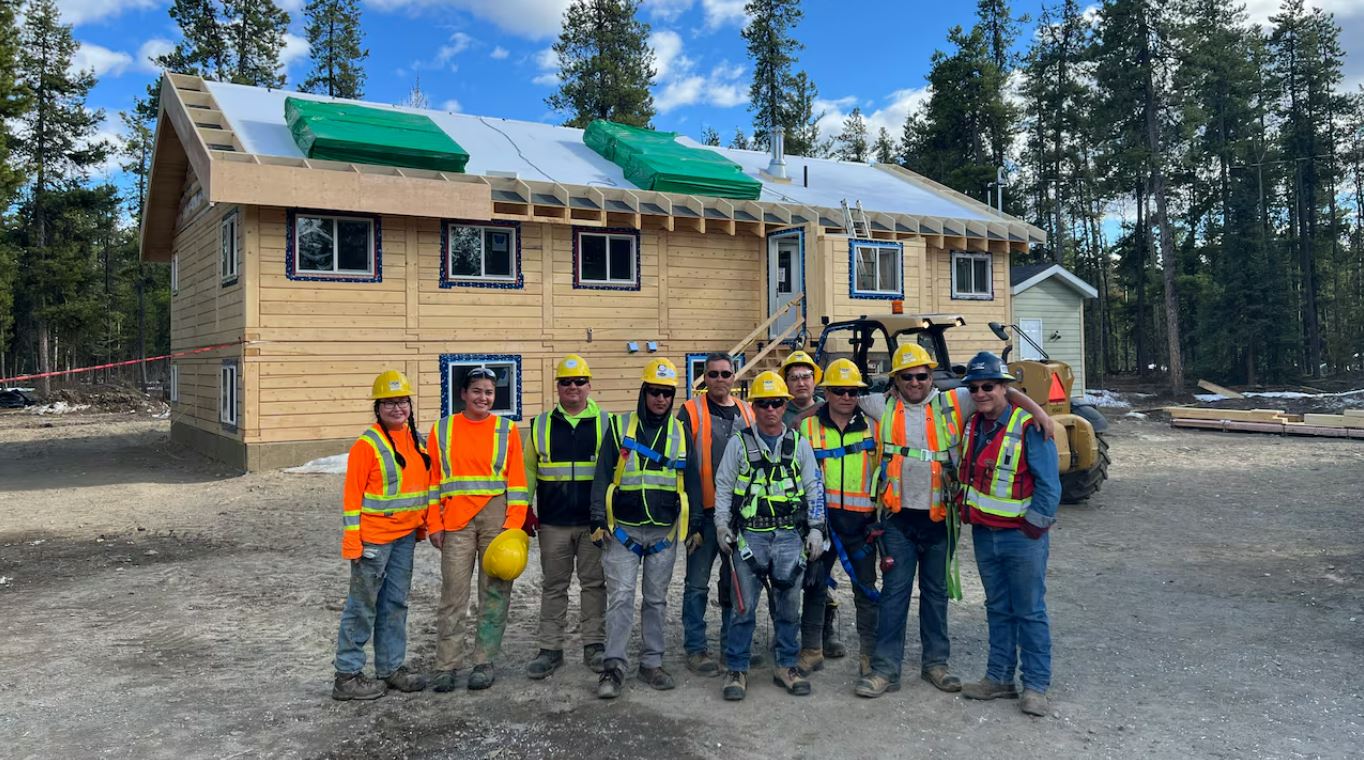
Living in a log cabin, according to Devin Brodhagen, has long been an “ideal” in the Yukon. But the timber houses he’s building are a far cry from the rough homesteads of the past.
Brodhagen is president of First Kaska, a contracting company wholly owned by Liard First Nation in southern Yukon.
Through its subsidiary Heartland Timber Homes, the company has been replacing run down and mouldy homes in the First Nation with modern timber-frame houses, complete with electrical outlets embedded in every wood-panelled wall — and a wood stove, of course, for when the power goes out.
“They’re long-lasting. You won’t find mould in these homes,” Brodhagen said. “The warmth in them, the efficiency, and just the beauty of living in a log home in the Yukon — it’s … nostalgic.”
Now, with an investment from the Canadian Northern Economic Development Agency (CanNor), the company is accelerating its work thanks to new state-of-the-art milling equipment purchased from Italy.
“This bigger machine … has the ability to put out 250 to 300 homes annually,” Brodhagen said. That compares to just 20 built last year.
With production like that, the company is now eyeing exporting kits to other markets — including First Nations in the neighbouring Northwest Territories.
“We started close to home, taking care of members and the community itself,” Brodhagen said. “But we do want to expand… to any customers that are interested, locally and beyond.”
A much-needed local industry
Chief Stephen Charlie of Liard First Nation said that the plant was originally conceived as a solution to the community’s housing crisis. Three years on, he said, “we’re very close to ending [the crisis].”
The plant has had other benefits as well. The Liard region has long lacked a local industry, and suffered the impacts of chronically high unemployment.
“It was 25 years since the forest industry left here,” Charlie said. “It was a really depressed economy.”
That, in turn, made it hard to secure investments for new initiatives, leaving the community dependent on federal funding it receives under the Indian Act.
That all changes as it develops new, independent income streams, like the house kits built at Heartland Timber Homes and a $30-million solar panel project currently underway.
“Every year going forward, we’ll have our own revenue that is independent from [federal] conditions on spending,” Charlie said.
That revenue also means employment. Already, Heartland Timber Homes employs a crew of “45 to 50” people, according to Brodhagen.
“[It] gave the ability to a lot of young individuals to start creating a life, to start being a part of society, living clean lives, healthy, sober,” Brodhagen said. “So we’re not just building homes. We’re changing lives, locally.”
Charlie says it represents “a turning point.”
“I’m proud of people … having hope again,” he said.
Hungry for timber
Currently, each house is constructed using timber harvested from standing dead or fire-flashed trees in the region, a sustainable practice that ensures no healthy trees are cut.
But that is already inadequate for meeting demand.
“Accessing the wood has been a bit of a struggle,” Brodhagen said. “We’ve been … outsourcing out of B.C., but that supply is running limited.”
Limited access to commercial wood lots in Yukon has been a frequent complaint from local harvesters.
Liam Reid, production facility and construction manager at First Kaska, said an average house can use up to 400 timbers, each representing the better part of a tree.
Those timbers also need to meet “specific criteria” to be appropriate for building, Reid says, like a moisture content between 18 and 22 per cent.
But Reid says there’s no shortage of good forests to harvest from.
“The wood up here, the lumber, is beautiful,” he said. “We just need the powers that be to work with us.”
With files from Cali McTavish and TJ Dhir
Canada: Northern water, housing and transit projects to receive funding from Ottawa, Eye on the Arctic
Greenland: Despite housing shortages, Greenland razes colonial apartment blocks, Blog by Mia Bennett
Sweden: Arctic Municipality in Sweden ups recruitment perks with housing, ski passes, bonuses, Radio Sweden
United States: Greenland ‘Freedom City?’ Rich donors push Trump for a tech hub up north, Reuters