
British carrier deploys north for NATO exercise amid increase in Russian overflights
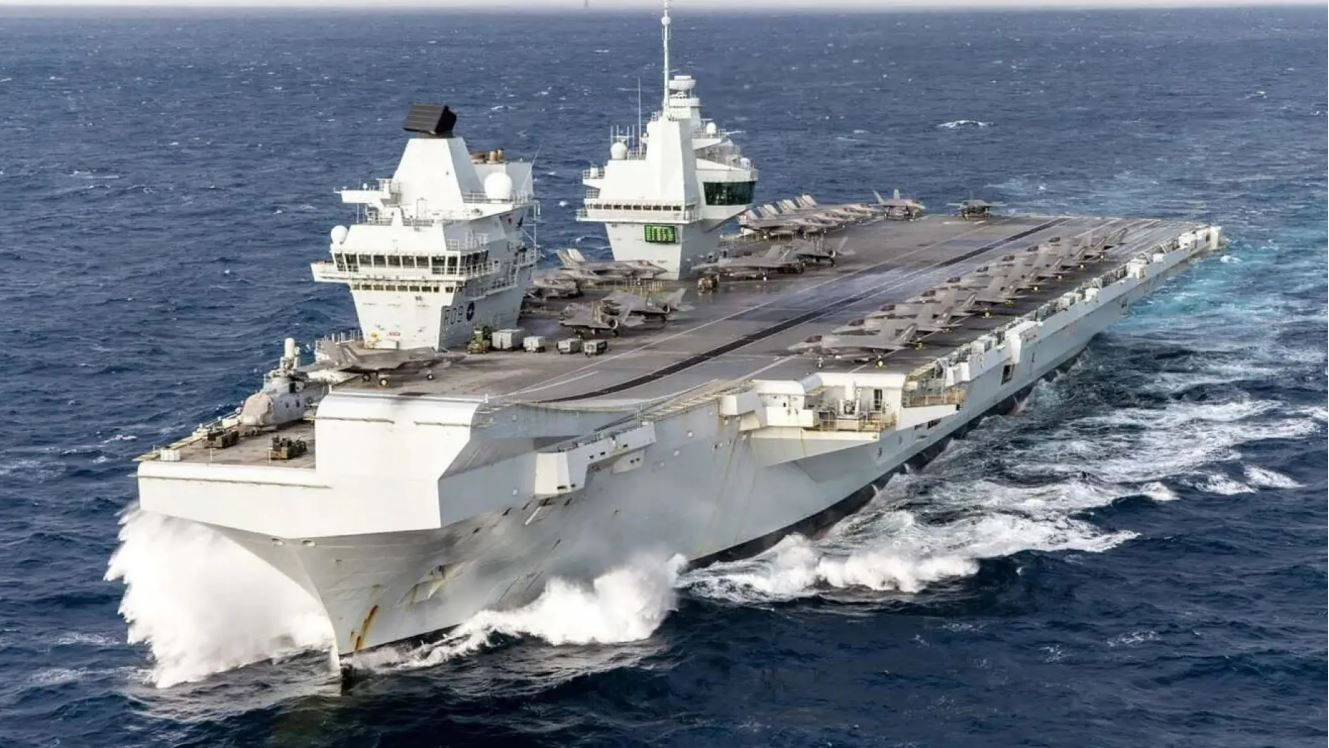
HMS Prince of Wales is carrying helicopters set to play a key role as NATO forces conduct submarine detection training in the Norwegian Sea next week.
Dynamic Mongoose is NATO’s largest anti-submarine warfare exercise in Europe, and it is no coincidence that it takes place near the Arctic Circle. Since 2022 in particular, Russia’s rhetoric has been marked by increasingly aggressive language, accompanied by coercive nuclear threats and anti-Western narratives.
The Kremlin portrays Europe as the “new enemy”, accusing it of threatening Russia’s so-called traditional values.
Although Russia’s ground forces have been significantly weakened by more than a decade of war in Ukraine, the Russian Navy’s submarine fleet has continued to advance. Its stealthy, heavily armed and highly sophisticated multirole submarines frequently sail into the North Atlantic from Northern Fleet bases on the Kola Peninsula.
The waters between Svalbard, northern Norway and Iceland have once again become the setting for a cat-and-mouse game between Russia and the West.
British, Norwegian and US P-8 Poseidon submarine-hunting aircraft are regularly seen operating from Keflavík, Evenes, Gardermoen and Lossiemouth on missions over the North Atlantic, particularly in the Norwegian and Barents Seas.
“This 2026 deployment delivers a clear signal of the UK’s steadfast commitment to working with regional partners and securing Europe’s northern flank,” said Commander James Mitchell aboard the destroyer HMS Duncan, which is sailing alongside HMS Prince of Wales.
The 65,000-tonne aircraft carrier can operate F-35B fighter jets and helicopters and regularly takes part in NATO operations and multinational exercises across Europe and the North Atlantic.
HMS Prince of Wales arrived in Stavanger on Thursday for a port visit and will spend the weekend conducting training exercises with Norwegian warships along the country’s west coast before taking part in the Dynamic Mongoose exercise.
The NATO-led anti-submarine exercise runs from 18 to 29 May.
In recent weeks, Russian military surveillance aircraft have become a daily sight off northern Norway.
“We have seen increasing Russian activity in the north. Our fighter aircraft on NATO standby have been identifying Russian surveillance planes heading out into the Norwegian Sea on a daily basis. It is happening more frequently than usual,” Vice Admiral Rune Andersen, head of the Norwegian Joint Headquarters (NJHQ), told the newspaper VG.
The Russian surveillance aircraft are based at Severomorsk-1 airfield north of Murmansk on the Kola Peninsula.
So far this year, Norwegian F-35 fighter jets have been scrambled 39 times from Evenes Air Station and have identified 51 Russian aircraft operating outside northern Norway. That matches the total number of deployments recorded during the whole of 2025.
On 30 April, a pair of Tu-95MS bombers flew west over the Barents Sea into international airspace off Norway. One of the aircraft was armed with a Kh-101 long-range cruise missile, similar to those Russia frequently launches against targets in Ukraine.
Related stories from around the North:
Canada: Arctic prepardness dominates Canada-Finland bilaterial meeting, Eye on the Arctic
Finland: European Commission names former Finnish PM as EU-Arctic relations advisor, Eye on the Arctic
Greenland: Denmark to expand Arctic surveillance with purchase of long-range drones, Eye on the Arctic
Norway: Norwegian F-35s track Russian bombers carrying long-range cruise missile, The Independent Barents Observer
Sweden: Two held in Sweden over suspected deliveries of hi-tech gear to Russia, Thomson Reuters