More money for health, community infrastructure in Nunavut’s $3.7B budget
By Chris Windeyer and Paul Tukker
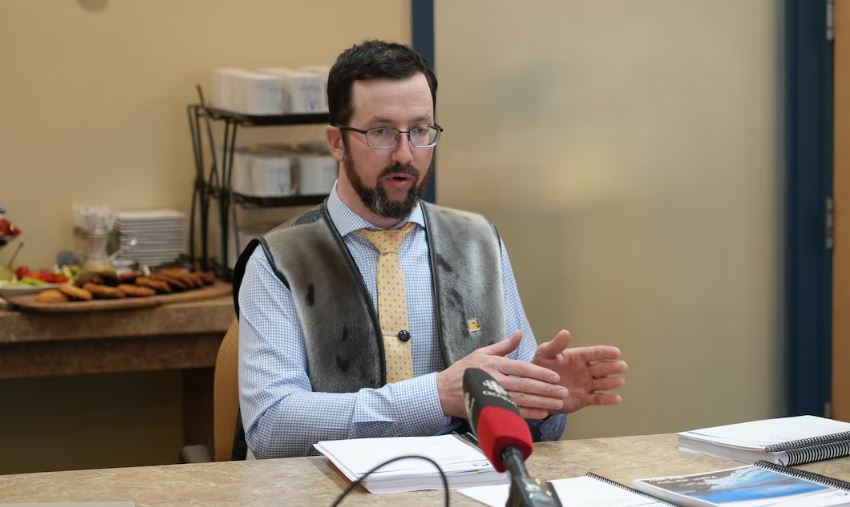
Nunavut Premier and Finance Minister John Main tabled the largest budget in the territory’s history Monday with major increases to spending on health, housing and social services.
The budget includes $3.7 billion of expenditures. It also includes a $169-million deficit, roughly half of last year’s figure.
Speaking to reporters after his budget address, Main said the budget is aimed at improving affordability for Nunavummiut.
“These are very difficult decisions,” he said. “When we look at health care, housing, education, infrastructure — there’s so much need.”
The health department — which sees the biggest chunk of government spending each year — will see its operating budget go up by 14.3 per cent this year, to $663 million.
The government will set aside $201 million for community infrastructure, including renovations to the Iqaluit courthouse, construction on schools in Taloyoak and Coral Harbour, and new water treatment infrastructure in Grise Fiord, Arctic Bay, Pond Inlet, and Sanikiluaq.
That spending also includes money for design and planning work on the Cambridge Bay long-term care centre, a new health centre for Qikiqtarjuaq and a new school in Arctic Bay.
The Nunavut Housing Corporation will get $87 million for new staff and public housing, and there’s another $10 million for local organizations to build housing.
Other budget highlights:
- $29 million in new funding for long-term care.
- $20 million for family wellness and poverty reduction.
- $14.5 million for financial aid for post-secondary students.
- $6 million for teacher wages.
- $4.7 million to operate the new Aqqusaiaq recovery centre.
- $4.1 million to offer incentives for health care workers.
- $4 million for day care
- $2.3 million to double the Nunavut Child Benefit
There is also money for staffing in several departments to address the territory’s suicide crisis, for the City of Iqaluit, and for the RCMP’s latest crime reduction strategy.
Approximately 70 per cent of the territory’s revenue is from federal transfer payments, with the rest coming from third-party agreements (which specify how the territory must spend that money), taxes, and other sources.
In his budget address, Main said that some of the spending outlined in the budget, including the Nunavut Child Benefit and money for day care, is aimed at helping Nunavummiut deal with rising costs.
“Many households are working hard simply to keep up. This government recognizes those pressures,” he said.
“Even modest assistance can make a real difference for families where every dollar matters.”
elated stories from around the North:
Canada: Research project explores rapid retrofits to tackle northern housing challenges, Nunavut