Chinook salmon in decline, worsened by Bering Sea heatwave a decade ago: study
By
NOAA says 2016-2020 heatwave in the Bering Sea hit already suffering population hard
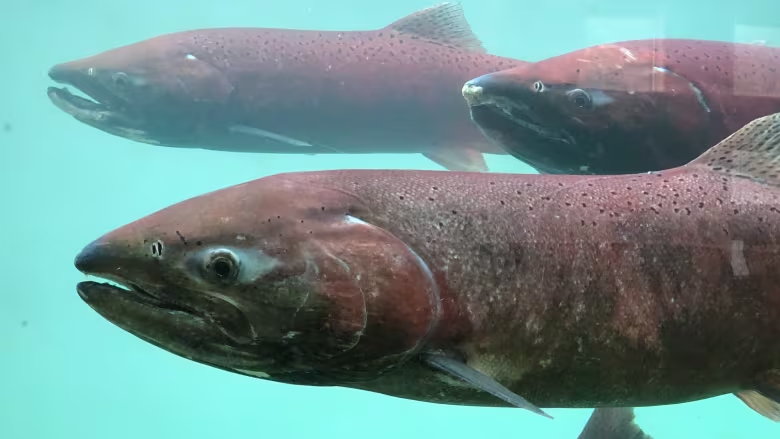
Yukon River Chinook salmon numbers have been in a decline for decades. Despite efforts to help the population recover, it has dropped nearly 90 per cent since the 1980s.
Now, a new study from the National Oceanic Atmospheric Administration (NOAA) says a four-year heatwave in the Bering Sea that started about a decade ago has been connected to a more recent drop in population.
Curry Cunningham, one of the co-authors of the study and an associate professor with the University of Alaska Fairbanks, said researchers have noticed two periods of decline in the Chinook salmon population between 2003 and 2023.
Cunningham said before 2013, the salmon experienced a short decline followed by a few years of recovery.
But by 2016, conditions started to change again.
“That’s led to this very depressed state we currently find ourselves in,” Cunningham said. “[It] seems to be associated in time, at least with the onset of this marine heat wave that we saw in the eastern Bering Sea.”
Cunningham said the actual heat wave lasted until 2020, but it had serious knock-on effects on the salmon and their prey.
Climate change, harvesting
Elizabeth MacDonald, manager of fisheries with the Council of Yukon First Nations, said she thinks the research is “spot on,” and agrees climate change played a major role in the collapse of the Chinook salmon population.
“But I also don’t think we can give ourselves a pass on harvesting,” she said
The Yukon River Agreement has placed a moratorium on harvesting the salmon in the U.S. and Canada between 2023 and 2030. MacDonald said in Canada, some First Nations haven’t harvested the salmon, a traditional food source, for decades.
“The biggest thing we have control over is how many fish we take out of the river,” MacDonald said.
Taking even ten fish, she said, “could equate to wiping out a whole population in a stream or system of spawning fish in four or five years if they hit another heat wave.”
For Cunningham, he admitted “it’s hard to say whether there’s cause for hope” as the warming trends are expected to continue.
“Salmon can be incredibly adaptable,” he said. Salmon in Alaska and the Yukon still have an intact spawning habitat that isn’t blocked by major dams, he added, leaving the door open for the salmon to adapt as conditions change.
“That sort of habitat diversity has a lot of benefits,” he said. “You have the greatest potential that one of those habitat types is going to be optimal in a given year.”
Related stories from around the North:
Canada: Federal committee hears Yukon River salmon are imperiled, CBC News
Norway: Moscow threatens Oslo over Barents fisheries, The Independent Barents Observer
Russia: Brussels imposes sanctions on Murmansk fishery industry, The Independent Barents Observer
Sweden: Dead salmon in northern Sweden are worrying researchers and fishermen, Radio Sweden
United States: Alaska Natives welcome new state limits to protect chum salmon, CBC News