Bug-eating plant found near Iqaluit, far north of usual habitat
Plant aficionado believes find could be a sign of a changing climate
Plant aficionado Klaus Koehler was strolling through the Sylvia Grinnell Territorial Park just outside Iqaluit in July when he found a species almost never seen in the Arctic. He says it could have implications for more invasive species occupying Northern habitats as the climate warms.
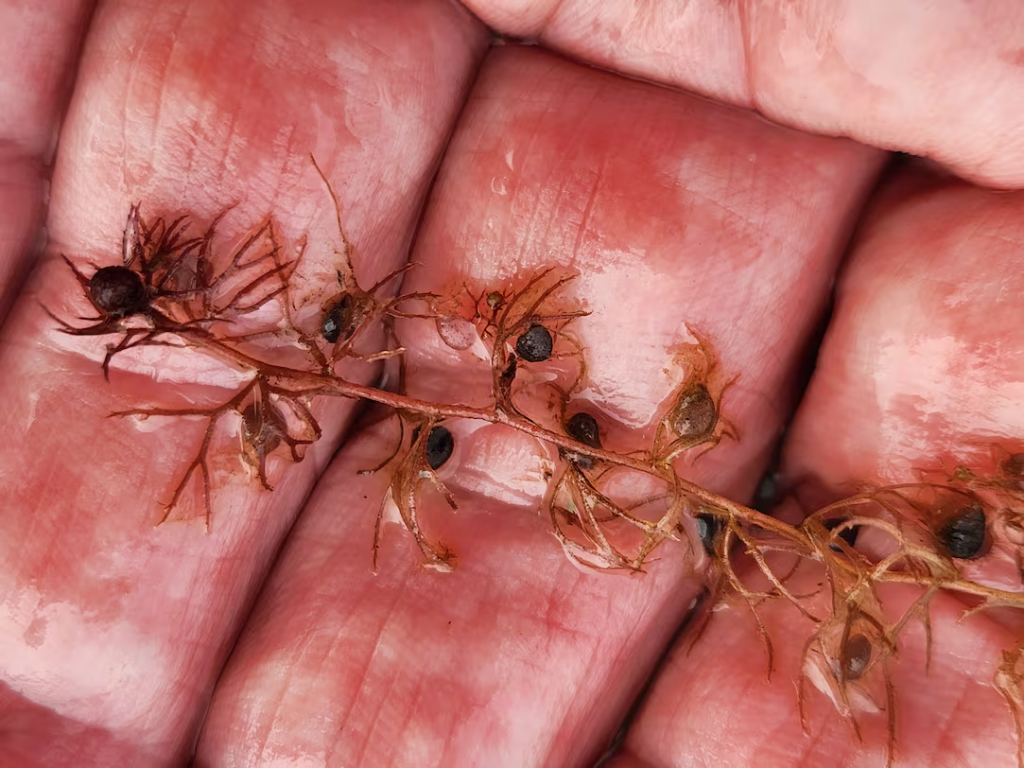
Koehler dipped his hand into the pond and what he pulled out was a brownish weed-like plant called bladderwort.
“It’s very non-distinguished for a normal eye,” Koehler said. “But if you know what to look for you can see this plant.”
The carnivorous plant is covered with small black balls — bladders — with nearly digested flies. This insect-eating species is usually found further south and rarely reaches the tundra.
The only other record of this plant growing in the region was in 2012, when a group of scientists found samples of bladderwort outside Kimmirut, about 120 kilometres southwest of Iqaluit. The discovery was recorded in the scientific journal Phytokeys.
Over three trips to the Arctic, that team found just over 30 new kinds of plants in the Arctic archipelago.
More plants might be creeping north as the Arctic warms
Koehler believes it could be a sign of a changing climate.
Currently, he said, there are few invasive species in the Arctic, as most of them can’t survive the harsh weather. But warmer weather is creating a more hospitable environment to plants not typically seen in the region.
He said the trend is sure to change the ecosystem.
“With the warmer summers and less winters, vegetation is getting longer here in the Arctic too,” he said. “In the future there will be more invasive species and also more native species expanding their range to the Arctic.”
It’s something that Paul Sokoloff, a senior research assistant with Ottawa’s Museum of Nature, is worried about too. He was part of the group that found the bladderwort in the 2012 study.
Birds, cargo ships and soles of the shoes of the increasing number of Arctic visitors, can also help plant seeds move into northern ecosystems.
“It’s of great concern to us that these species don’t come into the area and outcompete native plants,” Sokoloff said.
That has happened in other parts of Canada.
Phragmite – invasive grass originating in Eurasia – has been damaging Ontario’s ecosystem for decades.
It is a fire hazard and is harmful to animals and other plants in the province, according to the Ontario government.
Sokoloff said that Koehler’s find is unlikely to have that kind of effect. But other plants can.
There are over 2,500 species that have the potential to “invade the Arctic at the expense of the species that belong here,” according to a study published by a group of scientists from Norwegian University of Science and Technology in 2025.
“In some ways we are still trying to figure out what exactly could be coming up into the Arctic due to climate change,” Sokoloff said.
Koehler plans to collect a sample of the Iqaluit bladderwort to send to the Museum of Nature for closer examination.
That, he says, might help scientists better understand the nature of the plant’s expansion north.
Related stories from around the North:
Canada: N.W.T. to add boat wash station in effort to keep invasive species out, CBC News
Finland: River ice and white hares: Finnish scientists study signs of climate change in nature, Yle News
Russia: Snow crabs invading Russia’s Arctic nuclear waste dump, The Independent Barents Observer
United States: Communities wrestle with shark-bite mystery off Alaskan coast, Eye on the Arctic