
Norway opens world’s northernmost permanent radiation monitoring
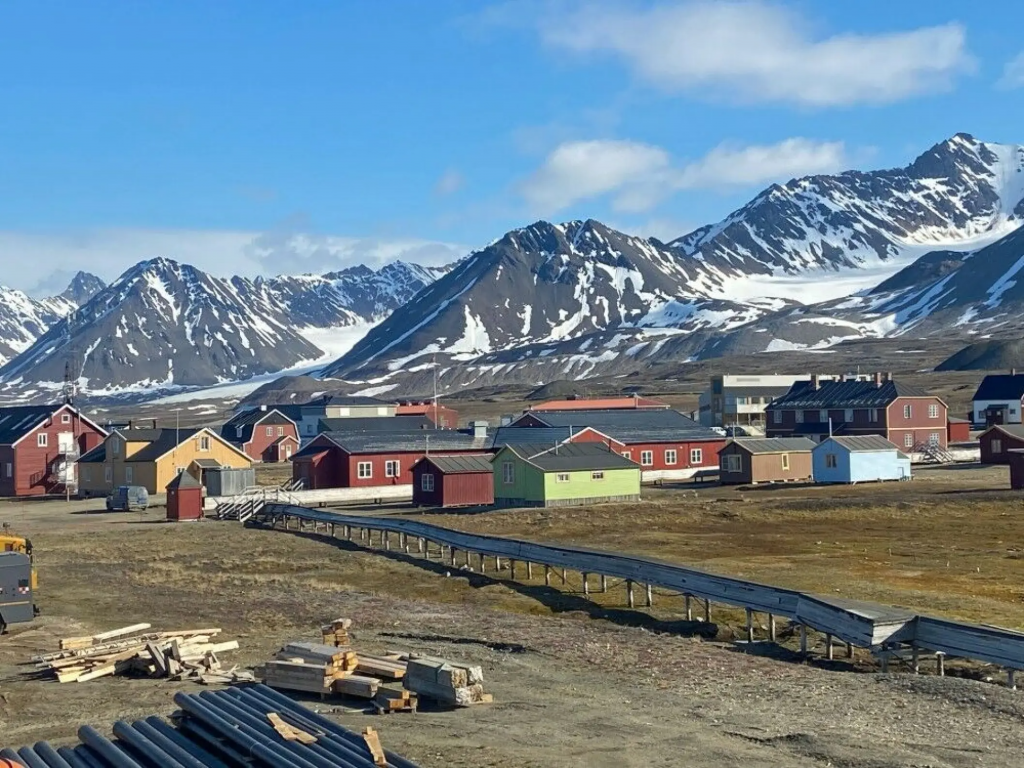
The air filter monitoring station will serve as an important supplement to Norway’s nuclear emergency preparedness and will strengthen vigilance in the North.
Starting the October 1st the station will be operated by the Norwegian Radiation and Nuclear Safety Authority (DSA).
“This will be an important supplement to our already existing network of air filter stations in Norway, and especially significant for nuclear emergency preparedness in the north,” said Markus Ottosen, Head of Section with the DSA.
This is DSA’s first permanent air filter monitoring station at Svalbard aimed to look for human-made isotopes, an important tool in case of nuclear accidents or leakages of radioactivity that could blow over the high Arctic regions.
The equipment to be used in Ny-Ålesund is partly based on monitoring of natural radiation carried out for research purposes by the Finnish Meteorological Institute (FMI) since 2000.
“The network of air filter stations are used to monitor radioactivity in the air and to assess the magnitude and composition in the event of incidents or accidents,” said Ottosen.
Similar stations are located in Pasvik near Norway’s border with Russia’s Kola Peninsula and in Tromsø on the northern coast of the Norwegian Sea. On Svalbard, the research institute NORSAR operates a similar station on behalf of the Comprehensive Nuclear-Test-Ban-Treaty Organization (CTBTO) at Platåfjellet outside Longyearbyen.
Svalbard is about 1,200 km northeast of Russia’s nuclear-test site at Novaya Zemlya, including the area where Putin’s weapon designers in Rosatom this autumn presumably have carried out various tests of the nuclear-powered cruise missile Burevestnik.
Related stories from around the North:
Canada: Québec funds research to adapt Nunavik public housing to thawing permafrost, CBC News
Norway: Thawing permafrost melts ground under homes and around Global Seed Vault in Svalbard, The Independent Barents Observer
Russia: Norwegians fear radiation as Russia prolongs test-window for Burevestnik missile, The Independent Barents Observer
United States: 30–50% of critical northern infrastructure could be at high risk by 2050 due to warming, says study, Eye on the Arctic