West Dawson residents hunkering and hoping for Yukon River to freeze
‘It’ll freeze eventually, but this open lead in front of town is no fun’
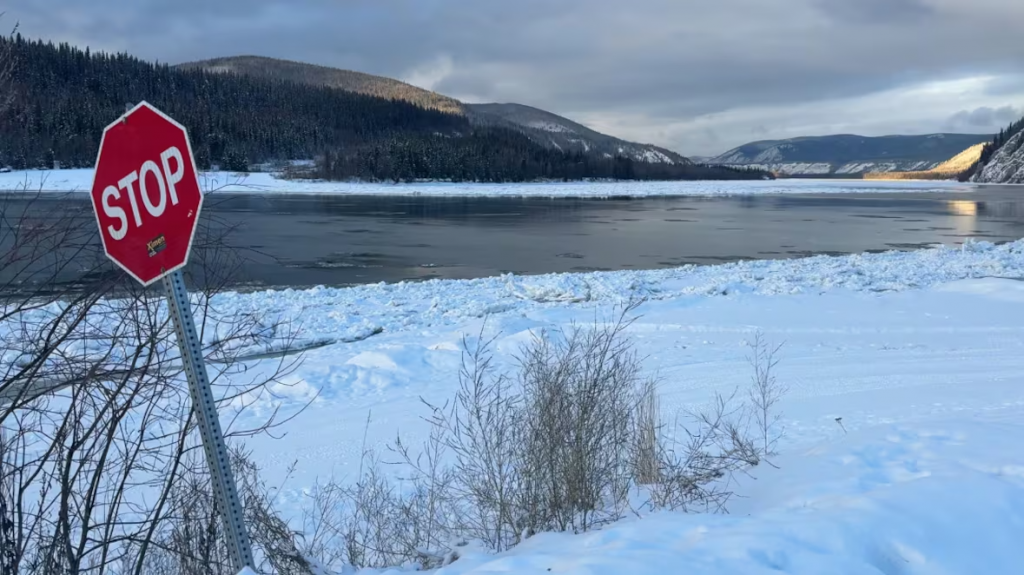
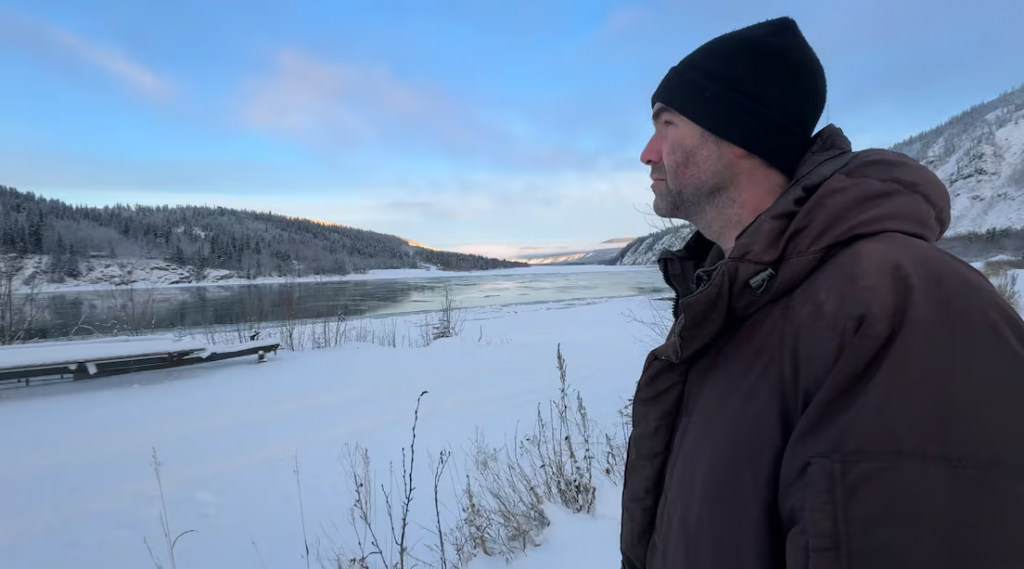
Duncan Smith stands on the dike in Dawson City and stares out at the open water on the Yukon River with a look of concern.
“It’ll freeze eventually, but this open lead in front of town is no fun,” said Smith. “And this taking forever to freeze is no fun.”
Smith is keeping close tabs on the river with good reason. Just across the water from the main townsite is West Dawson and the community of Sunnydale — and Smith’s home. He hasn’t been back there for six weeks and counting.
Every fall, when the seasonal ferry stops running, the roughly 200 residents of West Dawson are forced to make a choice: hunker down at home and wait for the river to freeze, or find a place to stay in town.
Smith chose the latter this year because of work commitments. He’s been staying in town with his wife and two young kids.
“If freeze-up was just two weeks, I would’ve used my vacation on it,” said Smith. “But we’re at like, five weeks now since the ferry went out.”
Most years, that period of West Dawson being effectively cut off from town ends when the river freezes over and people can safely cross. The Yukon government typically builds and maintains an ice-road crossing for vehicles.
Smith recalls how “that happened almost every single year, for decades and decades.”
However, it’s become less predictable in recent years.
In 2023, the ice wasn’t thick enough for the government to build an ice road. That had also happened a few years earlier.
Last year a road was built and opened to light vehicles in mid-December, which is typical for recent years.
However, the conditions this fall do not seem typical at this point. There was still plenty of open water on the river last week, and the temperature at the Dawson airport last weekend was seven degrees above normal.
Cud Eastbound, a town councillor who’s lived in Dawson for 13 years, has chosen to hunker down in his tiny West Dawson cabin during freeze up.
“Looking at historic data, obviously there have been warm winters — but this seems to be increasing in frequency, which is a little concerning,” said Eastbound.
“It does save on firewood.”

His birthday is Nov. 20, giving him a good gauge of the typical weather patterns this time of year in Dawson.
“It’s usually –30 or colder and the river is usually crossable,” said Eastbound. “This year it was +1, so it was quite balmy.
“The general vibe on this side is, ‘oh no, not again,” said Eastbound. “There was one year we had open water in town almost all winter.”
So far, Eastbound is making out fine as he waits for freeze-up this year. His cabin is well stocked for the most part.
“There are a few things I’ve run out of but they’re not things I need to survive, just items I would prefer to have,” said Eastbound. “People take care of each other on the west side, so we’ll trade goods.”
Eastbound says that, like Smith, people on the west side of the river are watching and waiting for freeze-up. Ideally, that happens right in front of the ferry landing for a shorter crossing.
But if ice jams up at the confluence of the Klondike and Yukon Rivers, like it did a few years ago, it can affect the formation of ice near town and make for a much longer crossing over safer areas. The trip can take as much as two hours by snowmobile.
Sometimes when rations run low or people need to get across the river quickly they might hire a helicopter. But Eastbound says there doesn’t seem to be as many helicopters available in town this year.
“So everyone is getting together as a community and making sure people have what they need,” he said.
‘You chose to live there’
Eastbound says he knows not everyone will sympathize with his predicament right now.
“I know the phrase ‘you chose to live there’ is constantly thrown out there,” said Eastbound.
“I would argue that point with the fact that a lot of people chose to live here back during a time freeze-up happened properly.”
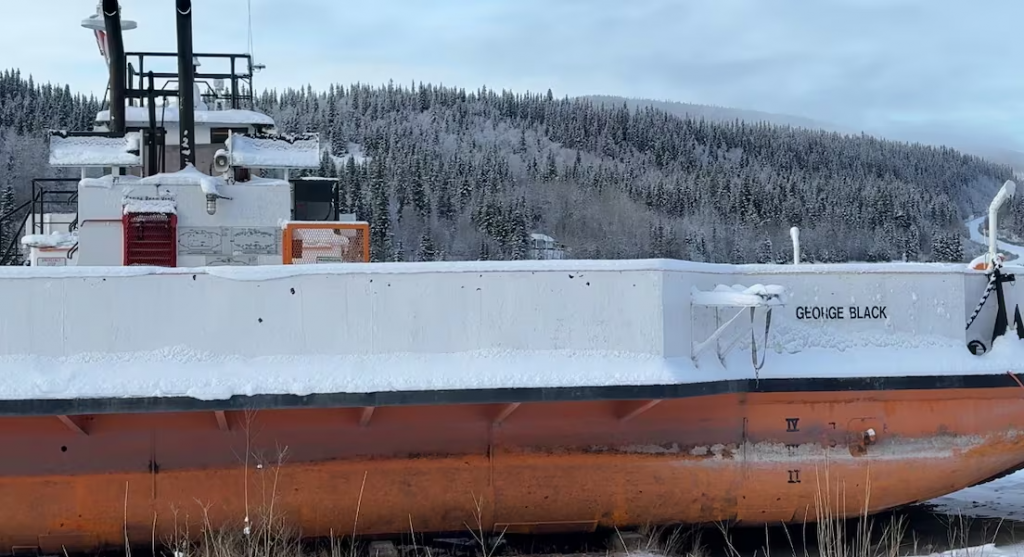
Smith also says he has no intentions of moving from West Dawson, though he acknowledges that when there’s no ice bridge or access to a helicopter, “you’re really vulnerable over there.”
“Like, especially if you got hurt really badly or something, if there’s an emergency.”
Smith says ideally, a permanent bridge would be built. It’s an idea that’s often been floated over the years in Dawson, but residents’ opinions on it vary.
“Oh, I’m a ‘pro-bridger,’ I’ll come out and say that,” said Smith. “I don’t speak for anyone, but yes a bridge would be a positive thing.”
Related stories from around the North:
Canada: Canada’s mild winter disrupts key ice road to remote Arctic diamond mines, Reuters