Gwich’in want Carney to advocate for protecting caribou, oppose Trump’s Alaska oil plans
AFN delegates resolve to pressure prime minister to protect key northern food source
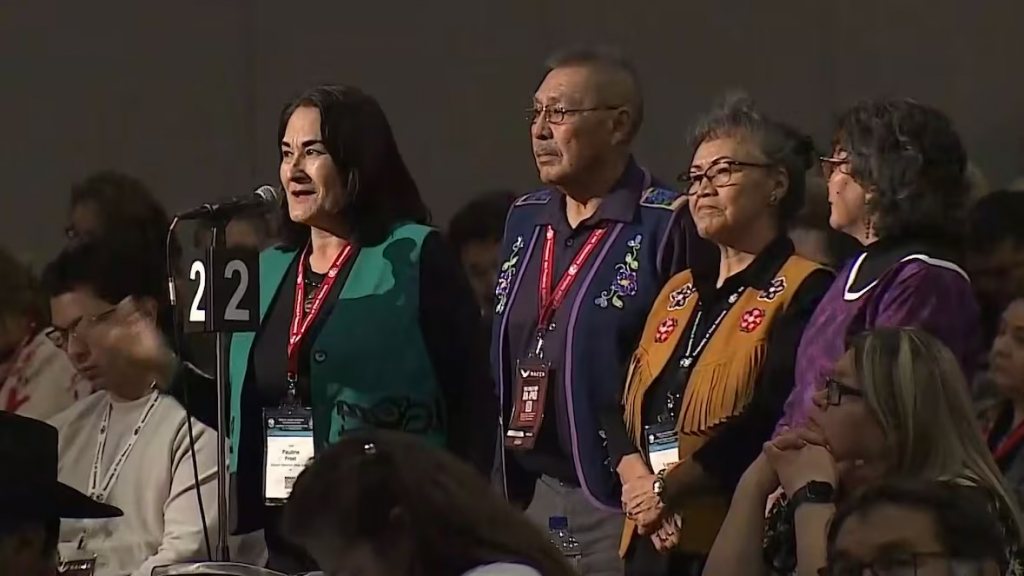
The Assembly of First Nations (AFN) has passed a resolution calling on Prime Minister Mark Carney to work to protect the Porcupine caribou herd and advocate against development in the herd’s Alaska calving grounds.
Hundreds of First Nations leaders are gathered this week in Ottawa for the AFN’s annual December meeting.
At the assembly on Wednesday, Pauline Frost, chief of the Vuntut Gwitchin First Nation in Yukon, called on the AFN to support the Gwich’in as they urge Carney to permanently protect the coastal plain of Alaska’s Arctic National Wildlife Refuge (ANWR) from oil and gas development.
“The Trump administration is pushing forward oil and gas development on one of the most sacred lands in North America,” said Frost.
“They’re saying, ‘oh look, it’s so far north, it’s of no use and value to anyone.’ It is of use and value to us,” she said.
Delegates passed the Gwich’in-led resolution on Wednesday, to pressure Carney to respond to Trump’s legislated sale of oil and gas leases in the calving grounds of the Porcupine caribou herd.
The Porcupine herd calves in Alaska, and migrates into the Yukon and N.W.T. Frost said this makes Alaska’s coastal plain integral to both the herd’s survival, and the self-determination of the Gwich’in, and the Trʼondëk Hwëchʼin First Nation and Na-Cho Nyäk Dun First Nations.
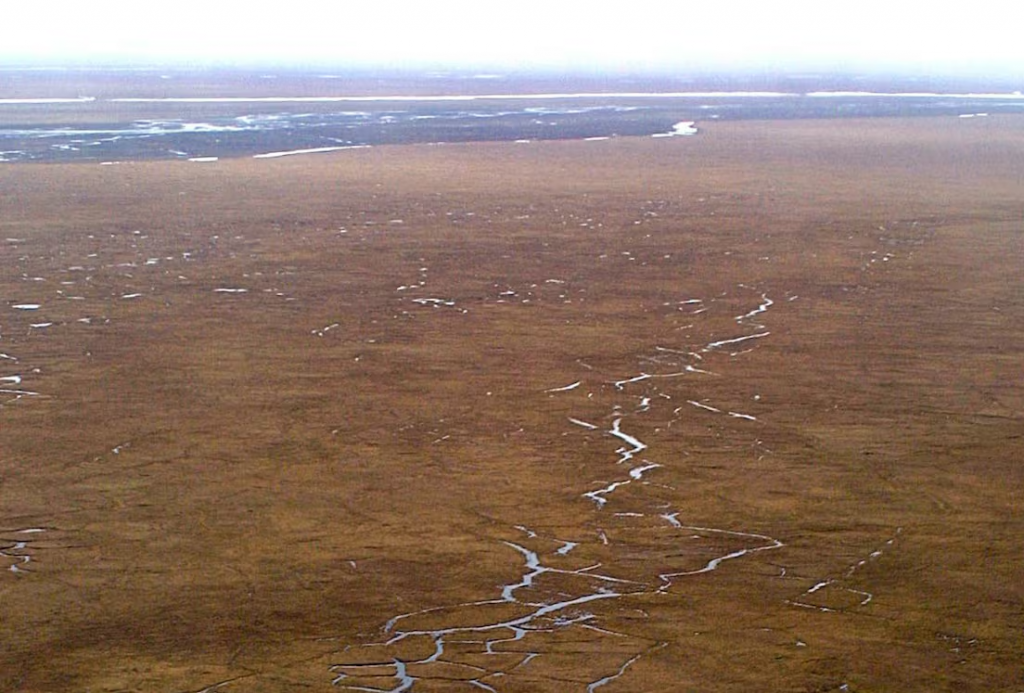
The decision to open the coastal plain to new leases is enabled by Trump’s so-called “Big Beautiful Bill” which introduced tax breaks and spending cuts in July. The bill also permits the Department of Interior to sell at least four oil and gas leases in states like Alaska over the next decade.
Frost said while the Gwich’in have been successful in staving off development over the years, caribou are now more threatened than ever by a rush to develop, and slackening environmental protections south of the border.
In October, U.S. Interior Secretary Doug Burgum announced the decision that paves the way for future lease sales within the refuge’s 631,309-hectare coastal plain. He also announced that the decision to restore oil and gas leases in ANWR that had been canceled by the Biden administration.
Frost decried the Trump administration’s efforts to fast-track exploration work.
“It’s happening across the country. No consultation, no engagement, no consideration for us as Indigenous people. No consideration for the animals,” said Frost.
Teetl’it Gwich’in Band Council Chief Elizabeth Wright said leaders want a commitment from the prime minister to advocate for the refuge as important caribou habitat for migration, feeding and calving.
“The threat facing the Porcupine caribou herd and its habitat by the United States government is serious and urgent,” said Wright.
She encouraged Carney to adopt the same stance as former prime minister Justin Trudeau, who pledged to protect ANWR.
CBC News did not immediately hear back from the Prime Minister’s Office.
Support from other nations
Chief Kelsey Jacko of the Cold Lake First Nations in Alberta supported the resolution at the AFN meeting, and said cumulative effects of oil and gas development must also be considered.
“I witnessed firsthand in my territory, with the oil and gas, the only way I get to eat caribou now is if somebody hits it with a car,” he said.
Dene National Chief George Mackenzie stood behind Gwich’in leaders, and said he supported the resolution.
Lutselk’e Dene First Nations delegate Juni Gahdele said Lutselk’e supported the resolution. He said his community is in the “same situation” in light of a proposed road along the habitat of caribou, referring to the Arctic economic and security corridor project.
“It’s going to have a big impact on our life because we depend on the caribou,” Gahdele said.
Vuntut Gwitchin elder Lorraine Netro said ANWR contains six months’ worth of oil reserves and she questioned the value of extracting oil in the coastal plain.
“Imagine that, six months of oil in this sacred area. And the United States wants to drill and destroy our very livelihood,” she said.
“We’ve been on these lands and depended on these lands since time immemorial. Do we want to repeat history and destroy a people for the greed of another country?”
Related stories from around the North:
Canada: PM, Manitoba reaffirm Arctic Gateway push, though project absent from recent federal priority list, CBC News
Greenland: Greenland’s leader hails EU as trusted friend and urges investment in its minerals, The Associated Press
Norway: Lawmakers in Norway make a deal opening up for deep sea mining in Arctic Ocean, The Associated Press
Russia: Putin in Arkhangelsk: Arctic industry and infrastructure on agenda, The Independent Barents Observer
Sweden: Just how significant is the discovery of rare earth metals in Arctic Sweden?
United States: Alaskan tribes sue B.C. gov’t over mines in far northwest, CBC News