Nunavut athletes disappointed by change to 3-year Arctic Winter Games cycle
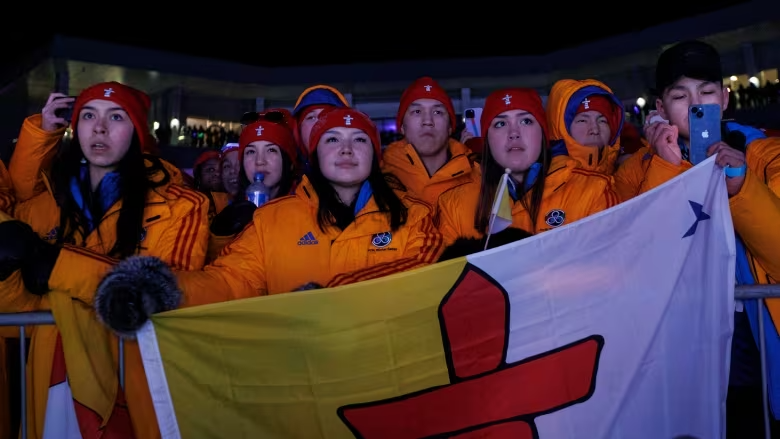
Some athletes worry they may age out of categories and have fewer chances to compete
Naja Pearce is heading to her fourth Arctic Winter Games (AWG) this March in Whitehorse. She is excited to compete but she’s also in shock over the news that the games are moving to a three-year cycle.
The games have historically been hosted every two years, but on Dec. 5, the AWG International Committee announced the change saying it’s meant to support the long-term sustainability of the games, which have faced challenges with hosts withdrawing and political disqualifications. The committee has said they’ll reevaluate the change after the 2032 games. But some in Nunavut worry it gives athletes in remote communities even fewer opportunities to compete.
“It is discouraging,” Pearce said. “I was disappointed at first and I wish they didn’t change it.”
Pearce, 22, competes in the open category of the Inuit games, which means she can’t age out of her category. But, she says she worries for younger athletes who can.
“It gets really discouraging because then athletes are now like, ‘Oh, I have one shot to go to AWG and what if I [don’t] make the team?’”

Pearce says she’s also concerned the change will make athletes unmotivated to train because of the three-year gap.
“Having that two-year cycle is what kind of drove me as an athlete and also as a coach,” she said. “How am I going to motivate these athletes to go to their highest potential and to their peak?
Mariele Depeuter, the director of sport and recreation for the government of Nunavut, says athletes are concerned about their eligibility, but it’s not yet clear what the age groups will be for 2029.
“There is disappointment and concern about the eligibility, but again, the full impacts haven’t been evaluated yet,” Depeuter said.
More time for hosts to prepare
John Rodda, the AWG International Committee president, says it takes three years for the host community to get ready for the games.
“You have to allow enough time for a host society to be created and put together all the pieces that it takes to actually put on an Arctic Winter Games,” he said.
Originally, Iqaluit was set to host the 2030 games, but now that has been pushed back to 2032.
Depeuter says hosting in 2030 would have been a tough ask for the city.
“Based on our review, [Iqaluit] would be able to host, but it wouldn’t be at the full scale that we want to be able to host. So allowing another two years evaluates the opportunity to potentially add more sports to what Iqaluit could host,” she said.
Though Pearce is disappointed, she says it’s also an opportunity for Nunavut to create more regional or territorial competitions to motivate athletes in between games.
Even with the changes, she says athletes should continue to train hard and push themselves.
“Don’t stop doing your sport and still have that motivation that you would have if it was still a two year cycle,” she said.
Pearce says she hopes this change is just a pilot project and the games resume as normal every two years after 2032.
Related stories from around the North:
Canada: Arctic Winter Games committee announces move to host games every 3 years, The Canadian Press
Finland: Ice fishing World Championships latest in Finnish series of odd sports events, Yle News
United States: Veteran musher Brent Sass wins Yukon Quest 300, CBC News