How polar geopolitics are creeping into the Arctic Winter Games
Athletes might be the stars of the show, but the Arctic Winter Games can’t escape politics.
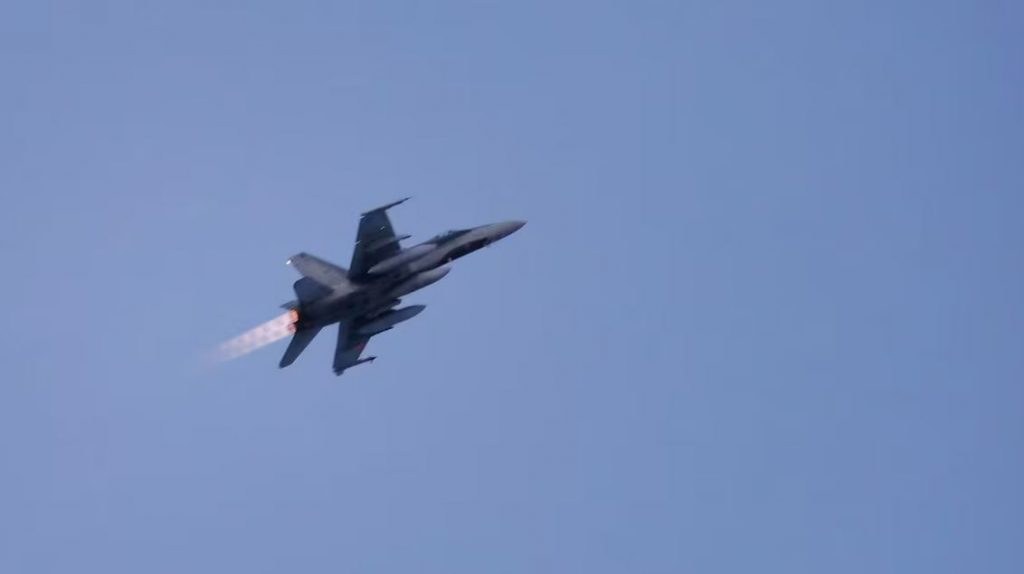
For example, the games kicked off with the flyover of a CF-18 fighter jet at the opening ceremony in Whitehorse Sunday. Military aircraft flying over sporting events is nothing new in much of the world, of course, but in the Canadian North, it’s practically unheard of.
Zach Zimmermann, an Arctic security expert who grew up in Whitehorse (and who won a bronze medal in table tennis at the 2016 Arctic Winter Games), said it looks to him like Canada is sending a message.
“I would say what Canada’s trying to demonstrate is that it has a military presence up here,” he said. “I don’t see how else you could really interpret that, that they’re flying a fighter jet over a kids’ sporting competition.”
Politicians, strategists and experts have long talked about the need for Canada to boost its military capabilities North of 60. Canada plans to pump money into that infrastructure and local leaders across the North are already lobbying to get a piece of the action.
The games are taking place as the Canadian Armed Forces, Canadian Rangers and troops from four NATO allies take part in Operation Nanook-Nunalivut, a sprawling set of military and “whole-of-government” exercises meant to give personnel experience working in Arctic conditions.
One patrol group is even in the middle of a 4,500-km snowmobile trek from the Yukon’s north slope to Churchill, Man.
Meanwhile, diplomats are also descending on the Yukon capital during the games. Pete Hoekstra, the bombastic U.S. Ambassador to Canada, is in town to meet with the Yukon government and local business leaders.
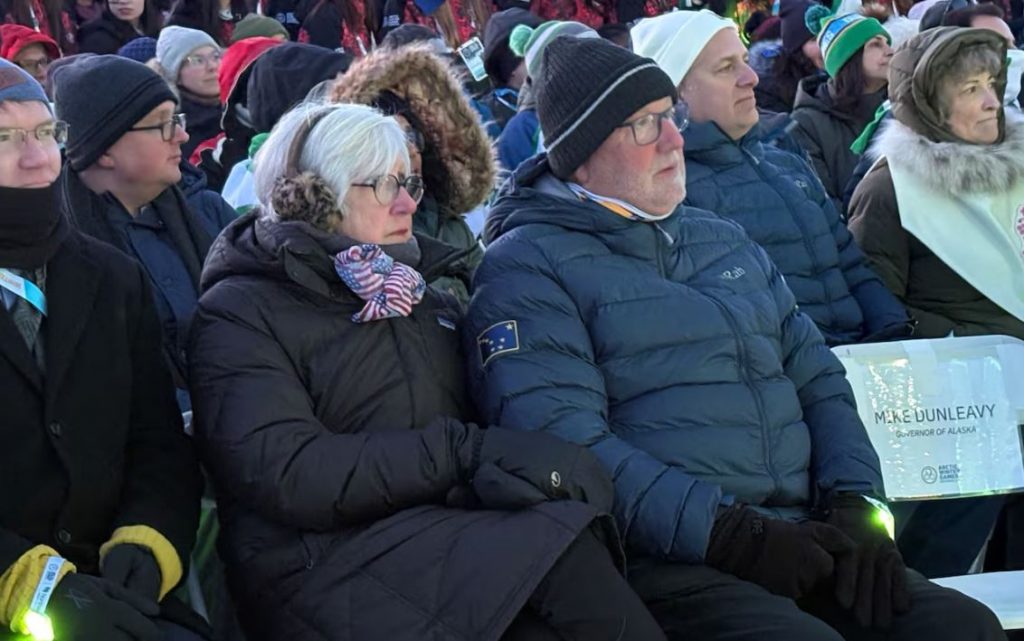
And ambassadors from the five Nordic countries are also in town for a public session on resilience in the Arctic, having held a similar event in Yellowknife in January.
The games are taking place in the wake of U.S. President Donald Trump’s push to take over Greenland. That’s still on the minds of some members of the Greenland delegation, competing for the first time under its Greenlandic name, Kalaallit Nunaat.
“The story about our whole performance is about this situation,” said Ayla Larsen, a member of Greenland’s cultural delegation. “[It’s] about our peace getting taken. Because that’s what we feel like. One day it was just so quiet because that’s what we always are. And then the next day there were journalists everywhere.”
The fear of any lingering tension between Greenland and America led games organizers to play only O Canada at Sunday night’s opening ceremony. Tracey Bilsky, president of the Arctic Winter Games host society, said organizers didn’t want any possible expressions of ill will to fall on the athletes, most of whom are 12 to 18 years old.
“We have felt that geopolitical pressure as well,” Bilsky said. “We were sympathetic to Greenland, and we wanted them to be comfortable. We also want the Alaska kids to be comfortable. We just wanted to make sure that we assessed the risks, and we just don’t want to put those kids in those situations.”
This edition of the games is not the first to be affected by the political decisions of Arctic nations. The region of Yamal-Nenets, in north-central Russia, was originally supposed to host this year’s games. But it remains suspended by the Arctic Winter Games International Committee following Russia’s invasion of Ukraine in 2022.
In that, perhaps, sports are like politics. Adults make the decisions. Sometimes kids pay the price.
Related stories from around the North:
Canada: Canada bets on ‘Build at Home’ defence strategy to reclaim sovereignty — and revive readiness, CBC News
Denmark: Denmark to provide four F-35 fighter jets to NATO’s Arctic Sentry, Reuters
Finland: Greenland clash left a mark on EU-US relations says Finnish PM, Yle News
Greenland: New Italy Arctic policy adds U.S. Greenland ambitions to growing Arctic competition narrative, Eye on the Arctic
Iceland: NATO chief to Arctic Allies: “We’re all frontline states now,” as Iceland’s role grows, Eye on the Arctic
Norway: Europeans step up submarine hunting in the North, The Independent Barents Observer
Russia: Russia claims first-ever North Pole aerial refuelling, TASS reports, Reuters
Sweden: Swedish military intelligence on the great power rivalry over Greenland, Radio Sweden
United States: Rubio says technical talks with Denmark, Greenland officials over Arctic security have begun, The Associated Press