Some Yukoners say this winter has been unusually cold and snowy
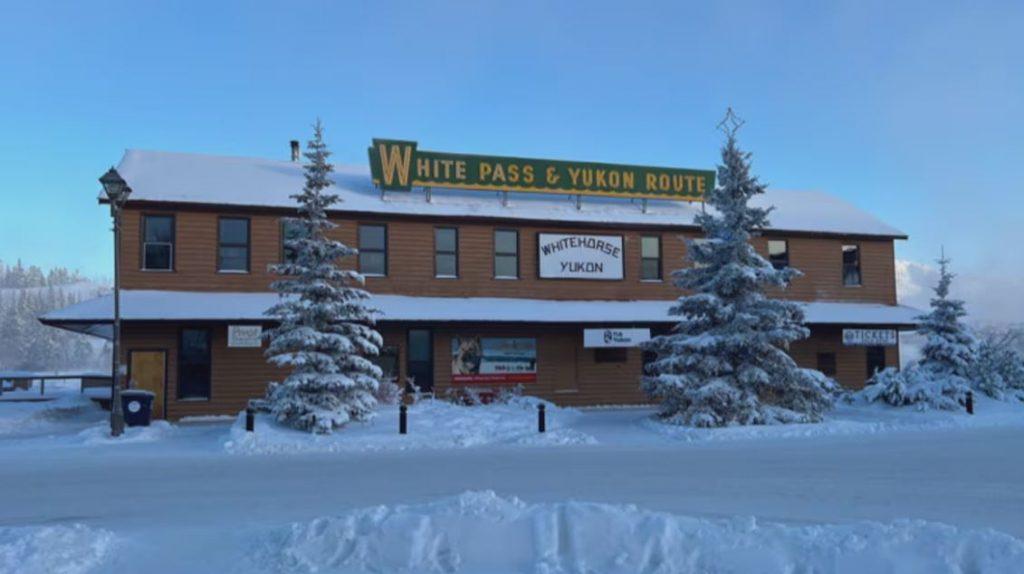
Whitehorse experienced its wettest winter on record this season with more than two-and-a-half times as much precipitation as the seasonal average, says Environment Canada.
It was just one of many records broken during an unusually cold and snowy Yukon winter.
The Whitehorse airport reported 139.8 millimetres of precipitation from Dec. 1 to Feb. 28 compared with a seasonal norm of 52.1 millimetres over the same time period, the weather office said.
The winter period was also the 24th coldest on record for the city since the agency began keeping records for it in 1941.
“If we look at Whitehorse, our typical mean temperature for the … months of December, January and February is –13.3 C,” said Environment Canada Meteorologist Brian Proctor.
“We were –16.9 C, so 3.6 degrees colder than we normally experience.”
The weather office defines meteorological winter as the period from Dec. 1 to the end of February. And the winter that stretched from 2025 to 2026 was colder than normal across most of the Yukon, Proctor said.
It was caused by a very significant ridge of Arctic high pressure that stalled over the territory in December and stayed put throughout much of the season, he said.
Record-breaking lows
The three-month period as a whole did not break any temperature records, Proctor said. But many communities saw record-breaking low minimum temperatures on individual days, he added.
Faro broke 13 low minimum temperature records in December, more than any other location in the territory, showed data provided by Environment Canada.
On Dec. 11, it posted the lowest low since 1966: –45.6 C.
Burwash Landing and the Kluane Lake area both broke low minimum temperature records four times in December; Carmacks and Beaver Lake each broke three; and Teslin, Watson Lake and Whitehorse each broke two, showed the data.
Proctor said some places saw a wetter-than-average winter.
“Dawson was the second wettest on the period of record going back to 1902,” he said.
“Watson Lake was the second to wettest going back to 1939.”
The extreme winter weather prompted one expert at Yukon University in Whitehorse to do his own analysis of Environment Canada’s data.
“Just for here, we thought, ‘OK, let’s just do, like, the number of days below –20 C,’” said Benoit Turcotte, a senior researcher focusing on hydrology and climate change.
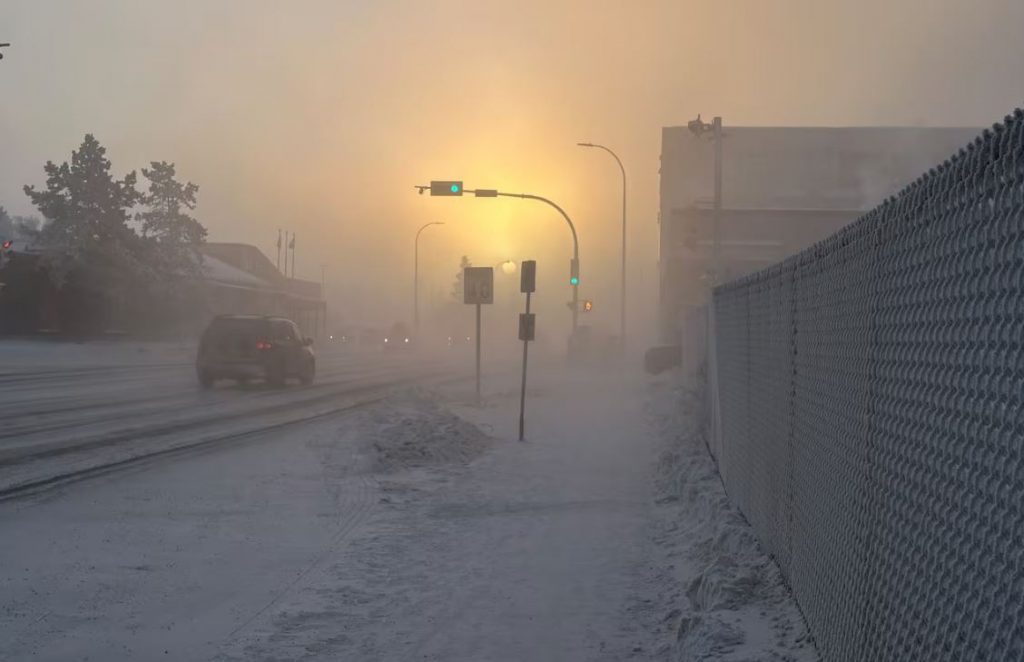
“And it turns out that we had 34 days essentially in a row of temperatures below –20 C. And some would say that in the matter of a month, we had the same coldness that [we’ve had] in some winters in recent years.”
Turcotte is concerned about the size of the snowpack and the possibility of a rapid melt in the spring, he said.
On Feb. 28, there were 77 centimetres of snow on the ground in Whitehorse, compared with 49 on the same day last year, showed Environment Canada data.
“We have a lot of snow in Whitehorse around properties and streets and all that,” Turcotte said.
“And if this snow melts quickly there could be damage to properties, houses, basements, etcetera, right?”
A report written by Heather Kitching
Related stories from around the North:
Canada: Mining companies in Nunavut, Canada defend environmental management despite stiff criticism, CBC News
Greenland: Greenland’s leader hails EU as trusted friend and urges investment in its minerals, The Associated Press
Norway: Lawmakers in Norway make a deal opening up for deep sea mining in Arctic Ocean, The Associated Press
Russia: Putin in Arkhangelsk: Arctic industry and infrastructure on agenda, The Independent Barents Observer
Sweden: Just how significant is the discovery of rare earth metals in Arctic Sweden? Radio Sweden
United States: Alaska Ambler Road project back in focus as company outlines vision for work ahead, Eye on the Arctic