N.W.T. school boards hope territorial funds help fill gap left by Jordan’s Principle

By Yumna Iftikhar
School officials say educational needs have changed in recent years, so funding should reflect that. N.W.T. schools hope new territorial funding will ensure some cultural programs, mental health resources and trauma-informed support programs at schools continue.
Some of those programs and resources have in the past relied on Jordan’s Principle funding from Ottawa. However, that came to a halt last year when the federal government made changes to how it administers the program.
The N.W.T. government’s 2026-2027 budget includes $30 million in new funding for educational supports, but school boards are still waiting to hear when and how that money will be dispersed.
Landon Kowalzik, assistant superintendent for Yellowknife Education District No.1, says the territorial funding is welcome.
“We’re optimistic and hopeful that that will also allow us to support our students and provide some of the programming support they really need,” he said.
Kowalzik says that classroom needs have changed drastically since the pandemic but the territorial government has not changed the funding framework enough to reflect that.
“We are seeing more and more students come to us with different complex needs, more and more students that need more intensive support, whether that’s medical support [or] specific academic support,” he said.
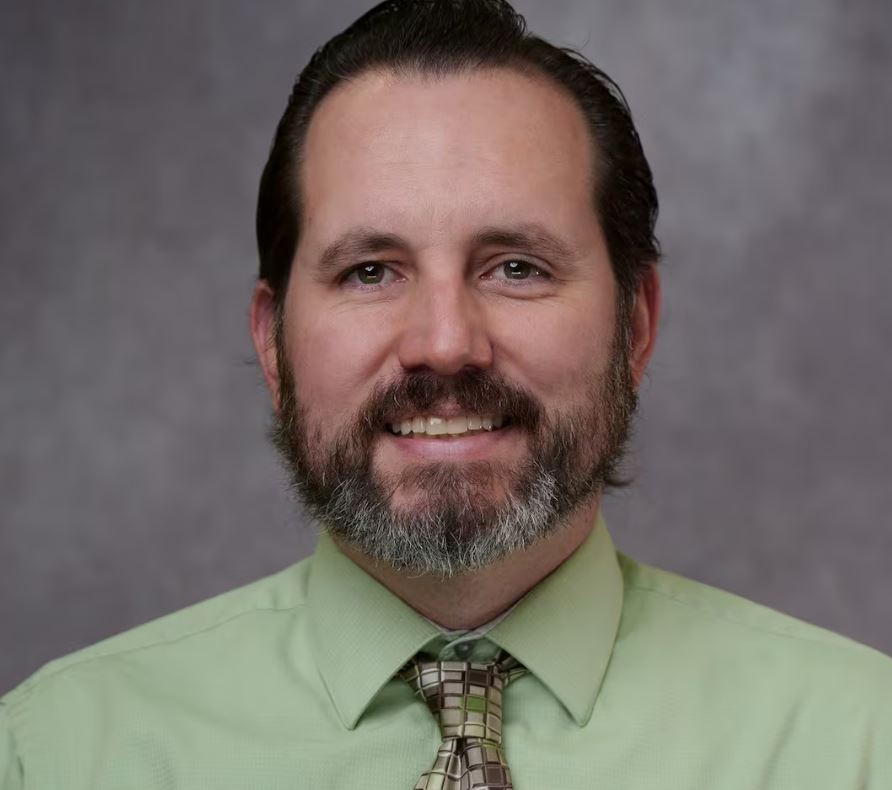
Landon Kowalzik, assistant superintendent for Yellowknife Education District No.1, says new territorial funding for inclusive education is welcome but he’s still waiting for details about how it will be allocated. (Submitted by Landon Kowalzik )
“If they were not able to get it through Jordan’s Principle, through their school, this service would not exist,” she said.
CBC News contacted the territorial government about how the new education funding will be allocated, but nobody was able to provide a response before publication.
‘It doesn’t make any sense to us’
Jordan’s Principle is a legal requirement established by the Canadian Human Rights Tribunal to ensure First Nations children get the services they need without delay.
Last year, Indigenous Service Canada (ISC) made changes to the program and no longer accepts school-related requests from off-reserve schools, except in certain circumstances.
Addressing an N.W.T. government standing committee last month, Bourassa told MLAs that ISC had “denied over $9 million in applications” from the Sahtu Divisional Education Council for Jordan’s Principle funding. `
Bourassa told CBC News that her school board plans to file a complaint through the Canadian Human Rights Commission. She says that 90 per cent of the students in her district are Indigenous.
“Our intention is to make a case that ISC’s denials of funding discriminate against our kids because they don’t live on a reserve,” she said. “It doesn’t make any sense to us that Jordan’s Principle applies to all First Nations children on or off reserve, yet ISC refuses to fund our educational supports because we are not on a reserve.”
Last year, the Sahtu school board applied for a judicial review of Ottawa’s decision denying Jordan’s Principle funding. However, the Federal Court ruled in October that the application was premature since ISC’s internal appeals process was still underway.
Kowalzik says Yellowknife Education District No.1 was one of the first school districts in the territory to lose programs because of ISC’s rejection of their applications for Jordan’s Principle funding. He described it as “demoralizing.”
“You can visibly see the impact that it’s having on the students, knowing that all next year they’re not going to have that same support. It’s heartbreaking,” Kowalzik said.
Adam Murray, superintendent for Yellowknife Catholic Schools, says his board had to go into deficit to ensure students could access speech development, social and emotional support programs, and trauma and mental health programs.
He says it’s still unclear whether the new funding promised by the territory will help fill the gap.
“Next year, if everything goes the way it looks like it’s going […] we’ll have an educational year with less support,” Murray said.
Related stories from around the North:
Canada: Changes to Jordan’s Principle unfair for N.W.T. children, some say, CBC News