Square dances and cell signal dead zones: Rangers confront Canada’s Arctic reality
By Murray Brewster
It’s safe to say learning to square dance with strangers was not on the list of expectations Lt.-Col. Travis Hanes had when he embarked on his 5,200-kilometre Canadian Ranger patrol along the edge of the Northwest Passage this past winter.By
Yet, in many of the 17 Arctic communities he and his team visited during their 52-day Northern odyssey, they were greeted warmly by residents who were eager to throw a party.
“A lot of the times we go into a community, they want to do a square dance with us,” Hanes said in a recent interview with CBC News.
The region may be vast and human contact infrequent, but when it comes it’s welcomed with an intimacy that people in the south find hard to wrap their heads around.
“You’re already starting to dance with them and it’s just, it’s so abnormal compared with how I [normally] conduct myself,” Hanes said.
In many respects the journey was a surreal experience, one he compares to watching a reboot of grainy old National Film Board documentaries on the North.
“There’s a disconnect,” said Hanes, who commands the 1st Canadian Ranger Patrol Group. “They have all these technologies like everyone has — a cell phone — and yet they have [other] pieces from different times.”
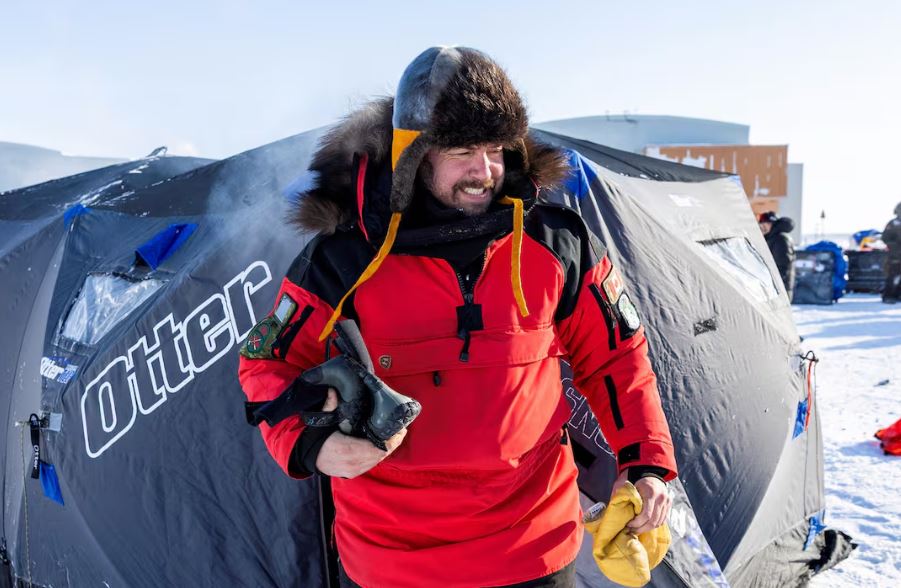
For Hanes, taking part in square dances and other cultural moments — all of it recorded on smartphones and even turned into TikTok videos — underlined not only the cultural disconnect between Canada’s regions, but also the urgent need for Canada’s military to fully appreciate what a sustained presence in the Arctic is going to mean.
It used to be said that the Arctic was Canada’s backyard: remote, frozen, out of sight and often out of mind. Not anymore.
Often we’ve heard political and military leaders talk about how the Arctic is one of the few places in the world where climate change, the great powers and economic ambition collide in real time.
Try as they might, they don’t feel it in their bones, however. Hanes has felt it.
Part of the Rangers’ mission during this year’s iteration of Operation Nanook-Nunalivut was to test new communications and surveillance technology, sometime delicate equipment that was designed and intended for southern hands.
“Everything freezes, let alone your hands,” said Hanes. “All comms devices are always made for people without gloves on.”
The troops tested a new system from Ottawa-based Dominion Dynamics, software that pairs with existing military communications gear and allows the Rangers to communicate and share information among themselves in the remotest of locations, even when there is no connection, no satellite and no GSM connectivity.
They’re then able to upload the data to headquarters once they’re reconnected.
“They got it working with the snowmobiles so you could, in real time, talk and navigate. But you still got to push these little buttons,” said Hanes.
The eyes and ears of the North
Increasing surveillance across the vast Northern frontier is a major preoccupation of the military and the federal government.
The Rangers are often called the country’s eyes and ear in the North, but getting what they see and hear into the hands of commanders and decision-makers in real time has long been a challenge.
The system the Rangers tested is meant to be one component of the company’s AuraNet, a network of rugged sensors and autonomous systems designed to monitor the vast Northern frontier.
Throughout the patrol, engineers with Dominion Dynamic took feedback from the Rangers and made fixes to the software on the fly, making the system more responsive and user-friendly as they went, said the company’s CEO, Eliot Pence.
“Over the last 60 days what we’ve created is the ability to push this information up into a web app, a common operating picture that allows the strategic command to understand and essentially track and trace and follow along,” Pence explained.
“There’s no telecom operating up there. You’re literally in a complete communication desert.”
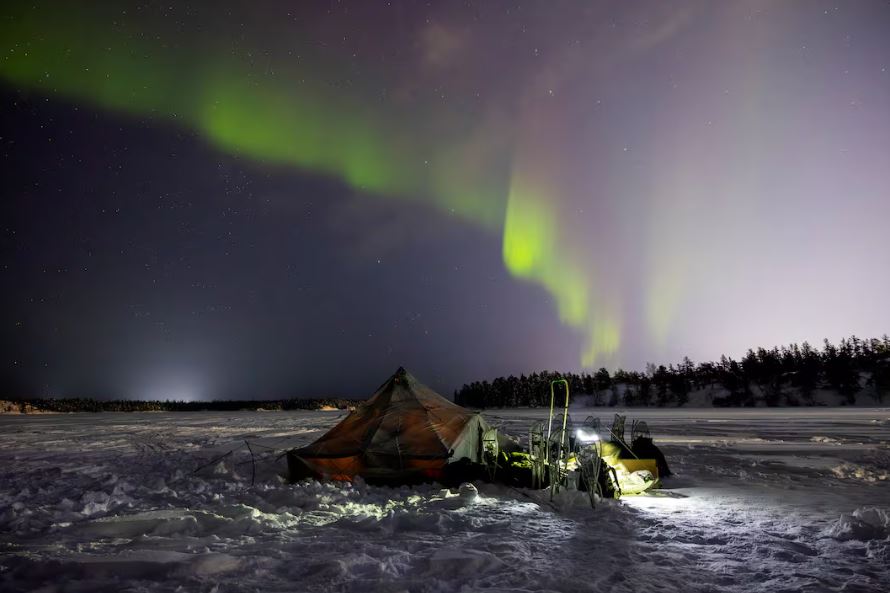
Hanes said overall the system proved itself because they were able to combine different communications systems and different sources of data into a coherent picture.
“Their system just pulled it into one location, organized it all and allowed it. It was open-source too, which was a benefit because we were working with the RCMP, Parks Canada and the conservation officers,” he said.
Once again though, southern technology and innovation met the limitations of the harsh North: Keeping all the new tech powered was a challenge.
“Every piece of technology is battery-based,” Hanes said. “We couldn’t trial the tech, the high-end tech, without trialing new types of generators that could work that far in the North, reliably, over the harsh terrain.”
The Arctic cold drains batteries at an alarming rate. The Rangers adopted the homespun if somewhat uncomfortable solution of storing lithium-ion batteries inside their pockets and sleeping bags to utilize body heat.
“I slept with like 15 different types of batteries in my sleeping bag the whole time,” said Hanes. “We all did on the patrol, so that’s annoying.”
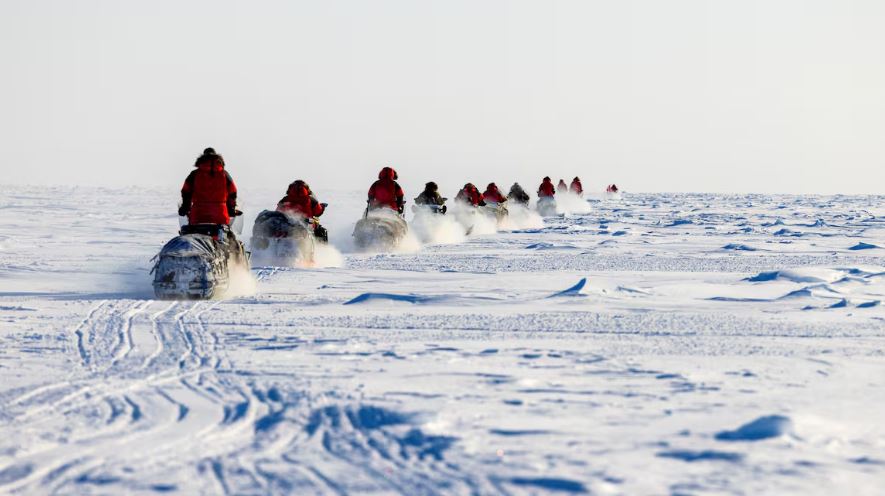
The Ranger patrol, which involved 10 members on snowmobiles, was one component of a larger Arctic military exercise that included 1,300 Canadian troops and foreign observers.
More than 200 vehicles and pieces of equipment including two M777 howitzers were shuttled across joint operations in the Yukon, the Northwest Territories, Nunavut, British Columbia, Alberta and Manitoba.
Operation Nanook-Nunalivut concluded last week, and the military will go back and write its lessons learned reports. Hanes said he knows what he’s taking home.
“Don’t sell Canadians short, especially in the North,” he said. “I’m not trying to romanticize it at all. It’s that if you don’t have people who want to help you in the North and who are there for you, it will be impossible to operate.”
Related stories from around the North:
Canada: Expanding Rangers key to improving Arctic security, says former military commander, CBC News
Faroe Islands: Denmark, Faroe Islands agree to establish air surveillance radar to bolster gaps in Arctic surveillance, Eye on the Arctic
Finland: Norwegian military vehicles take new transit corridor via Finnish Lapland, The Independent Barents Observer
Norway: Norway, Finland, Sweden prioritize North in updated statement, Eye on the Arctic
United States: U.S. Senate candidates agree they want to protect Arctic Alaska from Russia, Alaska Public Media