Fort Good Hope mother says medical bureaucracy increased stress
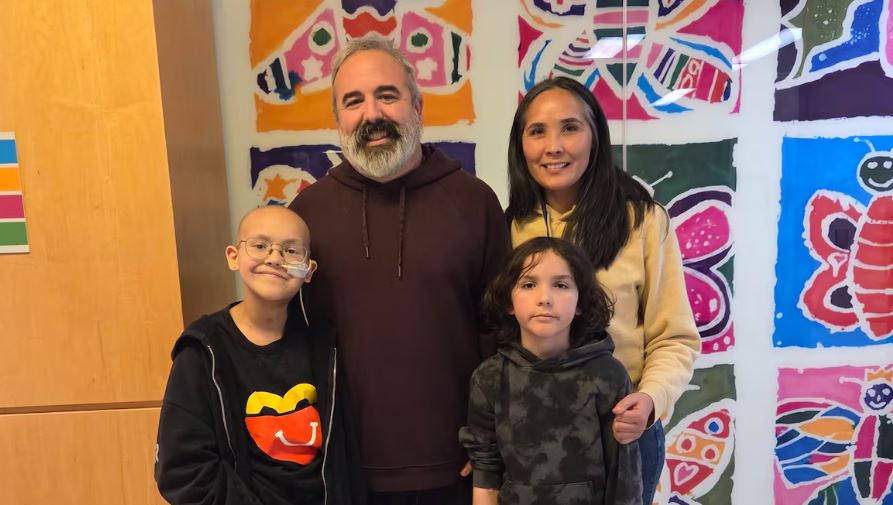
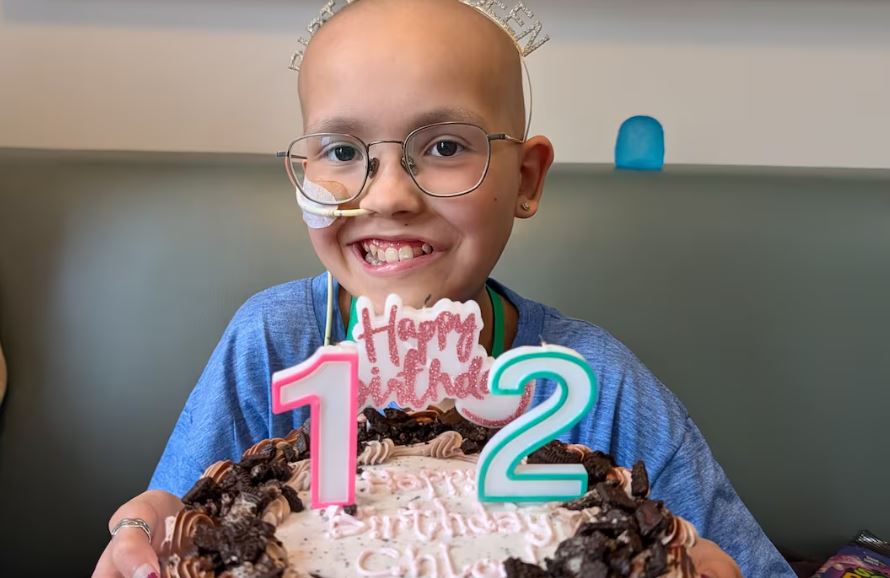
Chloe Dixon laughs before saying she likes being in Toronto but misses her home in Fort Good Hope, N.W.T.
“Nothing beats home,” the 12-year-old said with a smile.
Chloe has been staying at Ronald McDonald House in Toronto since last August.
While vacationing in Ontario with her mother and younger brother, Chloe was diagnosed with rhabdomyosarcoma, or RMS, a rare, aggressive cancer that develops in soft tissues.
For her mother, Heather Bourassa, the weeks following the diagnosis were a blur of medical treatments, adjusting to the reality of her daughter’s rare cancer and juggling shifting travel plans.
“I was just totally at a loss as to what I was doing day to day with Chloe’s condition and her brother and my work,” Bourassa said.
Navigating the complex health-care system and fighting for medical coverage heightened the stress, Bourassa said.
Out of territory costs
In June 2025, Chloe visited a dentist in Yellowknife for a persistent bump in her mouth. The dentist booked an August appointment in Edmonton with an oral surgeon.
While the family was on vacation in Ontario that July, Chloe visited an emergency room, which led to her cancer diagnosis.
That triggered a complex medical coverage battle. When Chloe’s social worker in Toronto and her father reached out to the territorial government about medical coverage, Bourassa said they denied Chloe’s medical travel claim. According to Bourassa, the government said Chloe was diagnosed in Ontario and had not been referred to that hospital by a territorial health professional.
To be eligible for medical travel for services and treatment not available in the N.W.T., a territorial doctor generally refers the resident to the nearest centre, typically in Edmonton. The government then covers some or all of the patient’s travel costs, such as flights, accommodations and food, depending on the resident’s income level.
Kirsten Berg, an assistant deputy minister for the territorial Department of Health and Social Services, confirmed to CBC News that a resident’s medical travel needs to start in the N.W.T. to qualify for reimbursement.
“With the Canadian health-care system, you would still have your health-care card. That means that you will be able to access insured services,” Berg said. “But the travel component to get you to that appointment wouldn’t be covered if you weren’t coming from the N.W.T.”
In the beginning, that left the family paying for many of the travel costs out of pocket.
Further complicating the matter was figuring out whether Non-Insured Health Benefits (NIHB) for N.W.T or Ontario was responsible for the medical coverage, Bourassa said.
NIHB is a federal program that provides health coverage for registered First Nations and recognized Inuit residents. In the territory, it is administered by the Northwest Territories Health and Social Services Authority (NTHSSA) on behalf of Indigenous Services Canada.
CBC reached out to NTHSSA about their NIHB policy but did not receive a reply by deadline.
It was eventually NIHB Ontario that funded Chloe’s medical stay, Dixon said.
Chloe’s father, Paul Dixon, said he and Bourassa work office jobs and are accustomed to paperwork, meetings and bureaucratic processes, and yet the struggle for coverage was still overwhelming.
“I don’t know how someone that, you know, didn’t have those abilities would be able to navigate that system for sure,” he said.
The family also brought Chloe to Florida for a specialized treatment recommended by her doctor. Bourassa said while the territorial government approved funding for the treatment, they denied the travel to Florida.
Dixon paid to take Chloe to Florida for the initial consultations. The travel for the treatment was then funded by Jordan’s Principle, a federal initiative created after a young boy’s death to ensure Indigenous children receive essential services without delay.
David Taylor, an Ottawa-based lawyer who has represented Indigenous clients in child and family services cases, said Jordan’s Principle was only meant to be an interim solution while the government fixed the gaps so the system would work more seamlessly for Indigenous children.
“The anticipation, which never played out, was always that the federal government would close the gaps in the background and kind of reduce some of the effects of the silos, and that hasn’t really happened,” he said.
Taylor added that while there are more funding options, the lack of coordination means “no one’s really able to kind of put things together.”
Rather than government agencies coordinating to determine funding, the burden of navigation continues to fall on families who are already struggling with a medical crisis, he said.
As for Chloe and her family, Bourassa said she and the kids will stay in Toronto while Chloe completes more tests and starts her maintenance chemotherapy. Chloe said she is looking forward to the summer and is excited to try swimming and join a camp for kids with cancer and other serious illnesses.
Related stories from around the North:
Canada: Yukon government passes bill to allow it to halt health authority, minister says, CBC News
Finland: Brakes on Lapland health cuts a win for Arctic communities, says Sami Parliament, Eye on the Arctic
United States: Senators, including Alaska’s, sound alarm on cuts impacting Indigenous health care agency, Eye on the Arctic