Gasoline from Morocco remains stuck in Murmansk amid fuel crisis
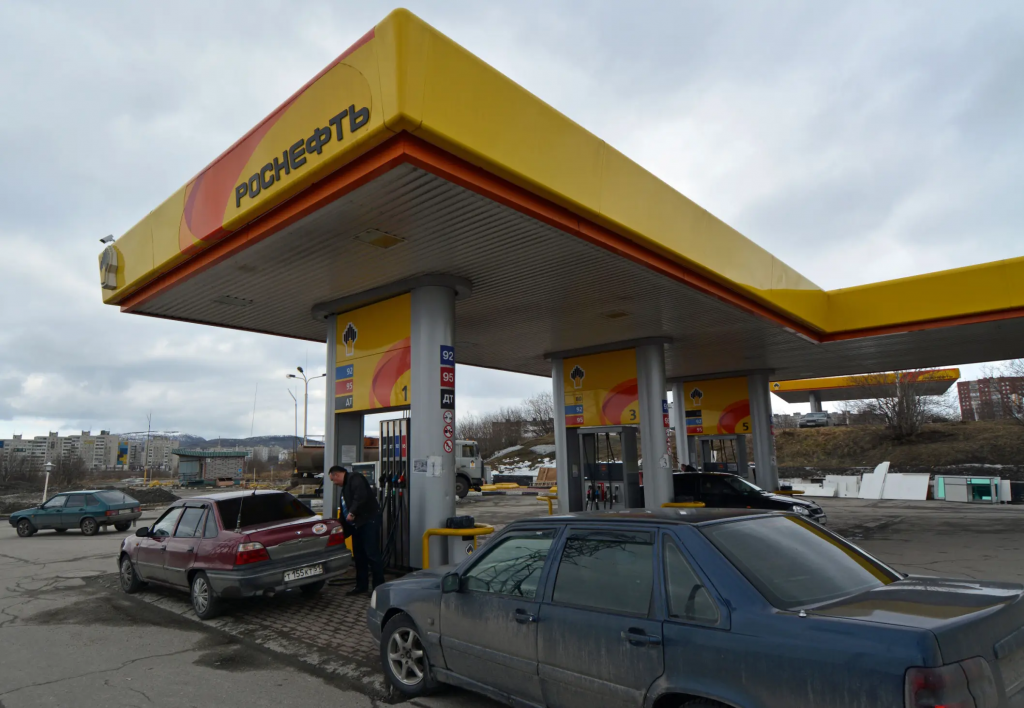
Fuel that arrived from Tangier two weeks ago has still not been unloaded because of a dispute over its price.
Reuters reported about two weeks ago that Russia had imported AI-92 petrol from Morocco, citing two unnamed industry sources.
According to the sources, a Panama-flagged tanker loaded 30,000 metric tonnes of fuel at the Moroccan port of Tangier — approximately 40.5–41 million litres. Lukoil was identified as the shipper, but the company declined to comment.
It was also reported that the St Petersburg International Mercantile Exchange had introduced new exchange-traded instruments for AI-92 petrol delivered from the Kola station in the Murmansk region on 29 July. However, trading has not yet begun. Tankers carrying the petrol have not been unloaded in Murmansk, and trains carrying the fuel have not departed from the Kola station.
Several days ago, the InfoTEK portal, citing three sources, reported that the imported petrol had still not entered the domestic market because oil companies and regulators had been unable to agree on a price.
According to one of InfoTEK’s sources, the seller wants to charge up to 150,000 roubles per tonne because of the complexity of the logistics, while Russian regulators require the petrol to be sold at domestic Russian prices.
Two other sources told InfoTEK that they had initially been offered AI-92 at 130,000 roubles per tonne, with the price later reduced to 110,000 roubles. Meanwhile, the domestic exchange price on 13 August was 77,620 roubles per tonne.
While the fate of the petrol stored off the coast of Murmansk is being decided, a second wave of the fuel crisis has begun in the country’s north-west.
For example, on 15 August, the Arctic Observer newspaper published a subscriber’s report on the situation in the Murmansk region:
“In Kirovsk, only one of the two Rosneft stations has petrol, and they are handing out 30 litres per person according to some schedule. The Ivekt station is out of petrol, and the second Rosneft station has only had diesel for a week, apparently. In Apatity, the Gazprom station is out of petrol, Lukoil has it, and Rosneft is 50/50. If there is petrol, it’s available according to a schedule and with restrictions.”
The author’s punctuation has been preserved.
Nord-News also reported fuel shortages in the Murmansk region. According to the portal, on Friday, AI-92 and AI-95 petrol almost completely disappeared from major petrol-station chains. An interactive map showing fuel availability in the region indicates that restrictions have now been imposed at almost all petrol stations.
The fuel crisis has also returned to Arkhangelsk. According to the city administration, on Sunday, AI-92 and AI-95 petrol were available at only three petrol stations, all of which were subject to limits of 30 to 60 litres per customer. The News29.ru portal reported the situation.
Queues at petrol stations persist in Karelia, where restrictions on fuel sales have also been introduced. Rosneft stations are selling up to 30 litres per customer, while other stations are limiting sales to 40 litres, according to Karelinform.
Related stories from around the North:
Canada: Yukon government offers incentives to switch to fossil fuels and rebates on electric bills, CBC News
Finland: Lapland among regions not in favour of wind power compensation for eastern Finland, Yle News
Norway: Will the green transition be the new economic motor in the Arctic?, Eye on the Arctic
Russia: Fuel crisis grips Karelia in northern Russia, The Independent Barents Observer
Sweden: Electricity prices climb in Sweden as Russian gas pipeline goes offline, Radio Sweden
United States: Alaska’s Northwest Arctic Borough gets $2 million tribal energy grant, Alaska Public Media