The N.W.T. is slowly closing the infrastructure gap for EVs
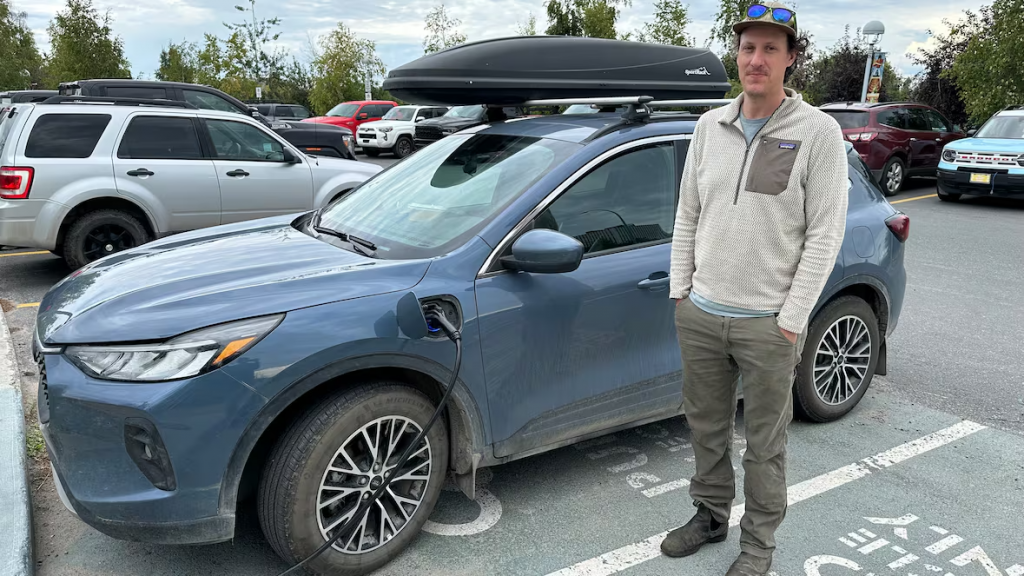
‘I wish the N.W.T. would have as good of an infrastructure as their neighbour,’ says EV driver
Electric vehicle usage in the North is somewhat of a chicken and egg situation: are infrastructure investments worth it with so few users, or are there so few users due to a lack of infrastructure?
Jeremy Armitage and his family have owned a hybrid vehicle since 2023, deciding to switch after their last car, with an internal combustion engine, broke down on the drive back to Yellowknife following the evacuation.
He said the decision came down to trying to offset the higher carbon footprint that comes with living in the North, but the cold made committing to a pure EV “tricky.”
Charlsey White is the director of planning and development for the City of Yellowknife. After determining that about 20 per cent of its emissions come from transportation, she said the city is actively planning to install EV chargers as part of its new construction projects under its Climate Action Plan.
It will also host a symposium on Sept. 12 for people to familiarize themselves with EV technology and its usage in the North.

“The feedback we hear is there’s not enough [chargers], where people are sitting there for too long. But that tells me people are using them and that there is a need for more,” she said.
Armitage said “it’s awesome” the city is expanding its fleet of chargers, especially in high traffic areas, but he’d like to see them around grocery stores, locations where “you’re not staying for five minutes.”
“That’d be cool if that were to roll out on a wider scale,” he said.
While hybrid vehicles don’t have the same range concerns as EVs, Armitage also said growing the number of chargers outside city limits would make more people comfortable to undertake the long drive south.
One year of the N.W.T.’s charging corridor
Sept. 9 marks World EV Day.
In the N.W.T., it also marks one year since the completion of the government of the Northwest Territories’ EV charging corridor between Yellowknife and Alberta.
Naka Power Utilities manages chargers in Yellowknife, Fort Providence, and Enterprise, while the Northwest Territories Power Corporation (NTPC) takes care of those in Behchokǫ̀, Hay River and Fort Smith.
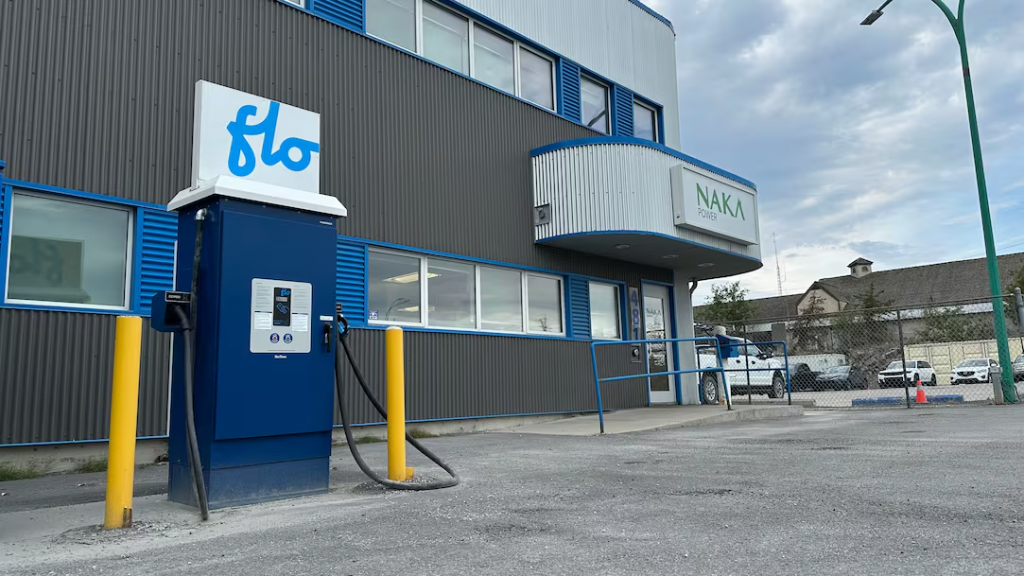
NTPC says that from Jan. 1, 2025 to Aug. 17, 2026, 194 charging sessions were recorded across its three charging stations for a total of 6,182 kilowatt hours purchased.
As of late August, Naka’s 2026 year-to-date information showed 34 charging sessions in Enterprise, 22 at its office in Yellowknife, and 41 at the Prince of Wales Northern Heritage Centre. In Fort Providence, 34 charging sessions were counted since April 2026, when the station became reliable enough for public use.
“We were really surprised with the amount of uptake we’ve seen in EVs across the territory,” said Jason Yorke, Naka’s manager of operations.
However, he also pointed out the current usage doesn’t translate into financial stability without funding from the territorial government.
“I wouldn’t say they’re going to be making us a ton of money right now, but it is supporting that EV industry in the North and giving that gateway to the South.”
Current limitations
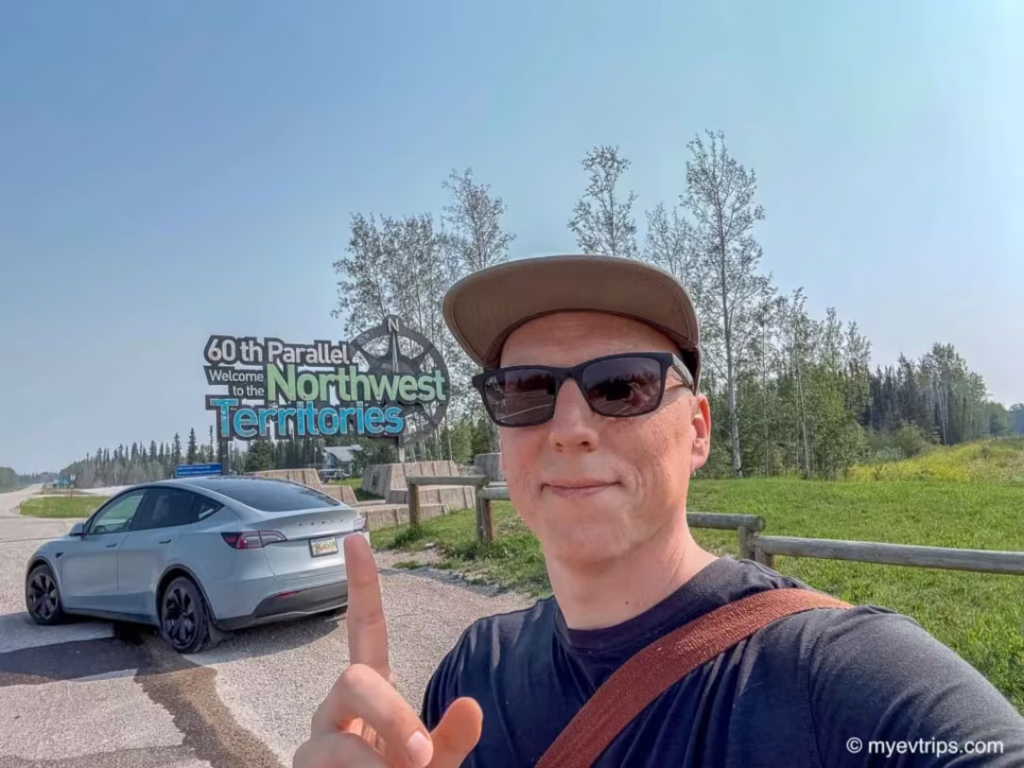
In 2025, former Yellowknife resident Shaun Robertson completed two northern road trips in his Tesla Model Y — the first from Vancouver to Yellowknife, and the second along the Dempster Highway to the Arctic Ocean.
He says the Yukon has been “kind of leading the charge” when it comes to EV infrastructure, which he found “a bit discouraging.”
“I wish the N.W.T. would have as good of an infrastructure as their neighbour.”
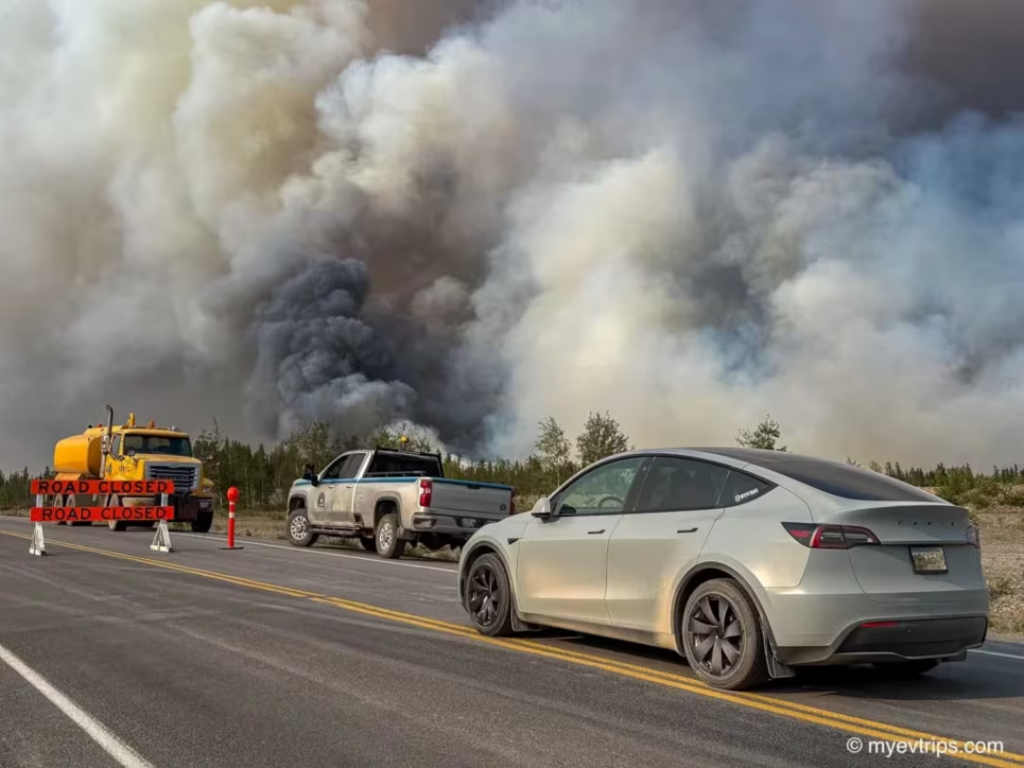
EV usage in the North often comes with two questions: how do they handle the cold? And, what happens if a wildfire forces a delay on the road or an evacuation?
During his trip to Yellowknife, Robertson experienced a wildfire delay firsthand. Nearing his point of “no return,” he decided to wait it out. He also had a backup battery with him.
“It would be nice to see more stops [with] chargers in between,” he said, not only for driving in winter, but any potential delays on a highway.
However, the N.W.T. is facing challenges due to its smaller electric grids, says Jason Yorke.
For example, Naka had to get creative in the case of Fort Providence and uses a battery to power its charging station rather than have it connected to the local grid.
The spike in demand from EV charging “can have a big impact and that could have other impacts to other customers, so that is kind of the limiting factor right now,” he said.
For now, the territory plans to install a charging station at Buffalo Junction, but is looking for funding to complete that project.
Related stories from around the North:
Canada: Study forecasts challenges of electric vehicle chargers on northern power grids, CBC News
Finland: Cold weather perfect to pioneer electric aviation says Finnair, The Independent Barents Observer
Norway: First fully electric garbage truck in Arctic Norway, The Independent Barents Observer
Russia: Mining boost in Russian central Arctic to feed electric vehicle market, The Independent Barents Observer
Sweden: Giant battery factory bringing economic boom to Northern Swedish city, Radio Sweden
United States: Alaska’s first, electric public transit bus ready to hit Anchorage streets, Alaska Public Media