
Experts highlight the ‘double-edged nature’ of Starlink in the North
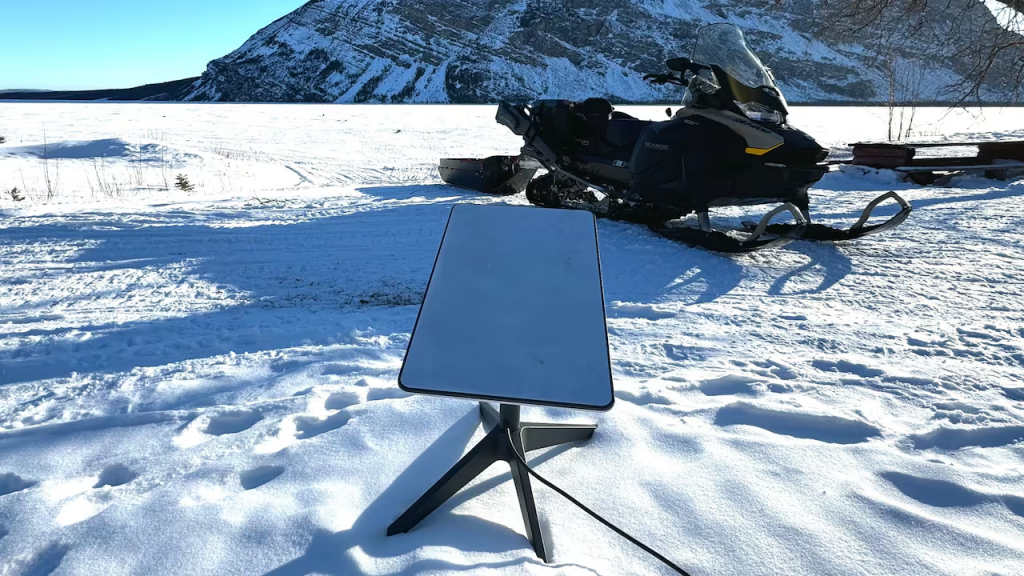
As Canada looks for alternatives to Starlink, experts say the technology has changed the North
As Ottawa is looking for made-in-Canada alternatives for Starlink, some experts say high-speed internet has accelerated the spread of online harms in the North.
“Unfortunately, there’s so much problematic content online now,” said Rob McMahon, associate professor of political science at the University of Alberta.
McMahon is the author of Too Much of a Good Thing?, a study into the “double-edged nature” of increased internet access. On one hand, Starlink helped address “digital inequality,” but also amplified concerns like online gambling, cyberbullying and online scams, the study found.
Even though as part of the study, McMahon surveyed residents of the Northwest Territories, he says the results would apply to Nunavut as well.
Starlink changes community life
Starlink became available in Nunavut in 2022, promising high-speed internet, averaging over 100 megabits per second, from anywhere in the territory.
That’s over six times faster than the maximum download speed in the top plan offered by Northwestel, the territory’s largest internet provider, which currently sits at 15 megabits per second.
“I could game, but it was very laggy,” said former Baker Lake mayor and IT specialist Kevin Iksiktaaryuk of his internet connection before Starlink.
Iksiktaaryuk says he was the first person to get a Starlink dish in his community and has since created a Facebook support group for Nunavut Starlink users with over 6,000 users.
He argues Starlink has become an essential part of Nunavut’s day-to-day life — in schools, on the land and video games.
But it also changed the usual community life.
“It’s not exactly the same anymore,” Iksiktaaryuk said.
He argues, along with high-speed internet, Starlink amplified “addictive tendencies” of social media, online gambling and misinformation.
“I’ve been a really big advocate for technology my entire life,” Iksiktaaryuk said. “I grew up loving it. I’ve always tried to see the good side of everything, but I do understand that there are bad sides too.”
Canadian company aims to compete with Starlink
But despite concerns, Starlink’s popularity grew in Canada. In 2025, the company announced it has over half a million customers across Canada. This has caused concern in Ottawa, McMahon said.
“I think there’s a push for this kind of network sovereignty as a means to also transition to a more kind of made-in-Canada solution,” he said.
Prime Minister Mark Carney said so himself.
Canadians “do not want to be caught in a situation where we are reliant on one provider that may change their view,” Carney said of Starlink Friday when asked about the limits the company imposed on Ukraine’s use of the technology.
One Canadian company is pitching itself as a competitor to Elon Musk’s massive empire.
“We will compete with them here, we will compete with them around the world,” said Stephen Hampton, vice president of Telesat, a satellite communications company based in Ottawa.
The company is planning to send 225 new satellites to provide internet coverage that Hampton says would match Starlink.
But despite being touted as an all-Canadian project, Starlink will still have a hand in it.
Telesat has a $1-billion contract with SpaceX, the company that owns and operates Starlink, to help launch those satellites in low Earth orbit.
“Right now SpaceX is the only game in town,” he said. “And in truth, they’ve been good partners on this.”
Related stories from around the North :
Canada: Why starlink is being called a ‘game-changer- in many N.W.T. communities, CBC News
Norway: New satellites to boost communications in Arctic Norway, The Independent Barents Observer
Russia: Northern Russia troubled by mobile internet shutdowns, The Independent Barents Observer
United States: $30.3 million grant announced to build up high-speed internet in rural Alaska, Eye on the Arctic