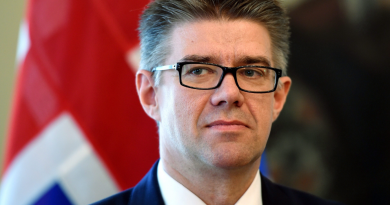
NATO chief to Arctic Allies: “We’re all frontline states now,” as Iceland’s role grows
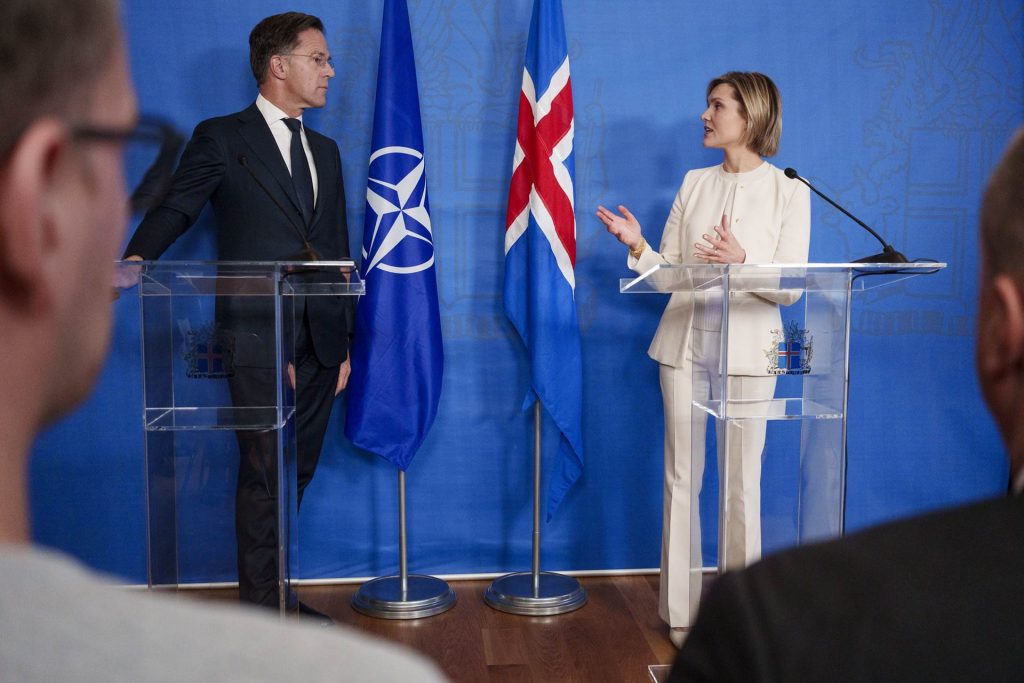
As geopolitical powers like Russia and China continue jockeying for influence in the Arctic, NATO Secretary General Mark Rutte used a visit to Reykjavík last week to underscore Iceland’s strategic role in the North.
“[Iceland is] the eyes and ears,” Rutte said at a joint press conference with Icelandic Prime Minister Kristrún Frostadóttir, posted on NATO’s website.
“Iceland is relevant, is important, and punches above its weight.”
Rutte’s comments signaled Iceland’s growing prominence to the alliance’s defencive planning despite the country’s lack of a standing army.
Iceland recently presented its first formal defence policy to parliament, a move Rutte said would also strengthen NATO’s deterrence posture.
The NATO chief also highlighted the country’s air-surveillance assets, infrastructure for Allied operations, and its location in the Greenland–Iceland–U.K. (GIUK) gap, a critical transit zone for naval and air activity between North America and Europe, as among Reykjavik’s key contributions.
Frostadóttir said Iceland’s security role will continue to focus on air surveillance, infrastructure and hosting duties but added that the government plans to increase investment to meet the North’s increasing security needs.
“We just need to make it more robust,” she said.
Iceland an “unsinkable aircraft carrier” for NATO in the North
Rutte also warned that NATO no longer considers the Arctic a distant theatre as it did prior to Russia’s invasion of Ukraine.
“We are all frontline states now,” he said, noting that Russia’s newest long-range missiles can reach any NATO member within minutes.

Since Sweden’s and Finland’s accession to NATO, seven of the eight Arctic states are now alliance members, an important boost to Arctic security, he said.
“Only one is not an Ally in NATO or not applying for membership, and that’s Russia,” Rutte said. “And there is a ninth country, China, which is geographically not in the High North, but it’s very active here, becoming more and more active.”
Frostadóttir described Iceland as an “unsinkable aircraft carrier,” for NATO, given country’s strategic location at the intersection of the Arctic, the Atlantic and Europe.
Frostadóttir sought to reassure Icelanders that they shouldn’t be alarmed about rising tensions in the region but cautioned that Reykjavík “cannot be naive” about geopolitical shifts.
“This is a different part of the world, the central, the central Atlantic, with Greenland, Iceland, the Faroes. We have a voice here as well, and we have a responsibility to be leaders in this region.”
Reykjavik’s strategic importance to Canada, U.S.
Rutte repeatedly linked Iceland’s strategic importance to Canada and the United States, saying the Arctic should be viewed as a shared operating space for all seven NATO Arctic Allies.
“Canada and [the] US, and Iceland and Denmark, Finland, Norway, Sweden, […]working together within NATO, and NATO, particularly, over the last 12 to 18 months, becoming more and more involved with these activities so that we can help to coordinate, and being the platform to organise this, is crucial,” Rutte said.
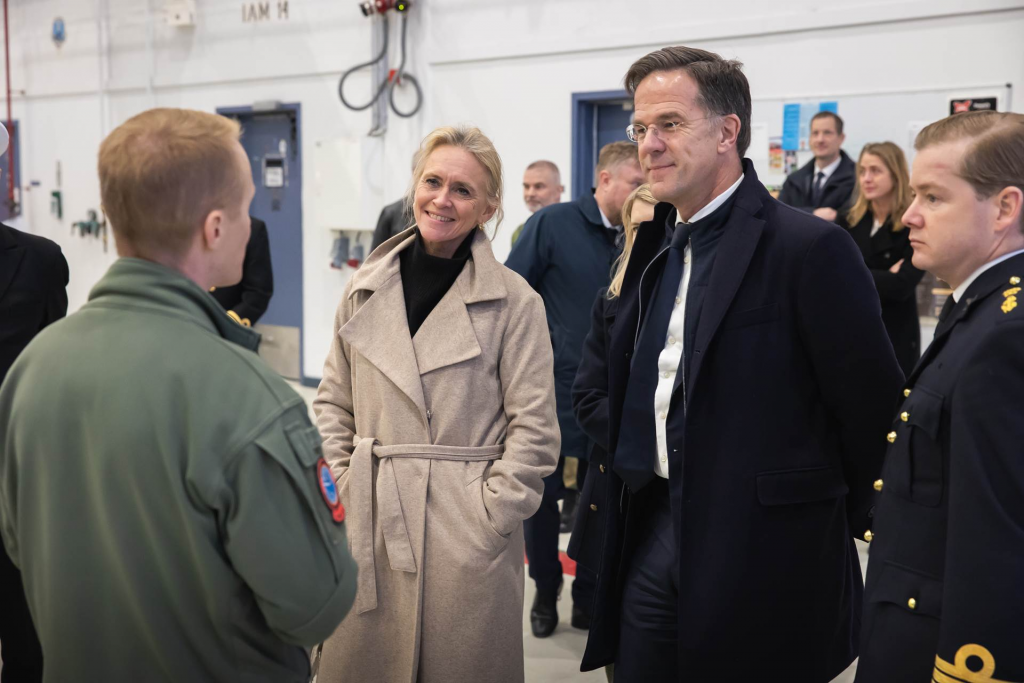
He referenced Norwegian Prime Minister Jonas Gahr Støre’s recent meeting at the White House, where Støre highlighted Russia’s submarine bases on the Kola Peninsula and how their capabilities were developed to reach North America.
Rutte said Iceland’s central position in the GIUK gap directly contributes to North American defence interests.
“The Atlantic, and the Arctic, and Europe – those three being safe means that we live in prosperity and can make sure that our values are protected and our people, but also United States and Canada.”
Comments, tips or story ideas? Contact Eilís at eilis.quinn(at)cbc.ca
Related stories from around the North:
Canada: Finland sharpens Arctic stance as security pressures rise; Canada among key allies, CBC News
Denmark: Denmark, Greenland agree to build naval wharf in Nuuk amid growing Arctic focus, Eye on the Arctic
Finland: Finland’s border fence almost ready in Lapland, Yle News
Iceland: Iceland sees security risk, existential threat in Atlantic Ocean current’s possible collapse, Reuters
Norway: Suspected illegal Arctic border crossing from Russia to Norway, person detained, The Independent Barents Observer
Russia: Russia withdraws from Euro-Arctic rescue cooperation, The Independent Barents Observer
Sweden: Sweden looking for Canadian partnership to ramp up fighter, surveillance plane production, CBC News
United States: Russian warplanes detected flying near Alaska for ninth time this year, US military says, Eye on the Arctic