With cooperation under strain, Canada joins partners in defending the Arctic Council’s future
TROMSO, Norway — The Arctic Council was built on the idea that the circumpolar North could be kept insulated from great-power conflict. But today, even its defenders openly admit that vision of the Arctic no longer holds.
Still, at the Arctic Frontiers conference in Norway that wound up last week, Canada joined a chorus of senior diplomats arguing that the council remains indispensable, despite Russia’s invasion of Ukraine, the suspension of political-level dialogue with Moscow, and ongoing tensions surrounding U.S. ambitions to control Greenland.
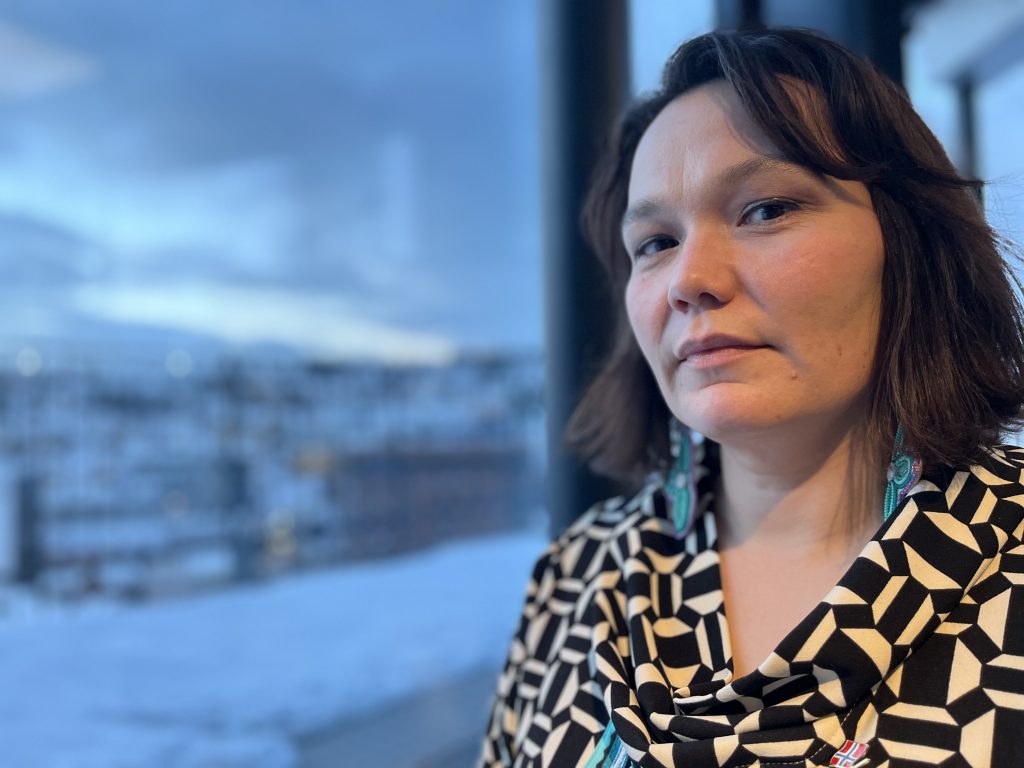
“[The Arctic Council] remains an integral part of where we see ourselves as an Arctic state,” Virginia Mearns, Canada’s Arctic ambassador and Senior Arctic Official to the council, told Eye on the Arctic in Norway.
“It’s a venue for Arctic cooperation and that’s something we take very seriously and want to ensure is in place for future generations to be able to convene and collaborate with fellow Arctic states.”
Others were blunt about how much has changed.
“The Arctic Council is not what it used to be,” Norway’s Foreign Minister Espen Barth Eide told the conference, citing the halt in political-level meetings since Russia’s 2022 invasion of Ukraine, and saying cooperation with Moscow cannot continue “in the old ways.”
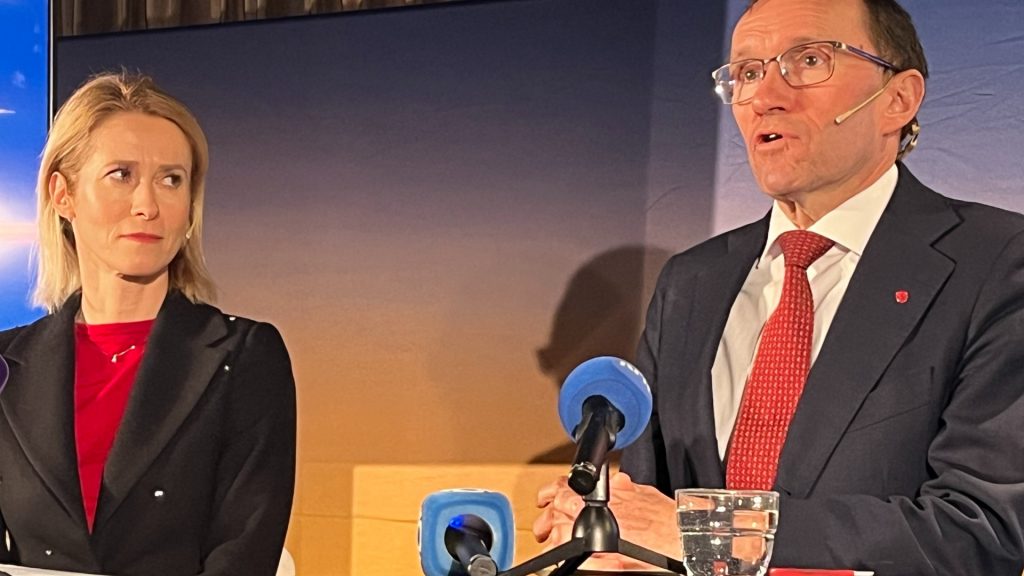
But abandoning it altogether would leave the Arctic with nothing in its place, he warned.
“There’s a limit to how many new things we can do, but it’s still there,” Eide said, adding that the goal of both current and previous chairships of the forum has been to “keep it alive, keep it relevant,” even as security competition increasingly defines the region.
Sober 30th anniversary for council
The Arctic Council brings together the eight Arctic states and six Indigenous permanent participants to tackle environmental protection, emergency preparedness and sustainable development. Military and defence matters have always been kept outside its mandate.
Created in 1996, the Council’s founding model is now being tested.
Year formed: 1996
Arctic Council States: Canada, Denmark (Greenland), Finland, Iceland, Norway, Sweden, Russia, United States
Permanent Participants: Aleut International Association, Arctic Athabaskan Council, Gwich’in Council International, Inuit Circumpolar Council, Russian Association of Indigenous Peoples of the North, Saami Council
Current Chair: Kingdom of Denmark (2025-2027)
The rotating chairmanship currently belongs to the Kingdom of Denmark, which includes Greenland and the Faroe Islands, an awkward reality as U.S. rhetoric continues to push for control of Greenland.
In an address to the conference, Greenland’s Foreign Minister Vivian Motzfeldt described the current period as “intense and hectic,” saying the Greenlandic government is defending principles that go beyond any single dispute.
“What we are dealing with, what we are defending, is greater than just the issue,” she said, citing territorial integrity, self-determination, democracy and respect for international law.
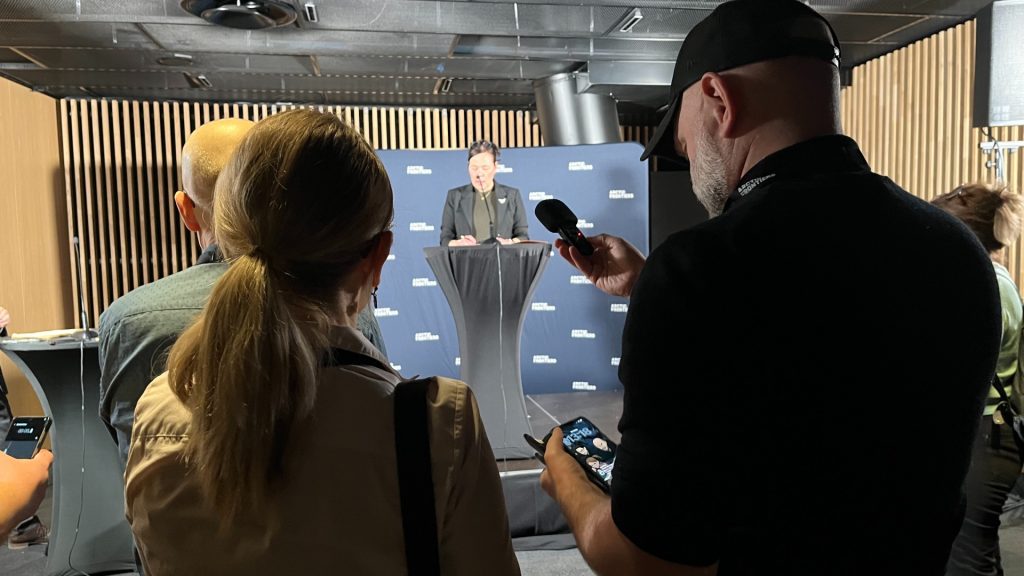
But even as Russia’s war in Ukraine and U.S. rhetoric over controlling Greenland continue to test Arctic cooperation, Motzfeldt said she remains committed to the forum’s survival.
“From the Greenlandic side, we are proud to be playing a leading role in steering the Arctic Council through the current situation,” she said.
“Together with Denmark and the Faroe Islands, we will do our best to ensure that the work of the Arctic Council remains active and that progress is being made. And most importantly, that the council continues.”
Write to Eilís Quinn at eilis.quinn(at)cbc.ca
Related stories from around the North:
Canada: Greenland tensions sharpen focus on Arctic infrastructure gaps in Canada, Eye on the Arctic
Finland: Greenland clash left a mark on EU-US relations says Finnish PM, Yle News
Greenland: New Italy Arctic policy adds U.S. Greenland ambitions to growing Arctic competition narrative, Eye on the Arctic
Iceland: NATO chief to Arctic Allies: “We’re all frontline states now,” as Iceland’s role grows, Eye on the Arctic
Norway: “We want to be Europe’s most integrated region in terms of defence”, The Independent Barents Observer
Russia: Russia claims first-ever North Pole aerial refuelling, TASS reports, Reuters
Sweden: Swedish military intelligence on the great power rivalry over Greenland, Radio Sweden
United States: Rubio says technical talks with Denmark, Greenland officials over Arctic security have begun, The Associated Press