
Nunavik residents rally against alcohol and drugs, amid rising rates of violence
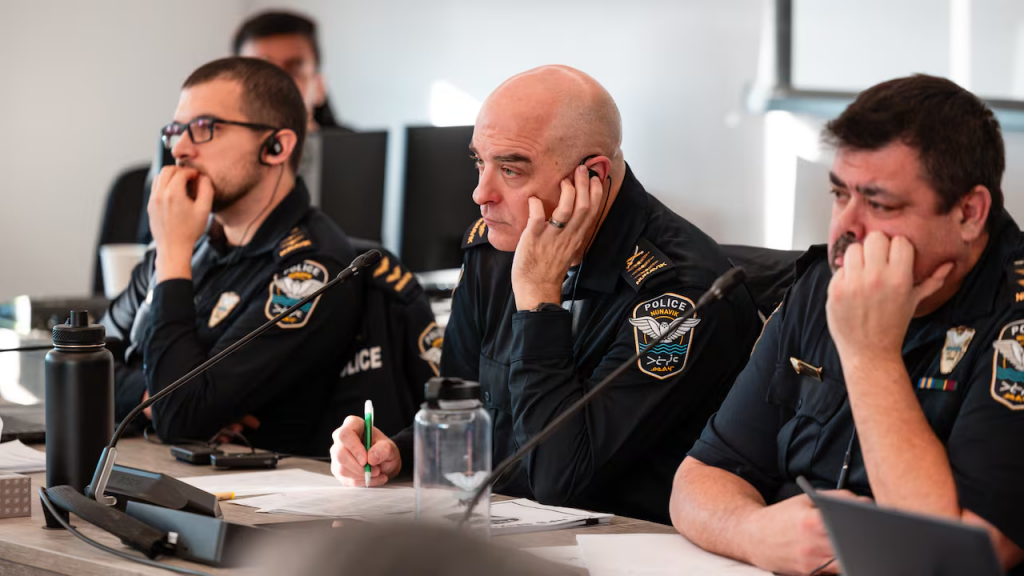
Numbers ‘worrying’, says Nunavik Police Service’s interim chief Jean-François Bernier
New police figures show violent crimes in Nunavik are rising, with national estimates finding the relative frequency and severity of violent crimes in Nunavik is nearly 20 times higher than the Canadian average.
There were 3,123 reported assaults in Nunavik in 2025, compared to 1,759 in 2023, according to numbers from the Nunavik Police Service (NPS). Sexual assaults, assaults on police officers, and assaults with weapons have all risen over the past three years.
The 2024 Statistics Canada severity crime index — a measurement of the relative number and severity of crimes — listed Nunavik’s Violent Crime Severity Index score as 2,046.04. That’s compared to 97.04 in Quebec, and 99.87 across Canada, and it’s higher than the score of the three northern territories combined.
These are some startling figures for Jean-François Bernier to be confronted with, having only joined the NPS as the interim chief in November.
“It worries me, it’s worrying for my police officers themselves. And it worries me also for the community members because the confrontation [happens] so often and it’s violence,” he said.
Trina Qumaluk, who was recently elected as the president of the Saturviit Inuit Women’s Association of Nunavik, says violence affects so many women she knows.
“As women, as mothers, violence, arguments, being scared, it’s a lot and it’s heavy. This is one of the biggest issues we’re trying to figure out how to deal with,” she said in Inuktitut.
Bernier attributes much of the rise in violence to the flow of drugs and alcohol. Puvirnituq, Kuujjuaraapik and Kuujjuaq are among the only Nunavik villages where alcohol sales are permitted, though much of it is bootlegged from the south.
There are also heavy struggles with addiction and suicide, compounded by intergenerational trauma and a lack of housing.
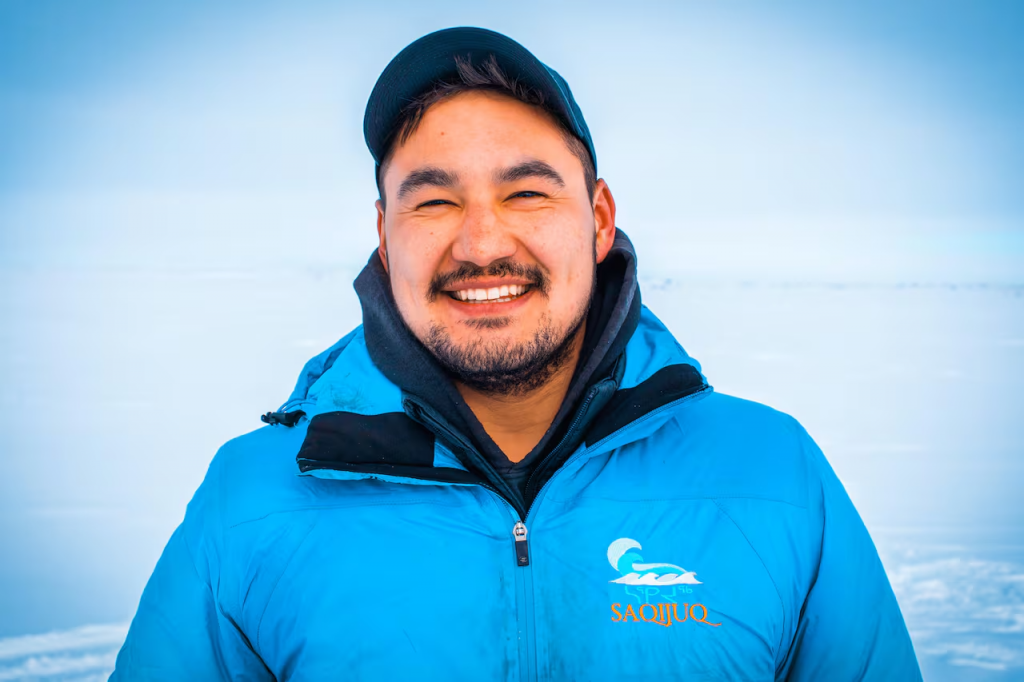
Lukasi Whiteley-Tukkiapik, the executive director of the wellness organization Saqijuq, believes the region is seeing a rise of harder drugs. It was the subject of a town hall meeting in his community of Kuujjuaq in December 2025.
“All these people were using alcohol as a coping mechanism. Unfortunately, I believe that they’re starting to turn to harder stuff as well too,” he said.
Confrontations with police
There were 297 assaults on police in 2025 in Nunavik. Bernier says that’s even higher than the number of assaults on officers with the Québec City Police Service, despite the city having a population 55 times the size of Nunavik’s.
NPS has been involved in a series of fatal police-involved shootings of late. There were three between November 2024 and July 2025, and at the time, the region had rates 73 times higher than the Quebec average according to figures from the provincial police watchdog, Bureau des enquêtes indépendantes.
Bernier acknowledges those statistics, though he adds that he doesn’t know any police officers who want to use force for fun.
“They try as much as they can to de-escalate and to not resort to force as much. But sometimes it’s necessary also to do so when the intoxication level is so high that you cannot engage with someone verbally,” he said.
He says all NPS officers receive de-escalation training, and he’s looking to introduce more regular reviews.
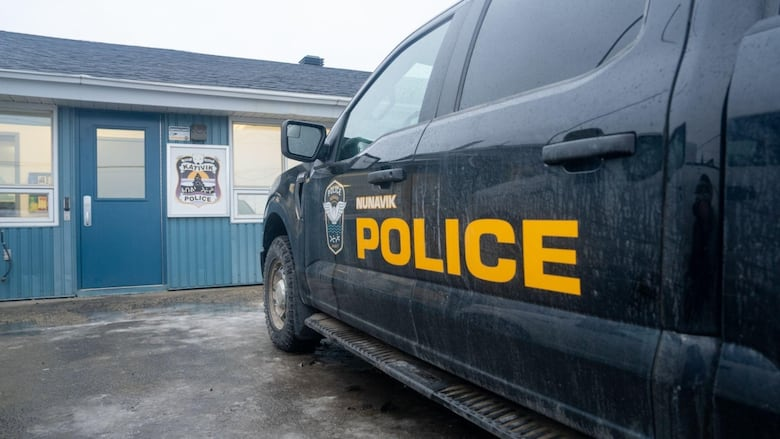
Meanwhile, data from Saqijuq’s 2025 report show some positive results for the organization’s mobile intervention teams. Currently set up in Kuujjuaq and Puvirnituq, those teams pair social workers with police officers to respond to distress calls.
Saqijuq’s figures show around 90 per cent of all calls mobile intervention teams responded to last year did not result in any judicial intervention. The majority of calls were about someone in a suicidal state, family or domestic violence, intoxication and youth at risk.
Whiteley-Tukkiapik says the teams often lean on other members of the community to help someone in need.
“We’re doing more of a community-based approach to traditional social work and I believe that plays a huge part in our success,” he said.
Finding ways towards prevention
Police are often limited to exercising law enforcement when it comes to violence — but Bernier wants to have a greater role in prevention too. He wants NPS to play a bigger part with the Kativik Regional Government on education about alcohol and drugs, partnerships with social services, and crime prevention.
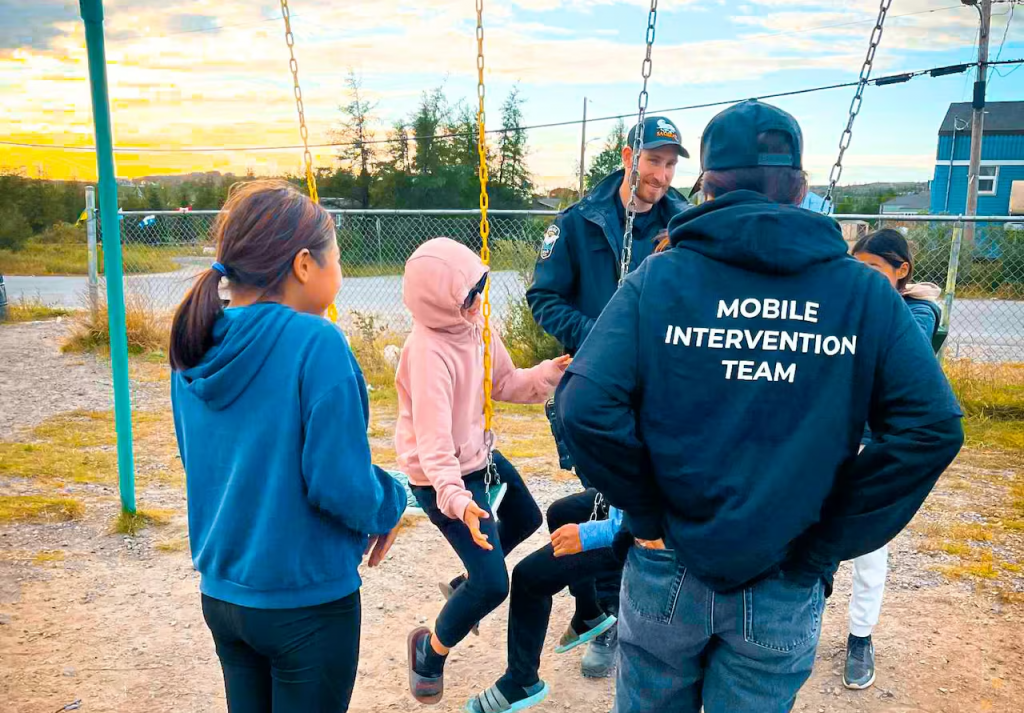
He’s currently looking into doubling the size of the NPS crime prevention teams, which he hopes can bring officers closer to the communities they serve.
“Repressing crime is in our mandate, but we have to be there for prevention initiatives and to educate people moving forward,” he said.
Whiteley-Tukkiapik says he sees authorities taking action, and it helps that communities like Kuujjuaq are rallying behind the cause.
“It gives me hope. We’re not just letting it happen. Now we’re seeing the impact of it and we’re responding accordingly,” he said. “It’s not going to happen overnight, but what we need to do is stay on top of it and push forward.”
Related stories from around the North:
Canada: Nunavut gov’t says no police resources will be used on federal gun buyback program, CBC News
Finland: Police response times up to an hour slower in Arctic Finland, Yle News
United States: Lack of village police leads to hiring cops with criminal records in Alaska: Anchorage Daily News, Alaska Public Media