Ottawa Invests $55 Million in Arctic Infrastructure
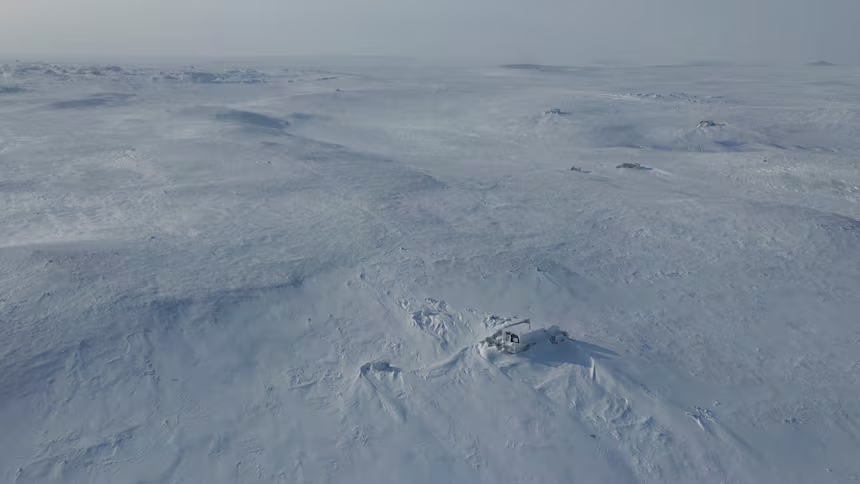
The federal government is providing over $55 million in funding for two major projects in Nunavut.
Sourced from the Spring 2026 Economic Update, this investment aims to secure the critical minerals supply chain, strengthen Canadian sovereignty in the North, and reduce mining operations’ reliance on diesel.
$50 Million for the Grays Bay Megaproject
The largest portion of the funding—a conditional $50-million envelope from the First and Last Mile Fund—has been awarded to the West Kitikmeot Resources Corporation.
This funding will support planning and preparatory work for the Grays Bay Road and Port Project.
“Investments like the Grays Bay Road and Port Project will have a transformative impact on Nunavut,” explained Lori Idlout, Member of Parliament for Nunavut. “By improving access to our region and promoting more sustainable mining practices, we are creating jobs, strengthening communities, and ensuring that Northern development is done in consultation with Inuit, delivering concrete benefits to the people of Nunavut.”
Managed by the Major Projects Management Office since last March, the project includes:
-
The construction of a deep-water port in the Arctic.
-
The development of a 230-kilometre, all-season road.
This new land and sea corridor will connect the region to the national highway network, facilitating access to and transportation of zinc and copper to global markets.
Green Transition: $5 Million for Clean Technology
Minister of Energy and Natural Resources Tim Hodgson also announced a $5-million grant to Quebec-based Glacies Technologies Inc.
This funding will be used to test a low-emission heating and ventilation system at the Goose gold mine site, operated by B2Gold in the western Kitikmeot region.
If the trial proves successful, this alternative technology could replace diesel, reducing both operating costs and the carbon footprint of Northern mining operations.
Economic Context and Sovereignty
According to Ottawa, these investments are a direct response to rising global demand for raw materials and the growing geopolitical importance of Arctic trade routes.
Nunavut MP Lori Idlout emphasized that this development will be carried out in close consultation with Inuit. Specifically, pre-construction phases will rely on Inuit Qaujimajatuqangit (Inuit traditional knowledge), ensuring direct benefits for local employment.
Related stories from around the North:
Canada: Auditor general gives Housing N.W.T. a bad grade, again, CBC News
Finland: Greenland clash left a mark on EU-US relations says Finnish PM, Yle News
Greenland: New Italy Arctic policy adds U.S. Greenland ambitions to growing Arctic competition narrative, Eye on the Arctic
Iceland: NATO chief to Arctic Allies: “We’re all frontline states now,” as Iceland’s role grows, Eye on the Arctic
Sweden: Arctic Municipality in Sweden ups recruitment perks with housing, ski passes, bonuses, Radio Sweden
United States: Greenland ‘Freedom City?’ Rich donors push Trump for a tech hub up north, Reuters