Nunavut’s Family Services pledges changes to keep children in care, in the territory
Sending children and youth in care out of the territory has become a common occurrence in Nunavut, but the territorial government is pledging changes that could reduce that practice.
While numbers can fluctuate, figures from the Department of Family Services show as of June 30, 251 children and youth were in the department’s care, including 61 out of the territory.
There are a range of alternative placements for children who are removed from their families, including in foster care, treatment facilities or staff-supervised group homes.
Across the three Nunavut group homes, the department at the time said there were seven out of 31 placements available.
-
Nunavut gov’t reverses decision to end children’s group home services in Iqaluit
“I do not understand how in the year 2026, 27 years into Nunavut [as its own territory], that we cannot find alternatives for children that are apprehended to stay within their communities or at least stay within their culture,” said Tara Qunngaataq Tootoo Fotheringham, president of the non-profit Amautiit Nunavut Inuit Women’s Association.
Fotheringham said many Inuit have stories of children being taken out of their communities, even if there are extended family willing to care for them.
“[They were] picked up and removed to a completely new family that they didn’t know, and a non-Inuit family,” she said. “Inuit need to stay with Inuit”.
WATCH | Deputy auditor general ‘disappointed’ in Nunavut Child and Family Services fixes:
A new report from the Auditor General of Canada is shedding light on how much work still needs to be done. TJ Dhir has the details.
Clayton Greaves, the deputy minister for Family Services’ wellness division, insists the decision to send children out of Nunavut for care is a last resort.
But he said there are some specialized services that just aren’t available in the territory, which include specialists in psychiatry, behavioural management, developmental and physical needs.
“Oftentimes the decision is made that going south and accessing a wider variety of services is in the best interest of the young person,” Greaves said.
More specialized services, new legislation
Anne Crawford, an Iqaluit-based lawyer and a former director of child welfare when Nunavut was part of the Northwest Territories, doesn’t believe people should just accept that argument, given the large proportion of children and youth sent outside of the territory.
“It’s like saying firefighting is an emergency, so we don’t have to prepare for it,” she said. “The same with the various needs of children. We know those needs are going to exist or they’re going to come up from time to time and we have to plan for it.”
Those needs are big in the territory.
A federal report based on 2022 figures shows the rate of children in out-of-home care in Nunavut is the second highest in the country, after Manitoba.
-
Auditor general ‘disappointed’ by Nunavut’s lack of progress to protect children and youth
Verna Strickland, a former social worker, believes the lack of spaces in foster homes is forcing the department to send children out of the territory, which in turn is because of a lack of trust in transient workers who don’t always understand Inuit culture and communities.
“When you’re not being heard properly, you just don’t feel like you want to do anything for any service provider,” Strickland said.
Greaves acknowledges all that, but he has a plan that he’s committed to implementing by the end of the fiscal year.
Greaves said he’s looking to work on leveraging funding from the federal Inuit Child First Initiative to fund more psychiatry and psychology services for Nunavut children, and he’s working on legislation for the licensing and operations of group homes which the territory currently lacks.
“These are some of the long-term plans that we have as a department to address the needs for young people,” he said.
A ‘men’s agreement’
Crawford said many Nunavummiut often look to Nunavut Tunngavik Inc. (NTI), or other regional Inuit organizations, to be a counterbalance to the territorial government.
But she points out the Nunavut Agreement, the territory’s land claims settlement, doesn’t contain provisions for child welfare.
“The kind of catch word is that the land claim was negotiated by men and it tends to deal with, I guess, what we would call colloquial men’s issues,” she said.
The inclusion of social services delivery in a land claims agreement isn’t unheard of. The James Bay and Northern Quebec Agreement includes provisions for health and social services as well as welfare assistance.
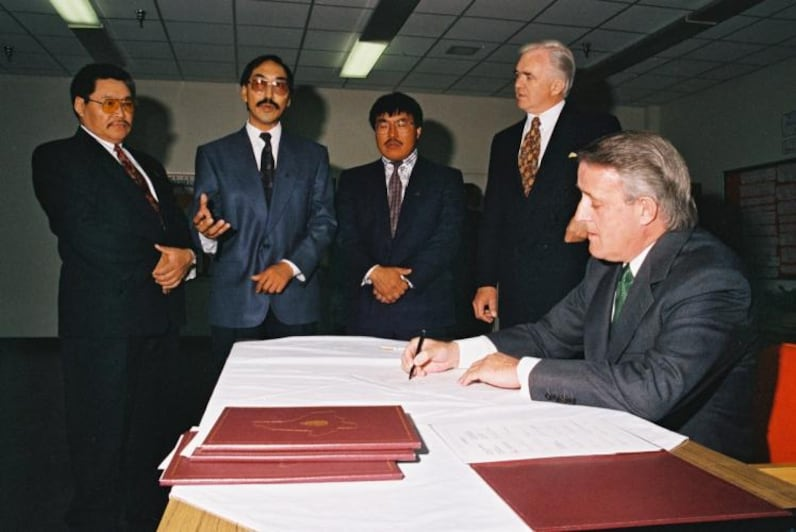
“According to the Nunavut Agreement, children and youth aren’t included,” said Strickland. “They don’t really have a voice, so who is helping them?”
Article 32 of the Nunavut Agreement establishes the right of Inuit “to participate in the development of social and cultural policies.” However, Crawford said that still doesn’t provide NTI the mandate to deliver those services.
Eight children from Nunavut placed in unlicensed group homes in Alberta
“The structure of NTI wasn’t built for dealing with social and family issues like that. So we’re in an unusual place where that counterbalance … isn’t available,” she said.
NTI has not responded to CBC News’ request for comment.
Make your own policies
For Fotheringham, those issues are in the past. Going forward, she sees plenty of opportunities for Inuit organizations to take initiative and create their own policies.
In particular, she wants to see a policy to support Inuit women, who are more likely to have experienced physical or sexual assault by an intimate partner compared to non-Indigenous women.
“I was raised where a man had a certain skill and a woman had a certain skill and together, you needed both in order to create a family and a foundation for survival,” Fotheringham said.
There are other existing legal mechanisms that Crawford believes could shape the way child welfare services are delivered.
In 2019, a federal act affirmed the inherent rights of First Nations, Inuit and Métis governments to assert jurisdiction over welfare for Indigenous children. It recognizes the harms of intergenerational trauma and colonial policies that cause Indigenous children to be overrepresented in foster care.
“There would have to be an organization in Nunavut or in the regions that would decide to pick up that mandate,” Crawford said. “That would be very interesting because we would then have a federal mandate.”
While that legislation doesn’t necessarily change the way the territorial government operates, Greaves said the department uses it as a guide for culturally-safe care.