Warming climate could mean more harmful bacteria in northern water sources, study says
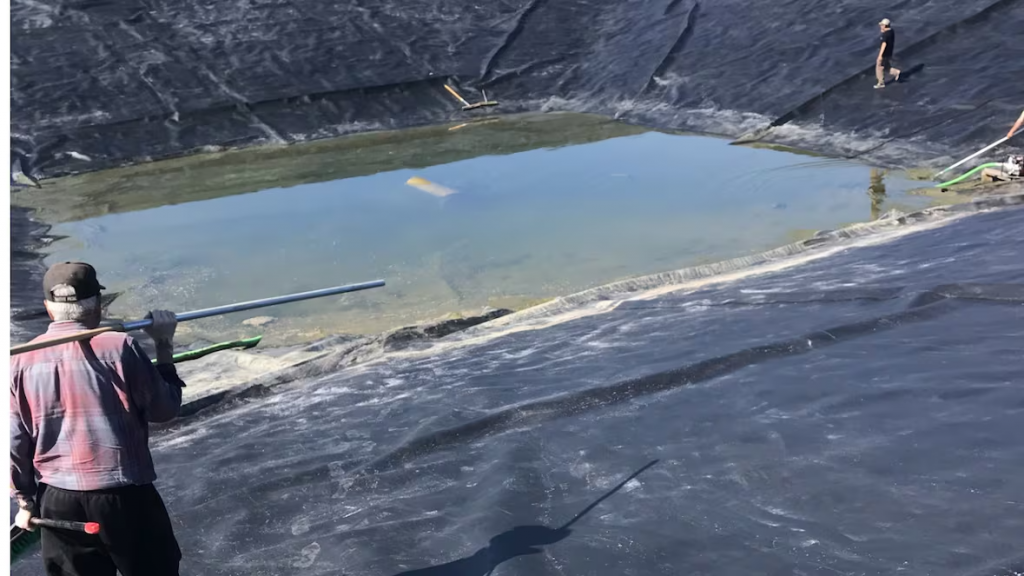
Researchers found cyanobacteria in Sambaa K’e First Nation’s drinking water source in 2023 and 2024
A recent study details the first detected case of a harmful bacteria in one N.W.T. community’s drinking water source. It warns that as the territory warms it could become a more common occurrence.
Researchers with York University published the study in the journal Facets in June. It details the 2023 and 2024 discovery of something called cyanobacteria in Sambaa K’e First Nation’s drinking water reservoir, which supplies the community’s water treatment plant.
Cyanobacteria resemble paint, pea-soup, or globs in the water, said the lead researcher Rebecca Gasman.
She said exposure can cause sickness like vomiting, rash, fever, skin irritation, and headaches.
Gasman said boil water advisories don’t help in these cases since boiling the water actually releases the toxins.
In 2023, when Sambaa K’e residents returned home from a wildfire evacuation they noticed an algal bloom, but believed it was related to fire retardant, Ruby Jumbo, the band manager for the First Nation, said.
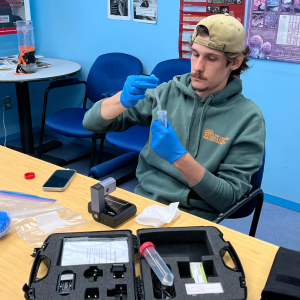
The next year residents found another algal bloom. The community reached out to researchers and that’s when they found it was cyanobacteria. Community members also began complaining about the water smelling and tasting bad, Jumbo said.
Jumbo said the community’s drinking water reservoir has since been drained, cleaned, flushed and refilled.
While these two discoveries of cyanobacteria in the First Nation’s reservoir have been dealt with, researchers are warning that bacterial blooms like this could become more prevalent as the N.W.T. warms.
According to the report, the N.W.T. is warming at four times the global rate.
“Climate change is making this an emerging issue in the Northwest Territories. Historically it was either too cold or there wasn’t the same influx of nutrients,” Gasman said.
“Under climate change and the changes that are occurring in the Canadian North [cyanobacteria blooms] are expected to become more common.”
The report said that more research is necessary to understand the increased risk these blooms pose to existing drinking water infrastructure and public health, especially in Indigenous and remote communities.
Michael McPhee, the lands and protected area advisor for Sambaa K’e First Nation, said community leadership is already collaborating with researchers and the government of the Northwest Territories to tackle these issues.
He said the community recently received funding from the federal government’s Climate Change and Health Adaptation Program.
McPhee said the community is using the money to work with the territorial government to create a plan for when cyanobacteria blooms are reported. He said they’re also looking at how to modify the water treatment plant in Sambaa K’e to be “more resilient to climate change and algal blooms in the future.”
McPhee added that a solution could include UV-shading to block sunlight from reaching the reservoir, as cyanobacteria is photosynthetic and thrives in warm, sunlit areas.
He said more support and resources for water treatment officers could be another way to address the issue.
According to Chirag Rohit, the chief environmental health officer for the government of the Northwest Territories, it’s “a very solvable problem.”
He said they’re in the process of developing “multiple options” across the government.
That could include changing the water line between the reservoir and the water treatment plant. He said they are currently exploring engineering and technical projects.
Related stories from around the North:
Canada: Record warmth, regional contrasts, mark 2025 in Canada’s Arctic: report, Eye on the Arctic
Finland: Unusually balmy June comes on tail of Finland’s record spring warmth, Eye on the Arctic
Norway: Weather above normal for 18 consecutive months, The Independent Barents Observer