
Construction on long-awaited school underway in Nunavik community of Quaqtaq
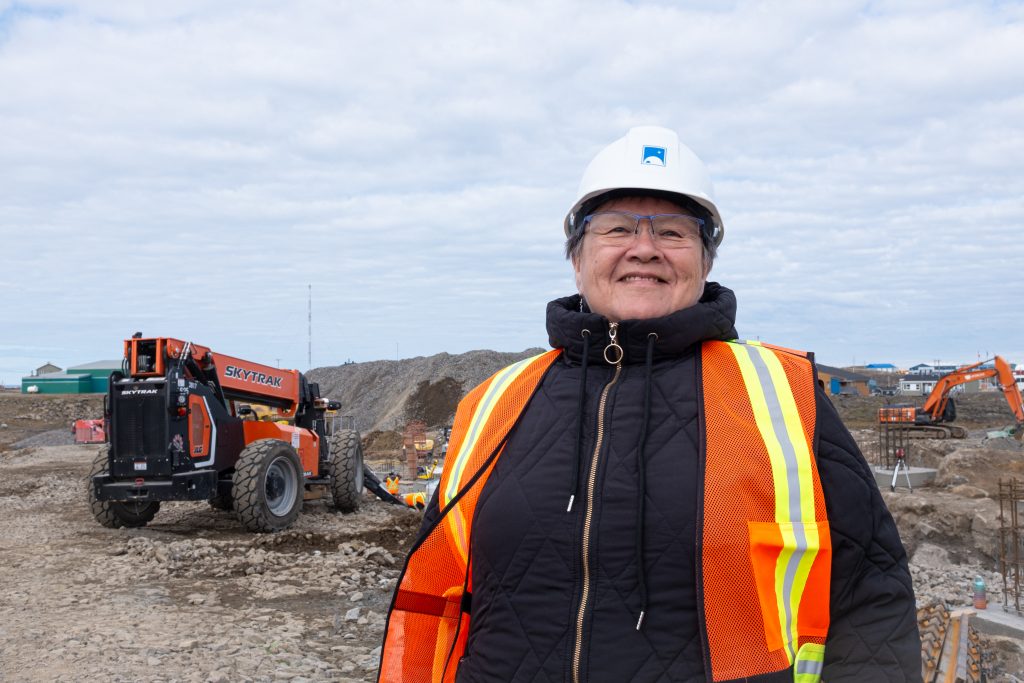
Sarah Aloupa, President, Kativik Ilisarniliriniq, during the new school groundbreaking ceremony in Quaqtaq in September 2026. (Jade Duchesneau Bernier/ Kativik Ilisarniliriniq)

The Nunavik community of Quaqtaq is breathing a sigh of relief that construction has got underway on a new school.

“It’s been a long road to get here,” said Sarah Aloupa, president of Kativik Ilisarniliriniq, Nunavik’s school board. “I’m very excited and the employees are very happy and anxious to get the new school.”

Quaqtaq is a community of approximately 450 people.

The Isummasaqvik school was built in 1971, intended to operate as the village’s French-language school. But over time, it came to accommodate the village’s entire student population, which now stands at 117.
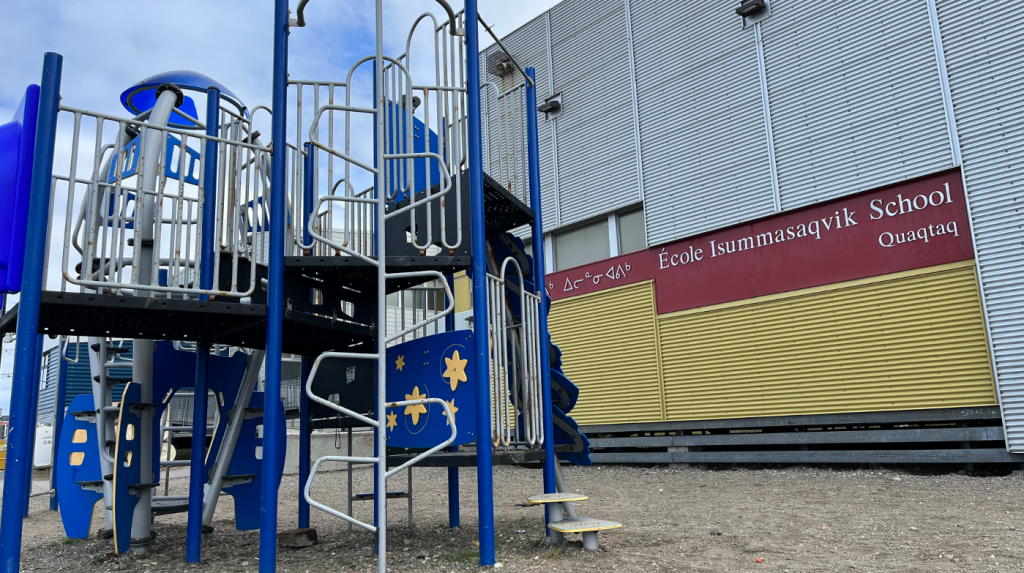
The Isummasaqvik school building in Quaqtaq is no longer big enough for the growing student population. (Eilís Quinn/Eye on the Arctic)

The building has been plagued by ongoing repair issues and overcrowding, despite some extensions, requiring difficult decisions.

“We used to have a library, but now we’re using it as a classroom and also for emergency daycare,” Aloupa said. “The janitorial room is also being used for special needs education. There’s just no more space.”

The physical location of the school—next to a steep hill where snow easily builds up—has also proven a problem, preventing access by municipal services.

“We end up closing the school more than once a year during the wintertime because water and delivery services can’t get to the area,” Aloupa said.

The new building will accommodate up to 250 students and be built in a different part of town, with a direct hook up to the water plant.
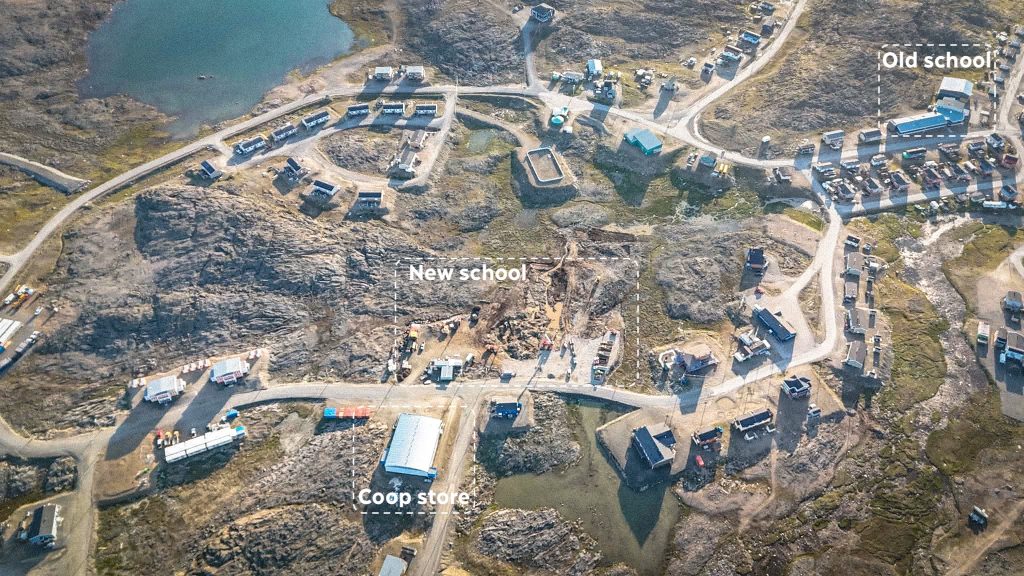
Drone view with annotation showing the construction site, the old school, and the Coop store. (Abel Groulx/Courtesy Kativik Ilisarniliriniq)

MLS + Jodoin Lamarre Pratte are the architects behind the new building’s design, inspired by an umiaq, a traditional Inuit boat.

“It will be culturally and modernly designed, and with culturally appropriate classrooms,”  Aloupa said.

“That’s very important for the design.”
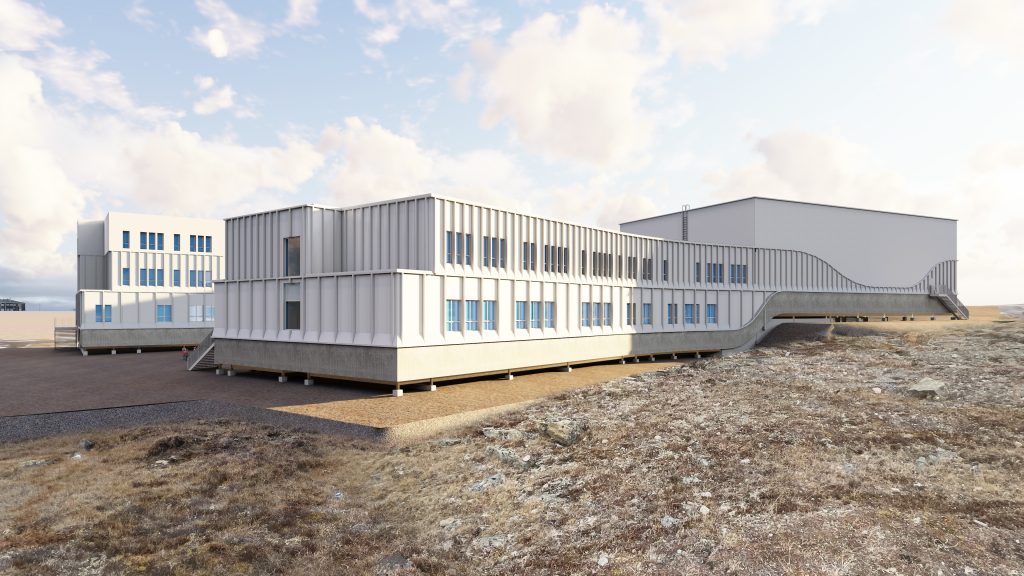
The maquette for the new Isummasaqvik School. (MLS + Jodoin Lamarre Pratte architectes en consortium)

The new school is scheduled to open in 2030 and current plans are to keep the Isummasaqvik name.

The old school building will be renovated and become an adult vocational training centre, Aloupa said. 

Comments, tips or story ideas? Contact Eilís at eilis.quinn(at)cbc.ca

Related stories from around the North: 

Canada: Nunavik eyes post-secondary education rooted in Inuit culture and offering Western credentials, Eye on the Arctic

Russia: More than 75% of schools in Murmansk need major repair, The Independent Barents Observer

Sweden: Northern Swedish municipality of Luleå bans mobile phones in schools, Radio Sweden

Eilís Quinn, Eye on the Arctic

Eilís Quinn is an award-winning journalist and manages Radio Canada International’s Eye on the Arctic news cooperation project. Eilís has reported from the Arctic regions of all eight circumpolar countries and has produced numerous documentary and multimedia series about climate change and the issues facing Indigenous peoples in the North.

Her investigative report "Death in the Arctic: A community grieves, a father fights for change," about the murder of Robert Adams, a 19-year-old Inuk man from Arctic Quebec, received the silver medal for “Best Investigative Article or Series” at the 2019 Canadian Online Publishing Awards. The project also received an honourable mention for excellence in reporting on trauma at the 2019 Dart Awards in New York City.

Her report “The Arctic Railway: Building a future or destroying a culture?” on the impact a multi-billion euro infrastructure project would have on Indigenous communities in Arctic Europe was a finalist at the 2019 Canadian Association of Journalists award in the online investigative category.

Her multimedia project on the health challenges in the Canadian Arctic, "Bridging the Divide," was a finalist at the 2012 Webby Awards.

Her work on climate change in the Arctic has also been featured on the TV science program Découverte, as well as Le Téléjournal, the French-Language CBC’s flagship news cast.

Eilís has worked for media organizations in Canada and the United States and as a TV host for the Discovery/BBC Worldwide series "Best in China."

Do you want to report an error or a typo? Click here!

Leave a Reply

Note: By submitting your comments, you acknowledge that Radio Canada International has the right to reproduce, broadcast and publicize those comments or any part thereof in any manner whatsoever. Radio Canada International does not endorse any of the views posted. Your comments will be pre-moderated and published if they meet netiquette guidelines.
Netiquette »

Your email address will not be published. Required fields are marked *