N.W.T. finance minister says no emergency relief from fuel price shock, but pushes Ottawa for support
Territorial gov’t not planning to slash fuel tax
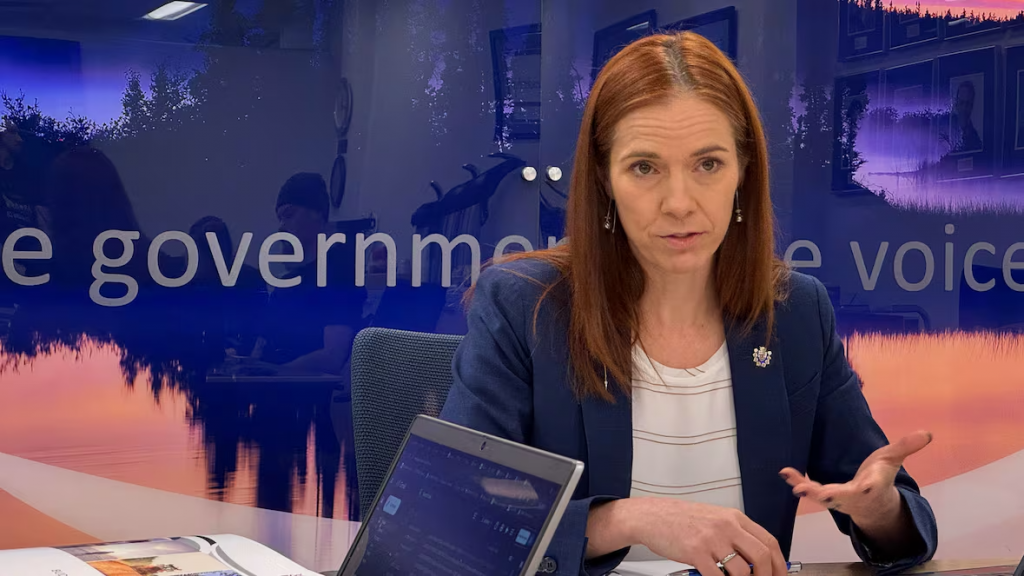
Northwest Territories Finance Minister Caroline Wawzonek is not committing to any new relief for residents facing an impending winter fuel price shock, but promised she would advocate for support from the federal government.
Wawzonek was pressed on Tuesday by a number of MLAs in the Legislative Assembly who asked if she would suspend the territorial tax on gas and diesel for vehicles, or take emergency measures to provide subsidies to those who aren’t already getting support for home heating fuel costs.
The cost of fuel has surged across the board since the United States and Israel launched their war on Iran earlier this year, resulting in a blockade of the Strait of Hormuz – a critical choke point for global oil shipments. Reciprocal tariffs in the trade war between the U.S. and Canada have also contributed to a sharply rising cost of living across the country.
Range Lake MLA Kieron Testart pointed to actions taken by other provinces and the federal government to cut fuel prices and asked if the N.W.T. would do the same by lowering the territorial fuel tax.
Testart and Yellowknife Centre MLA Robert Hawkins hosted a town hall last week where residents voiced concerns about the cost of keeping their homes heated during the territory’s notoriously harsh winters.
Wawzonek rejected Testart’s suggestion, saying there are “not any proposals underway to remove the $15 million estimated we get out of [fuel] taxes,” adding that such a move would only save $8 on an average tank.
Frame Lake MLA Julian Morse asked Wawzonek if she would commit to emergency subsidies for low-income residents not already covered by existing programs to help ease the burden of home heating fuel costs.
Wawzonek said that’s not currently under consideration. She stressed the territory is focused on addressing structural issues like the North’s reliance on diesel for power generation, the high cost of living and supporting the most vulnerable – those living in public housing and the elderly.
When it comes to electricity, she said it’s likely the government would need to step into manage costs due to low water levels impacting the hydro system, which results in diesel being used to fill the gap. But even with subsidization, Wawzonek said “there are no illusions here that there’s going to be some high costs that we’re facing.”
Minister presses for federal support
Wawzonek made good on her promise to press the federal government for support earlier in the day, testifying virtually before the federal standing committee on Indigenous and Northern Affairs about the unique affordability challenges in the North.
Wawzonek told the committee living costs in Yellowknife are 23 per cent higher compared to a city like Edmonton, and the costs are even higher in communities outside of the N.W.T. capital.
Energy is the biggest driver of this discrepancy, she said, with the cost of transport and heat double the national average.
According to Wawzonek, the N.W.T. government provides over $18 million in direct annual subsidies to help stabilize energy costs for residents.
Wawzonek pointed to a recent $2-billion push by the federal government to support the installation of home heat pumps, which she said is good for the rest of Canada, but would not work in the North due to the extremely cold winters.
“Don’t just announce things in a large scale without thinking through the impacts to 40 per cent of Canada’s territory,” she said.
Wawzonek said there are other measures that are better suited, including biomass, wood stoves and liquefied natural gas.
Related stories from around the North:
Canada: Yukon government offers incentives to switch to fossil fuels and rebates on electric bills, CBC News
Russia: As gasoline crisis worsens, Russia boosts fuel imports through Murmansk, The Independent Barents Observer