How many military bases are there in the Arctic? Here are the facts
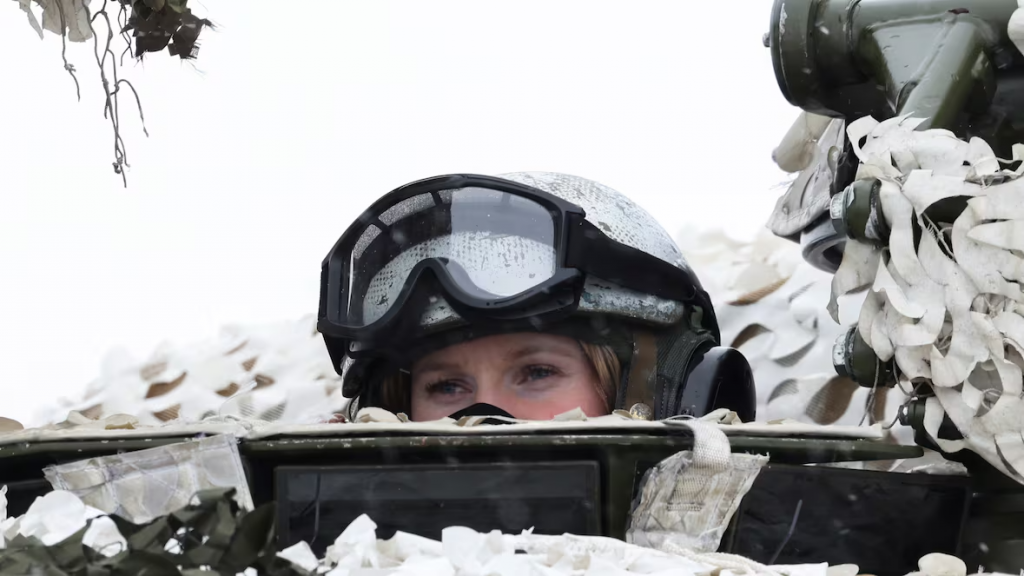
Canada’s presence is considerably smaller than other players
There are dozens of staffed military bases and facilities around the Arctic, and hundreds more that include radar installations and other support equipment.
The military buildup at the top of the world began in the Second World War, and then receded as the Cold War came to and end. But in the past ten years, with climate change accelerating and Russia waging war in Europe, the Arctic has been re-militarizing.
A huge amount of Arctic territory belongs to Canada, but its military presence pales in comparison to other Arctic nations.
Here’s what the military picture looks like:
Canada
There are currently eight staffed military sites in Canada’s Arctic, the largest of which is in Yellowknife. There are also facilities in Whitehorse, Iqaluit, Inuvik and a few other communities. Alert, at the top of Ellesmere Island, is the northernmost military facility in the world. There are about 55 people there at any given time, although no one lives at Alert permanently.
The Canadian Coast Guard is present in the Arctic, but to say its coverage is thin would be an understatement. Its northern headquarters is in Yellowknife, which is not on the coast, and it employs a total of only 100 full-time people across the Arctic. This despite the fact that the Arctic has 162,000 kilometres of coastline, 60 per cent of Canada’s total.
Canada also operates 47 radar sites that make up the North Warning System, but those are not staffed.
Greenland
There are only three military bases in the territory, the biggest of which is the U.S. Pituffik Space Base (formerly known as Thule Air Base). It operates the world’s most northern deep water port, which is frozen in ice nine months of the year. It also operates an air field year round.
There are also smaller facilities — in the capital of Nuuk, and on the south coast — operated by the Danish military.
During the Cold War, the U.S. had as many as 13 military bases in Greenland. Under a treaty with Denmark signed in 1951, there is nothing stopping the U.S. from re-establishing bases. That agreement made it clear that Denmark has sovereignty over Greenland, but essentially gave the U.S. a free hand to have as big a military presence as it wishes.
The U.S.
The only part of the U.S. that’s in the Arctic is Alaska, and that’s where all ten of its domestic northern military facilities are. Some are air bases that host F-35 and F-22 fighter jets. Others house troops.
Fort Greely operates interceptor missiles, meant to shoot down any incoming missiles from a hostile nation, such as North Korea.
The U.S. can send submarines to the Arctic year round, but submarines tend to be more active farther south.
Russia
The biggest military player in the Arctic is definitely Russia. Currently there are estimated to be between 30 and 40 staffed military facilities in the country’s north. Some are scattered across Russia’s vast Arctic coastline, including in the far east near Alaska.
But the bulk of Russia’s Arctic forces are concentrated in the Kola Peninsula, close to the border with Norway and Finland along the shores of the Barents Sea. Some analysts estimate there could be more military firepower there than anywhere else on earth. Russia has at least three air bases that host fighter jets, surveillance and transport aircraft. There are also numerous bases that can host troops.
Russia’s northern naval fleet is also based in Kola, which includes dozens of surface ships, submarines, icebreakers and other vessels.
Norway
Norway is one of the few NATO members that share a land border with Russia, and has always been wary of its eastern neighbour — the theory being that if Norway doesn’t demonstrate its military power in the Arctic, Moscow might try to fill the void.
Because of this, Norway has 15 military facilities across its relatively small Arctic territory. They include bases for troops, its air force and coast guard.
Norway also has sovereignty over the Svalbard Islands, which extend almost as far north as Canada’s Ellesmere Island and Greenland. But under a 1920 treaty, those islands are demilitarized.
Related stories from around the North:
Canada: Carney says he spoke with China’s Xi about Greenland, Arctic sovereignty, The Canadian Press
Denmark: EU chief promises ‘unflinching’ response to new tariffs as Trump trolls and threatens on social media, Reuters
Finland: Finland not sending more troops to Greenland, Yle News
Greenland: New Italy Arctic policy adds U.S. Greenland ambitions to growing Arctic competition narrative, Eye on the Arctic
Iceland: NATO chief to Arctic Allies: “We’re all frontline states now,” as Iceland’s role grows, Eye on the Arctic
Norway: “We want to be Europe’s most integrated region in terms of defence”, The Independent Barents Observer
Russia: Russia claims first-ever North Pole aerial refuelling, TASS reports, Reuters
Sweden: Swedish military intelligence on the great power rivalry over Greenland, Radio Sweden
United States: EU to hold emergency summit on Trump’s tariff threat over Greenland, Reuters