In a more competitive Arctic, Canada’s influence hinges on investment

A major Arctic conference this month heard European foreign ministers deliver a blunt message that the old era of Arctic cooperation is over.
But rather than something for Canada to fear, one analyst says the shift could present an opportunity, if Ottawa follows through on Arctic investments.
A more assertive Europe
The annual Arctic Frontiers conference brings together Indigenous leaders, scientists and policymakers to discuss issues shaping the circumpolar North. This year, however, European ministers and senior officials emphasized that the region is no longer defined primarily by cooperation, but increasingly by security competition.
“We want to bring a stronger understanding, a stronger focus, on the more hard security issues of the Arctic,” Norway’s Foreign Minister Espen Barth Eide said during the conference.
Eide also pointed to Finland and Sweden’s recent NATO membership as part of that shift, saying the alliance now stretches in a continuous line from the Arctic Ocean to the Baltic Sea along Russia’s border.
Updated EU Arctic policy to come
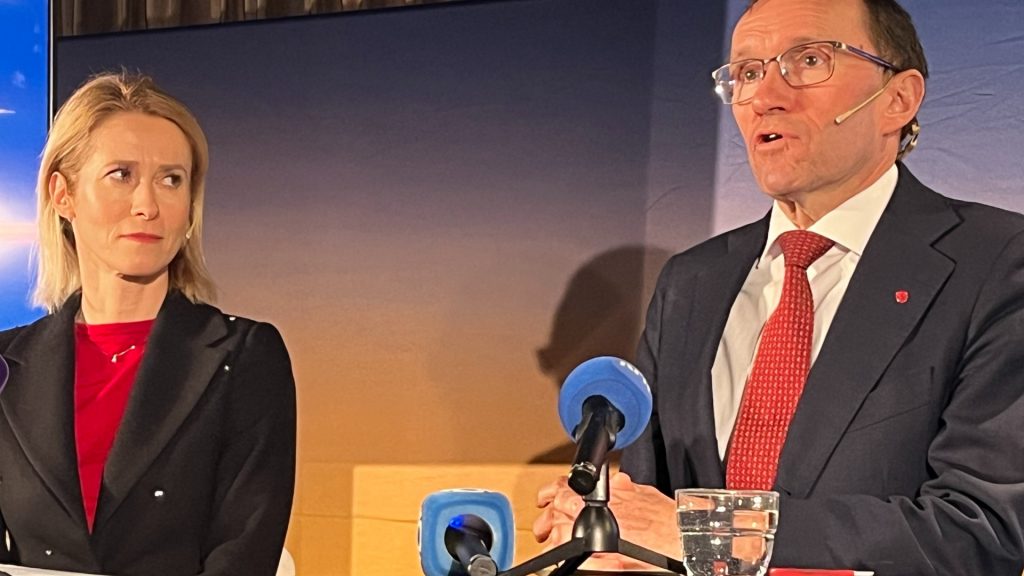
European Union foreign policy chief Kaja Kallas said Brussels is preparing an updated Arctic strategy to reflect what she described as a more volatile geopolitical environment, shaped by Russia’s ongoing war in Ukraine and tensions surrounding U.S. rhetoric about controlling Greenland.
“Together with member states, we are updating our EU Arctic strategy,” Kallas told reporters. “This will reflect the changed security landscape and have Greenland as a core pillar to keep the region safe.”
Opportunity for Canada
While some observers see the Arctic hardening into competing blocs — with Europe asserting itself, Washington charting its own course and Russia increasingly isolated — Alex Dalziel, an Arctic security expert at the Macdonald-Laurier Institute, says the shift does not sideline Canada.
Instead, he argues, it could boost Ottawa’s role.
“I don’t think I’ve ever been at an international event where Canada came up so often,” Dalziel, who attended the Arctic Frontiers conference, said. “There’s opportunity there.”

Dalziel pointed to Prime Minister Mark Carney’s recent speech in Davos, which called on middle powers to work more closely together, including on defence, as a message that was frequently referenced throughout the conference.
But that opportunity depends on credibility, he cautioned.
“The Arctic is a particular focus of recent Canadian strategic documents, the defence strategy and the Arctic foreign policy and there’s a real strength to that,” he said. “But big words haven’t always led to big actions and I think that’s the challenge right now.”
As Nordic governments harden their security posture amid growing concern about Russia, long-term Canadian commitments to security and infrastructure in the North would help demonstrate that Ottawa is a credible and reliable Arctic partner, Dalziel said.
“Canada making investments will matter and will have resonance in Europe,” he said.
“Lots of people want to work with us, but it’s about substantive, real investment on a number of fronts and having a sophisticated strategy that’s actually resourced to be implemented. That’s what I’ll be watching for now, follow-through from the Canadian government.”
Comments, tips or story ideas? Contact Eilís at eilis.quinn(at)cbc.ca
Related stories from around the North:
Canada: Infrastructure, security focus at Arctic Summit in Yukon, CBC News
Denmark: Denmark calls an early election following tense US-Greenland standoff, The Associated Press
Finland: Trump’s Greenland threats cast shadow on Finland’s icebreaker deals, Yle News
Greenland: Greenland PM declines Trump’s hospital ship, urges him to stop ‘random outbursts’ online, Reuters
Iceland: NATO chief to Arctic Allies: “We’re all frontline states now,” as Iceland’s role grows, Eye on the Arctic
Norway: The UK doubles number of troops in Norway, The Independent Barents Observer
Russia: Russia claims first-ever North Pole aerial refuelling, TASS reports, Reuters
Sweden: Swedish military intelligence on the great power rivalry over Greenland, Radio Sweden
United States: Rubio says technical talks with Denmark, Greenland officials over Arctic security have begun, The Associated Press