Arctic militarization could lead to ‘unintentional incidents’ in region, Russia warns
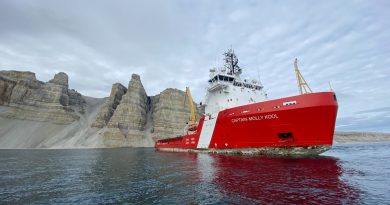
Militarization of the Arctic by Canada and its allies could lead to “incidents” and possible military confrontations, says a Russian government official.
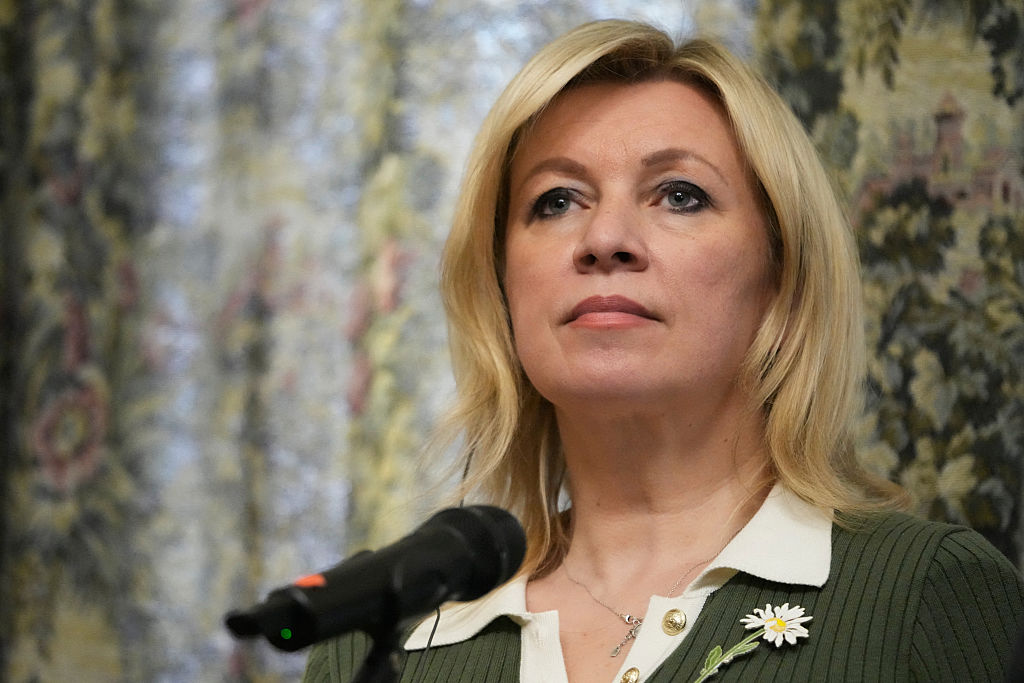
“Speaking of the politics of the West in the far North: they are simply creating security threats for our country,” said Maria Zakharova, spokesperson for Russia’s Ministry of Foreign Affairs, in Russian at a news conference in March.
Those “security threats” increase the risks of “unintentional incidents, which in case of a negative scenario could lead to a beginning of a military confrontation.”
The Arctic has been considered a region of low international tensions for decades. In 1987, Soviet leader Mikhail Gorbachev described the Arctic as a “peace and co-operation zone” – a sentiment later shared by all eight Arctic nations: Canada, United States, Russia, Norway, Denmark, Finland, Iceland and Sweden.
But things have changed, and Zakharova’s statement is just one of the latest signs of that, says Alison LeClaire, Canada’s former ambassador to Russia.
The statement was Russia’s “signal” that it wants to be taken into account as other Arctic nations build up their military capacities in the North, she said.
“Just remember, as you have all of these conversations about what you’re doing in the Arctic, that we are watching and we are listening, and it’s not a really a great idea to leave us out of the conversation,” LeClaire said, describing what she believes Russia’s message is.

In the meantime, Canada is continuing to “monitor developments and take steps to deter threats to allied security,” said Thida Ith, spokesperson for Global Affairs Canada, in an emailed response to Zakharova’s statement.
In the years since Russia invaded Ukraine in 2022, Arctic nations including Canada have realized the need to increase their military presence in the region.
“The Arctic is no longer a low-tension region,” said then-foreign affairs minister Mélanie Joly in 2024 when https://nunatsiaq.com/stories/article/new-policy-represents-shift-in-canadas-role-in-arctic-foreign-minister/ announcing the federal government’s $34.7-million Arctic Foreign Policy.
“Guardrails that prevent conflict are increasingly under immense strain.”
Since then, the federal government has announced billions of dollars in Arctic defence spending, including $2.7 billion for seven Arctic operational support hubs and nodes, $32 billion for upgrades to the air force’s northern forward operating locations, and $7 billion for an over-the-horizon.
Russia and China pose the most significant threat to Canada’s interests in the Arctic, says Canadian Armed Forces Maj.-Gen. Michael Wright.
Despite that, “the threat of a Russian incursion into Canada’s Arctic is low,” he said in a Senate report titled Arctic Security Under Threat, published in June 2023
LeClaire agrees.
“I think it’s important to understand that for Russia the current rules in the Arctic really work,” she said.

Over the years, Russia has followed conventions and regulations governing the Arctic. The current order has allowed Russia to achieve its economic and military goals in the region, so it wouldn’t want that to change, Leclaire said.
From 2014 to 2019, Russia established 14 airfields, six military bases, refurbished 16 Soviet-era deepwater ports, and established 10 border posts in the Arctic according to the Arctic Institute, a U.S.-based think tank.
Russia’s intelligence services have engaged in “foreign interference activities” in Canada’s Arctic, according to a 2024 report from CSIS, Canada’s spy agency.
The report didn’t specify what those activities are, but said the agency is working to “counter threats posed by the Russian Federation towards Canada’s Arctic sovereignty.”
All that could potentially lead to the kind of “unintentional incidents” that Zakharova was talking about, LeClaire said.
Canada’s former ambassador to Russia, Alison LeClaire, says a military confrontation between Canada and Russia in the Arctic is unlikely. (Photo courtesy of Government of Canada)
“If you have more military traffic in a zone, you have a higher risk of those assets misunderstanding one another,” she said.
If such incidents arise, they would come at a time when Canada and Russia have largely ended their “channels of communication” that could have helped to de-escalate the situation, she said.
“But I don’t think Russia presents a physical threat to Canada in the Arctic,” LeClaire said.
“I know it’s a view out there – it doesn’t make any sense to me. It is too important to Russia to have peace and stability in the Arctic for them to disrupt that.”
Related stories from around the North:
Canada: Analysis—Inside NATO’s race to secure the Arctic, CBC News
Greenland: Greenland prime minister rebuffs Trump remarks as NATO tensions rise, CBC News
Norway: Norwegian police move training north as Russia eyes body-snatching law, The Independent Barents Observer
Russia: Russia flexes muscles near NATO’s northern flank ahead of Cold Response exercise, The Independent Barents Observer