Nunavik joins Indigenous push for banishment of traffickers

Leaders in Nunavik are exploring the idea of banishment as a way to stop the flow of drugs and alcohol into their communities.
Banishment is a historical practice that a growing number of Indigenous communities have been bringing back.
Pita Aatami, president of Makivvik which represents Inuit in Nunavik, says the policy, if implemented, would largely target non-Nunavik residents bringing in contrabands. He says substance use is “killing our people.”
“We want to make it clear to everyone in Canada that we are welcoming, but we’re not welcoming people that are there to destroy people’s lives by selling their drugs.”
Most southerners working in Nunavik have housing tied to their contracts, so changes to employment policy could be one avenue for implementing such a policy. Another is through the landholding corporations which manage Inuit-owned land.
Banishment isn’t explicitly addressed in the James Bay Northern Quebec Agreement, so Aatami says Makivvik is exploring the legality of the practice, including how it fits with the Canadian Charter of Rights.
But he argues that community members have a right to feel safe — and banishment of certain people is historically a practice used by Inuit.
“There should also be laws put in place to protect from these kinds of people that in some cases have more rights than the victim,” he said.
Laws ‘not working for our communities’
In 2020, the Mississauga First Nation in Ontario banished a woman who, according to court documents, was alleged to be a drug dealer.
She was later convicted for failing to comply with the eviction order. It was a historic win for Chief Brent Niganobe, who said he fought to have his community’s laws recognized by the courts.
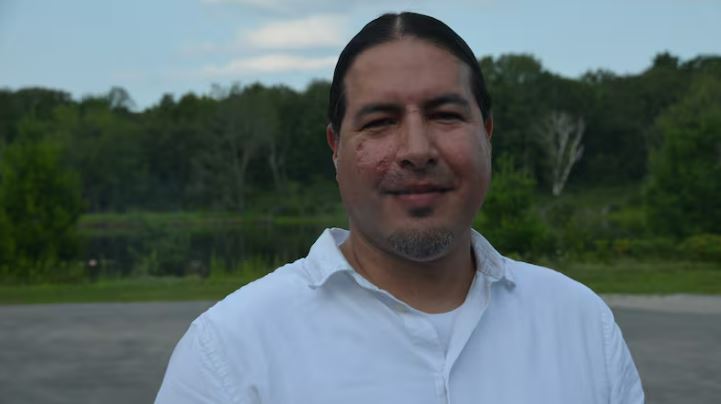
“The laws in place right now are not working for our communities,” he said. “We’re slowly practicing our sovereignty, which we never gave up in our right to govern ourselves.”
He says there are cases of people convicted of dealing drugs who are released, or do not serve time behind bars, and continue to be a danger to communities.
There are provisions to allow communities to banish people under federal legislation, in the Indian Act and First Nations Land Management Act.
Even then, Niganobe says the Canadian legal system often fails to recognize those rights.
“Any Canadian municipality can enforce bylaws,” Niganobe said. “We don’t have those mechanisms so we have to think outside the box.”
Banishment must be fair
Banishment doesn’t mean kicking people out as they please. Niganobe says there are procedures to follow and it’s based on evidence.
Marc Gibson, an Indigenous and constitutional rights lawyer, says the biggest concern is ensuring there is a fair process, and there have been cases where that’s been challenged.
He’s not as worried about challenges to the Canadian Charter of Rights, especially when it involves somebody who is not from the community.
“They don’t have any right to be there. Removing them from that community isn’t something that engages any of their rights other than the right to be treated fairly as part of the process,” he said.
But the test of fairness is higher for banishing someone from the community.
“You don’t just have to be fair in terms of making sure they understand the process … You have to consider that they have a right to be there, that you might be separating them from family members, from their residence, from their job,” he said.
Regardless, banishment alone won’t solve the flow of drugs. Gibson says there has to be a focus on the victims of drug trafficking, as well as the need for more education and targeted health campaigns.
“That’s sort of the low-hanging fruit [to say], ‘let’s remove the people who just don’t belong here,’” he said. “But then you still have to think, what about the people that are already here, the people who have already been harmed, the drugs that are already in the community?”
A report written by Samuel Wat
Related stories from around the North:
Canada: Nunavik and Montreal police join forces after reported security threats to Inuit community, Eye on the Arctic
Finland: Police response times up to an hour slower in Arctic Finland, Yle News
United States: Lack of village police leads to hiring cops with criminal records in Alaska: Anchorage Daily News, Alaska Public Media