Growing population of beavers affecting traditional lands in Arctic

By Bianca McKeown
New research shows how the animals have become more common in the North in recent years
Growing up, Kevin Arey says it used to be a “treat” seeing beavers in the Inuvialuit region. Now, not so much.
“They’re everywhere,” he said. “You see too many of them.”
Arey is an Imaryuk Monitor, a member of a community guardian program whose job is to protect wildlife and land along the N.W.T.’s Inuvik-Tuktoyaktuk Highway.
He says the beaver population in the area has been steadily growing and he’s even seen one in salt water — something uncommon for the typically freshwater creatures.
“I’ve never seen a beaver before like that swim in the harbour in Shingle Point in my life. So, that was a first for me.”
Arey said the beavers and the dams they make are affecting and changing traditional travelling routes.
“What we do for a living, our fishing, our hunting, it’s making obstructions, moving water, making the rivers act differently,” he said. “We live this, we’re here, we do this traveling on the land. We live it, we see it, it’s noticeable.”
Beaver expansion reflected in data
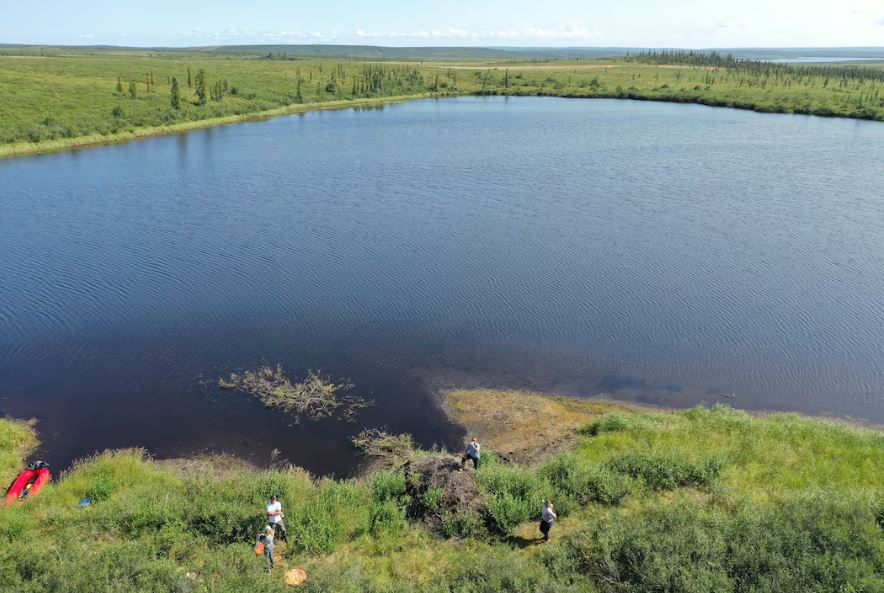
This reality that Arey sees every day is now reflected in a new study in the journal Ecosphere that shows new evidence for beaver expansion in the Arctic as early as 2008 using satellite imaging and studying vegetation.
Helen Wheeler, a lead researcher in the study, says there are several reasons why beavers are finding a home in the Arctic including climate change and shrubification, which is an increase in woody canopy-forming shrubs that beavers use to build dams.
Wheeler says examining shrub rings is helpful because, like tree rings, they can help researchers see and date when beavers were in the region.
“To kind of get a window into the past, in terms of when were beavers at this location? Were they permanently there or were they just there on and off?” Wheeler said.

The study also looked at and compared satellite imaging of surface water year to year to see if there were any abrupt changes that indicated beavers had created dams and affected waterways.
“Beavers backing up a lake or creating an increase in the amount of water that’s holding back with the dam,” Wheeler said. “This can actually be viewed from satellites.”
She says beaver dams can block important waterways for travel and cause impacts to permafrost which could contribute to lake drainage. She says community members also talk about dams creating overflow, which is when there is water on top of the ice, and how that causes problems for travelling.
Arey says the beaver population is growing in the region because very few people hunt or trap the animals, or use the fur in any way.
“It’s not feasible for people to go and trap and hunt these things because there’s no market for it. It’s not worth the time and money to utilize beaver,” he said.
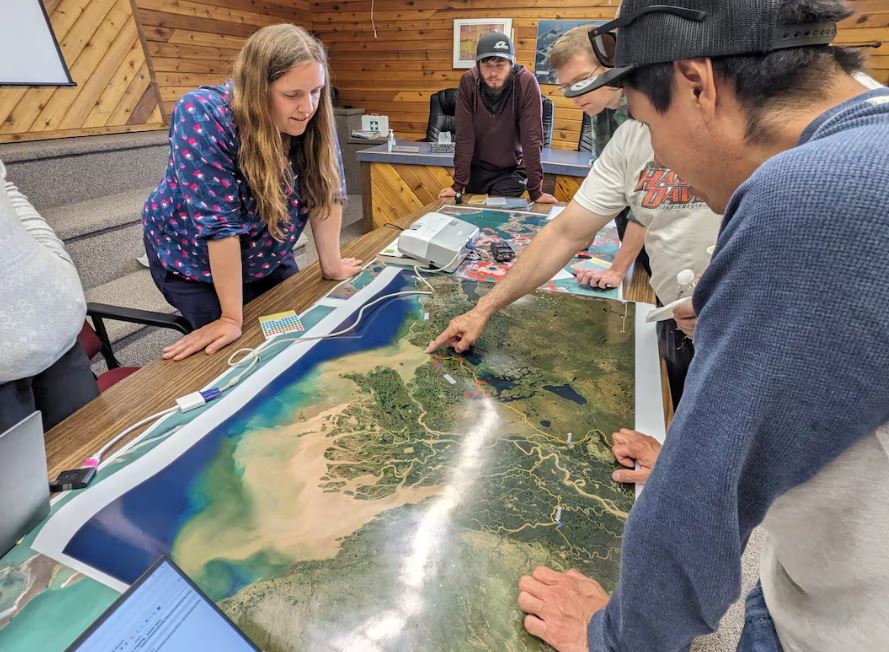
Arey says the growing beaver population is an issue that needs to be addressed and data collection can help inform solutions. But he says he’d like to see the Inuvialuit Settlement Area and the Gwich’in Settlement Area work together to preserve traditional lands for the next generation.
“We could collect data for ever and ever and ever, but collecting data does not change or fix our problem, right?” he said.
“The problem needs to be addressed, needs to be taken seriously by all sides, and we need to work together to try to find and build off of what we have for information and data gathering.”
Related stories from around the North:
Antarctic: Antarctic 2023 sea ice maximum hits record low since satellite data began, Eye on the Arctic
Canada: Beavers pose methane problem in the Arctic, CBC News
Finland: Finnish team assists in cutting methane emissions from cow burps, Yle News