Miners say projects on the Arctic Security Corridor will benefit Nunavut
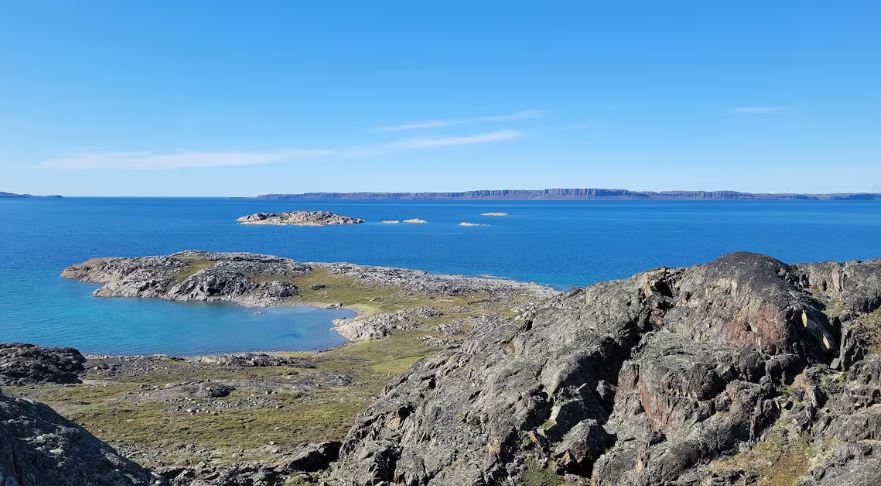
The Grays Bay Port and Road project in Nunavut promises to unlock the region’s mining potential, but questions remain about how much of the revenue those projects generate will stay in Nunavut.
The West Kitikmeot Resources Corp., the proponent of the project, says there’s a trove of rich deposits at the High Lake, Izok Lake and Hackett River areas.
They’re not far from the proposed port and road project – one part of the Arctic economic and security corridor which features a 230-kilometre all-season road towards the N.W.T. border, a new deepwater port on the Northwest Passage, and a roughly 1.8 kilometre-long airstrip.
But the two companies that own mineral assets at those three sites are based overseas.
Geoff McCarney, executive director of the University of Ottawa’s Smart Prosperity Institute, believes Canada’s development and extraction business is increasingly being dominated by foreign investors – which hasn’t always been a bad thing.
“It was thought to produce more investment, but what’s ended up happening is we also see a lack of sort of longer term strategic thinking of investments needed to continue to grow the sector in Canada,” he said.
But Brendan Bell, CEO of the West Kitikmeot Resources Corp., said shareholders of mining companies are scattered around the world, and ownership of publicly-traded companies changes all the time.
“You can’t build projects that are going to live for 50 years on the basis of ownership of any company,” he said. “I think our focus is not so much on ownership of the shares of these various multinational mining companies. It should be on local benefits, the things that we can control.”
Jobs, royalties and taxes
The things Nunavummiut can control, in Bell’s eyes, are jobs, royalties and taxes.
Troy Hey, the executive general manager of corporate relations with MMG Ltd., a China-backed base metals producer headquartered in Australia, says the company has spent $80 million exploring the Izok and High Lake sites since 2009 and has uncovered rich deposits of zinc and copper.
But MMG Ltd. needs an easy way to transport those minerals for export. It previously tried to set up its own port and road project that somewhat mirrors the West Kitikmeot Resources Corp.’s endeavours, but Hey said it was too costly. This new proposed corridor would mean MMG Ltd. can just focus on financing its mines.
“What was a dream some 20 years ago is now turning into much more like a reality,” Hey said.
Hey acknowledges the hesitance about a foreign investor mining in Nunavut. But he said building mines is not easy or cheap – and MMG has the experience.
“We bring investment, we bring expertise, we bring international standards, but the huge beneficiaries of that work are the communities, the employees, and the countries that host these resources,” he said.
In a written response, MMG Ltd. also says roughly 10 to 30 per cent of its total field program budget would be directed to Inuit contractors this coming year.
Glencore, the Swiss commodity and mining company which owns mining assets at Hackett River, says the port and road project would also unlock access to critical minerals for them.
In 2024, mining, quarrying, and oil and gas extraction was estimated to have made up roughly a third of Nunavut’s GDP, according to data compiled by the Nunavut Bureau of Statistics.
Gold and iron ore made up virtually all of the territory’s exports that year, according to Library of Parliament research. Most went to European markets, with Switzerland topping the list.

Negotiating fair royalties
Most mining in Nunavut currently happens on Inuit-owned lands, so royalties are going to Inuit organizations.
Revenue from future development on federal land will soon go to the Nunavut government once devolution comes into effect, although Premier John Main has previously said he doesn’t anticipate many royalties immediately from that process.
However, one economist doesn’t believe Nunavut is getting the royalties it deserves. Silo Strategy’s Erin Weir, a former MP for the federal NDP in Saskatchewan, has crunched the numbers by looking at publicly-available revenue reports.
“What I found was that even adding together what mining companies pay to both Inuit organizations and to the territorial government, it amounts to no more than a nickel for every dollar of minerals,” he said.
For example in 2024, Weir said Agnico Eagle, the territory’s second largest employer according to IBIS World, only returned roughly $90 million in revenues to Inuit organizations and the territorial and federal governments – which is about 5.2 per cent of the company’s profits.
Weir doesn’t believe Inuit organizations and the territorial government are negotiating a good return, especially with the price of gold increasing globally. He believes that could come down to a lack of coordination between Inuit organizations when negotiating royalties.

“I think there’s also a sense that it’s very expensive to build mines or to build anything in Nunavut, and there’s a lot of deference to the companies that have invested in the territory,” he said.
Another way Weir believes the Nunavut government could get higher returns is through adjusting corporate and property taxes.
In a statement to CBC News, Agnico Eagle says it’s important to look at the complete set of data, which is primarily shaped by its Inuit Impact and Benefits Agreements.
The company says in 2024, it spent $33 million in employee salaries and $895 million on Inuit business procurement – a figure that has risen to over $1 billion in 2025. It also points to other contributions, like with training and mentorship.
Community benefits
In Kugluktuk, the hamlet situated closest to the road and port project, MLA Simon Kuliktana isn’t sure what the benefits will be for residents.
He said he’s seen Inuit beneficiaries working at some mines in the Kitikmeot region – though there are few in leadership roles.
“I would like to see more local entrepreneurs in the region … and how they can play a role in that,” he said.
For the West Kitikmeot Resources Corp.’s part, Brendan Bell believes there are a host of benefits that don’t necessarily come with a dollar figure, such as opportunities for training and having the capacity to welcome bigger ships for sealifts.
Over the next year, Bell said the organization will begin discussions with its largest shareholder, the Kitikmeot Inuit Association, around a benefits package.
“Some of that will certainly entail business opportunities, local business opportunities, and employment opportunities.”
Related stories from around the North:
Canada: Why Coral Harbour, Nunavut residents are building a passage north, CBC news