Norman Wells, N.W.T., businesses prepare for another uncertain barge season
By Sarah St-Pierre
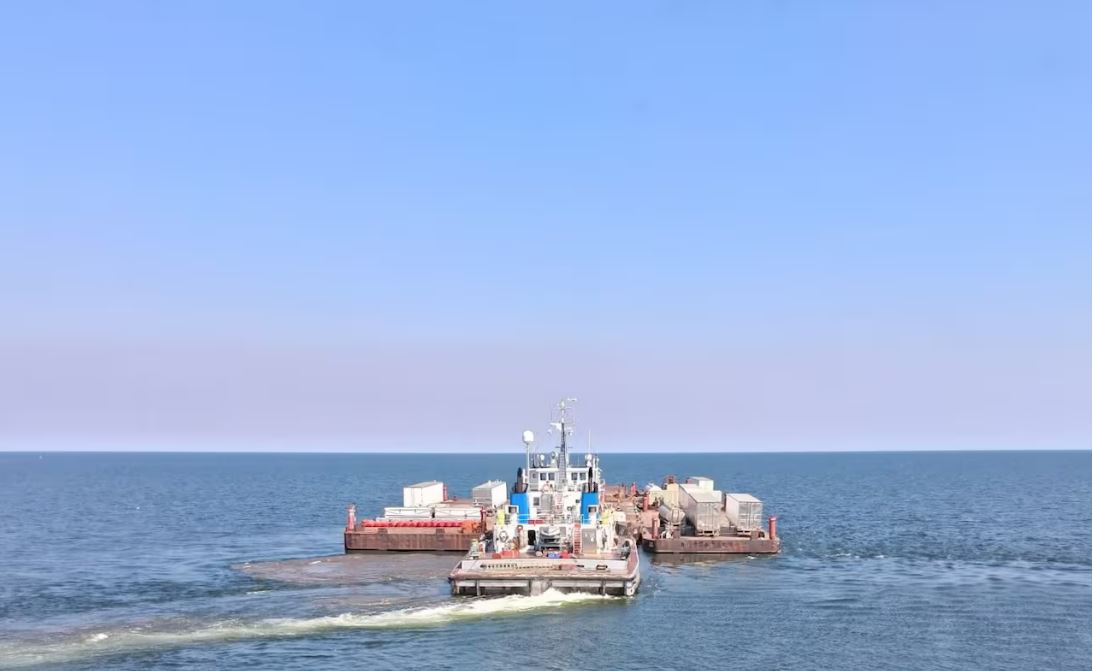
Some Norman Wells, N.W.T., businesses are hoping water rising levels in the Mackenzie River will mean reliable barge deliveries this year.
Mayor Frank Pope said it’s the main thing he’s hearing from business owners. But after several years of unsuccessful deliveries, including 2024 when no barges reached the community, there’s also apprehension.
“But I’m confident we’ll have enough water at least to get through June and July,” he said.
The N.W.T.’s Marine Transportation Services has released its barge schedule for 2026 and expects the sailing season this year to begin in mid-June or early July.
The Department of Infrastructure expects deliveries through the summer and into the fall if weather and river conditions allow, per a press release — though not all in Norman Wells are counting on it.
The uncertainty reflects a broader shift in how Norman Wells businesses approach supply chain planning. Years of unreliable barge seasons have left some rethinking their reliance on the Mackenzie River altogether. It’s a shift with real consequences for a remote community where the cost of living is already high.
Skipping the barges
Three trips are currently planned for Tulı́t’a and Norman Wells, with estimated departure dates currently set for June 18 and 22, and July 17.
Jason Balaski, owner of Boiler Controls & Installations in Norman Wells, is choosing to skip barges altogether this year after past unsuccessful seasons.
“Everyone has kind of shifted their mindset to put more emphasis on the winter road,” he said.
Balaski said that approach is making the winter road season more stressful for his business, since many large construction materials can’t be flown in after its window closes.
“If anything’s missed, you’re cutting in overheads or potentially stalling projects.”
He said relying on the winter road to bring in almost all materials also adds an “extreme financial burden.” Businesses must buy supplies months in advance but can’t bill clients until work begins.
For now, he said the approach is “sustainable but difficult.”
A long road ahead
“The winter road has sort of saved our bacon and we’re in good shape,” said Pope.
Still, he said it would be unwise to assume the town will always be able to rely on it.
“We have been very fortunate, the last two or three winters were very cold winters, and a very well maintained winter road system,” he said. “How long can we rely on climate change staying cold in the winter?”
He said it’s one more reason to build the Mackenzie Valley Highway, which would give the community an all-season road for the first time.
In the meantime, not all businesses, such as restaurants and grocery stores, can rely on the winter road either. A year’s worth of perishables can’t be stocked in a single haul.
Pope said many business owners are monitoring water levels closely, with some waiting to find out if private barging services will return to Norman Wells this year.
In the past, disrupted barging schedules have led to spikes in the already high cost of living in town.
In 2024, the town declared a state of emergency when barge cancellations drove up the cost of heating fuel.
Norman Wells’ current cost of living is “atrocious” and it can’t afford more spikes, Pope said.
“It’s either heat your home or eat,” he said. “You can’t do both this year.”
If it’s ever built, Pope said the Mackenzie Valley Highway could help bring down living costs and reduce the community’s dependence on barges, winter roads and air cargo.
However, he said the town can’t afford to wait another five years for the all-season road.
“Get at it and get the damn thing built,” Pope said. “Quit talking.”
Related stories from around the North:
Canada: Yukon tourism forecasts ‘very good season’ after record cruise traffic in 2025, CBC News
Norway: ConocoPhillips gets Norway’s nod to restart fields, boost Europe gas supply, Thomson Reuters
Russia: Russia’s Arctic Yamal LNG sends first cargo to China since November, Thomson Reuters