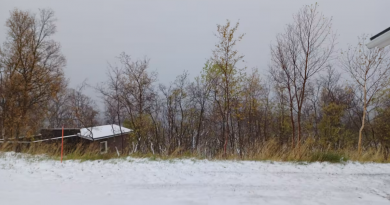
Back burning planned to head off wildfire near Wrigley, N.W.T.
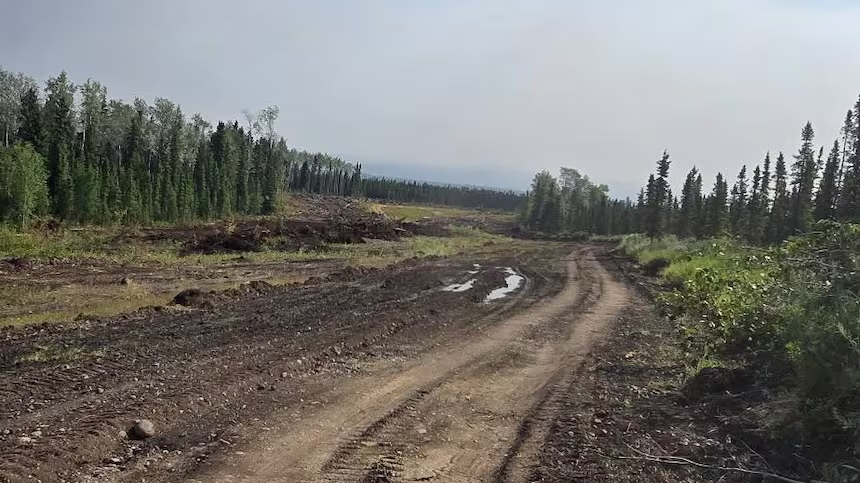
The fire that forced the evacuation of Wrigley moved closer to the community on Sunday night
The wildfire outside Wrigley, N.W.T. has continued to grow and is now only five kilometres from the community.
N.W.T. Fire said there is a small chance of thunderstorms, but not enough rain that it is expected to make a dent in the situation.
Temperatures are expected to rise, upwards of 30 C, on Tuesday and Wednesday. While winds slowed down on Monday, conditions are variable and may shift quickly.
“I can’t tell you for certain what the fire is going to do,” said Thomas Bentham, an N.W.T. Fire information officer, on Monday afternoon.
“I can tell you that we’ve made lots of precautions in the best effort to protect the community. I don’t want to say that the community is safe. I also don’t want to say that we’re going to put this fire out there. What we’re doing is precautionary measures.”
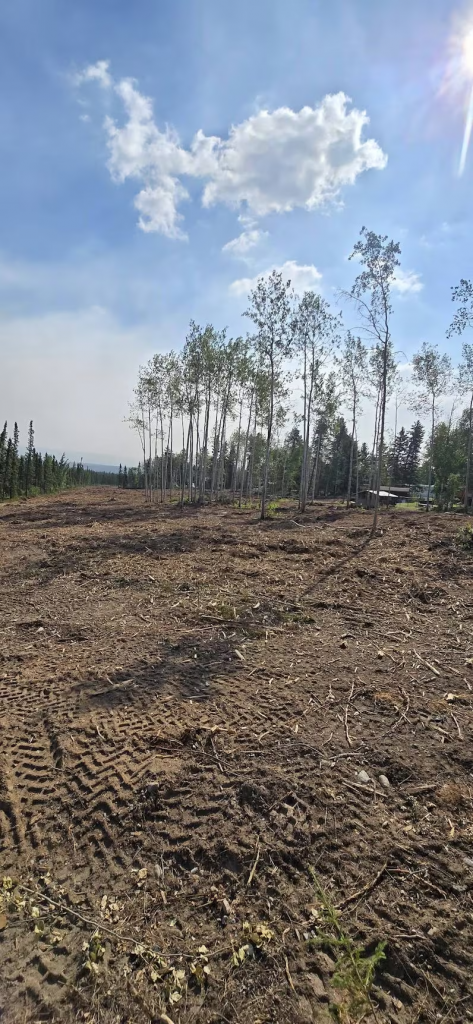
Smoky conditions have meant crews have struggled to get aircraft in the air today. A high volume suppression system has arrived from Alberta, and been installed on the north side of the community. It’s capable of shooting water nearly a kilometre, Bentham said, and will be part of the community protections being strengthened.
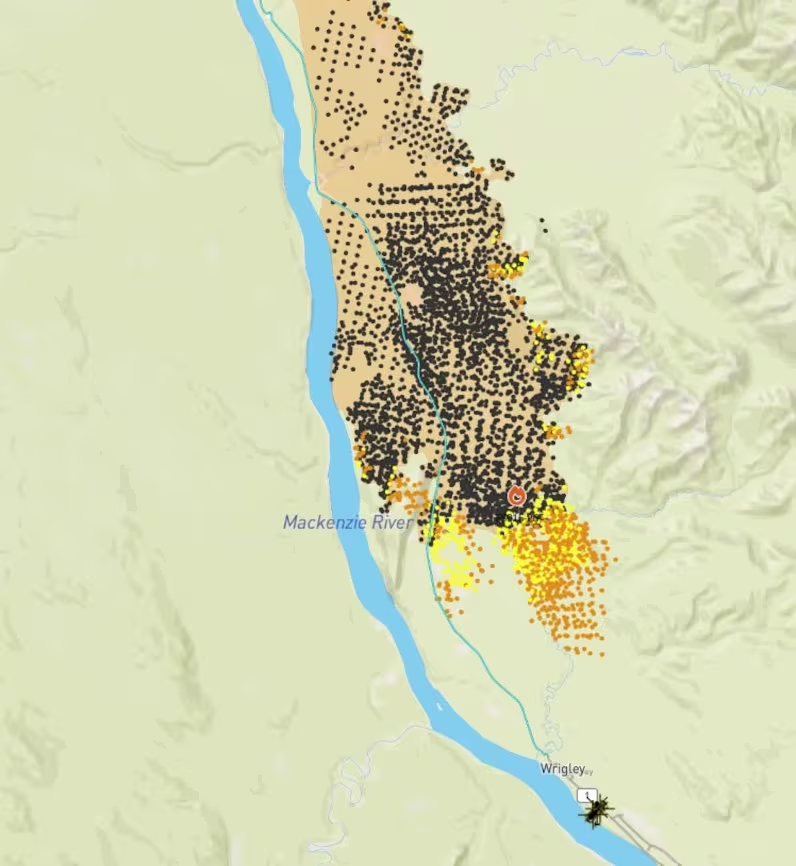
The increasing fire activity forced the evacuation of the remaining essential workers on Saturday. The rest of the population had already evacuated on June 29. Up until this weekend, the fire had stayed roughly 11 kilometres from town.
“I truly believe all the work we put into fire smarting homes and yards will help so please take that as reassurance,” Jamie Moses, chief of the Pehdzéh Kı̨ First Nation in Wrigley, wrote in a Facebook post published on Sunday night.
In an update posted on Facebook Monday morning, Moses it was smoky in the community.
He said backburning was still expected to commence, with crews on the north side of town and along the bypass towards the airport, just in case.
“Let’s all pray this goes well. They are the best at what they do so I have confidence,” wrote Moses.
Fire outside of Behchokǫ̀
While Wrigley remains the focus, Bentham said crews are watching the fire outside Behchokǫ̀ closely. It had grown to approximately 18,000 hectares by Monday afternoon, but only moved slightly towards the community. It’s now about 28 kilometres from Behchokǫ̀.
“This fire is a little bit tricky. We’re finding ourselves in a situation where the fire is wrapping around the lake, burning fuel, and there’s not much to do on the fire other than suppression efforts by aircraft,” Bentham said.
“And it’s been here and there in terms of being able to get helicopters in the air. There’s really no immediate threat to the community at this time.”
He said crews have been focused on installing structure protection in the community and on values in the area, as a precautionary measure.
With fire bans continuing across many territorial parks and hot, dry conditions across much of the N.W.T., fire risk remains high.
“We’re finding ourselves in a situation where fire activity is more likely,” said Bentham. “Summer’s not over and and wildfire seasons not over with us.”
Related stories from around the North:
Canada: Fire-loving fungi are nature’s first responders after wildfire, CBC News
Finland: Wildfires continue to burn across Lapland, Yle News
Norway: Smoke from Canadian wildfires forecast to reach Norway, The Associated Press
Sweden: High risk of wildfires in many parts of Sweden, including North, Radio Sweden
United States: Wildfires in Anchorage? Climate change sparks disaster fears, The Associated Press