4 years after fire, Fort Chipewyan’s Roman Catholic community seeks a new gathering place
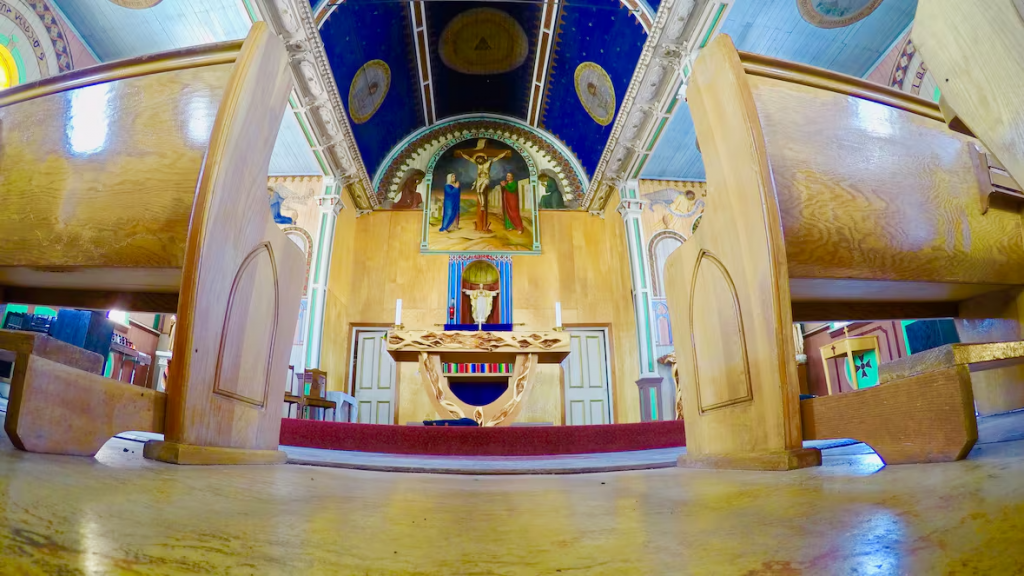
The Nativity of the Blessed Virgin Roman Catholic Church burned down in 2022
Four years after a fire destroyed a 113-year old church in Fort Chipewyan, some residents in the northern Alberta hamlet are calling for a new community gathering space to mark important milestones.
Elder Alice Rigney of Athabasca Chipewyan First Nation says she was baptized and married in the Nativity of the Blessed Virgin Roman Catholic Church, a building that also kept her deeply connected to her family.
“After I lost my mother I would still go [to the church] and I would go and sit in, in the spot that she sat. And I felt that connection with her,” she said.
Built in 1909, the church once sat on the shores of Lake Athabasca nearly 300 kilometres from Fort McMurray. It was designated as a National Historic Place in 2006.
In 2020, the Diocese of St. Paul — which includes 49 Catholic parishes and churches in Alberta — transferred ownership of the church to King’s Kids Promotions Outreach Ministries, a Fort McMurray based Christian charity.
“It was a blow to this community,” Rigney said of the change.
The community also did not have a stationed priest at the time, said the Diocese of St. Paul’s current Bishop Gary Anthony Franken. Instead it relied on the priest visiting from Fort McMurray.
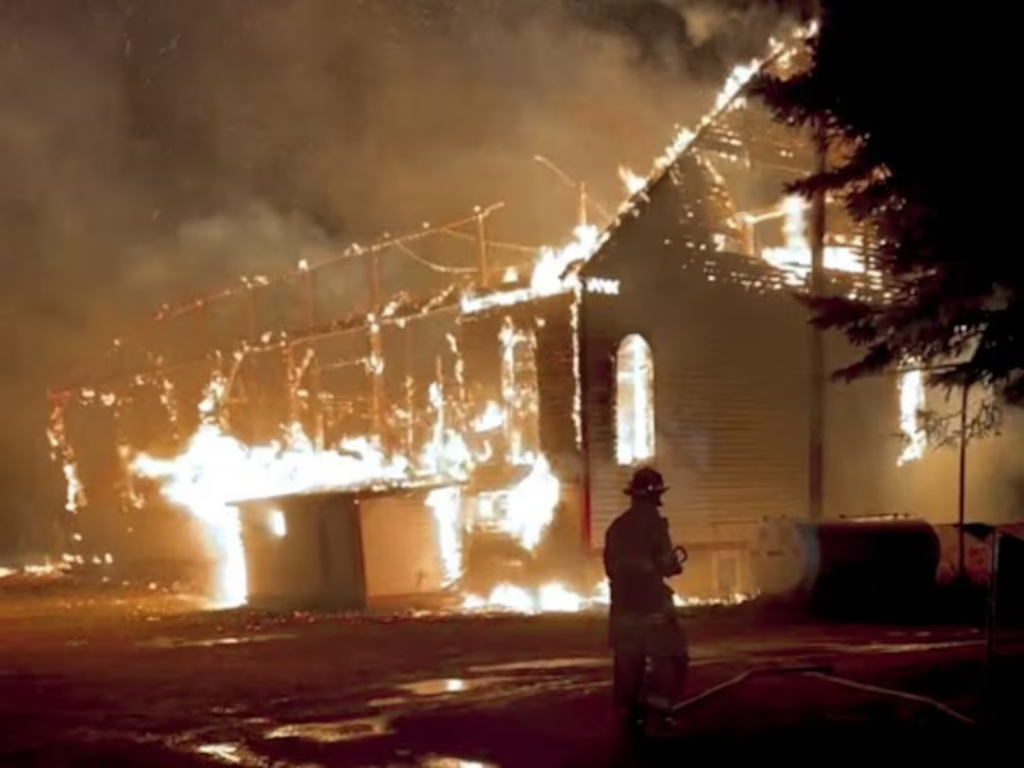
The Roman Catholic community continued to hold services and other events in the church until 2022 when it was destroyed in a fire.
“It was a loss of a beautiful building, a historical building. The paintings were done with fish oils,” Rigney said.
Building a new space for the community
The space that the church once stood on is still used by the Kids Promotions Outreach Ministries for children’ s camps and other community activities.
Margaret Whiteknife, a volunteer with the local Roman Catholic committee, says before the church was sold, the community was making efforts to collect funds and repair the historic building.
“The church would be so full…. We had the elders there and then they would sing in their Dené language or Cree language,” she said. “It was so special, like even magical to be there with all these beautiful voices and everybody so happy.”
Now, the members use a community hall for services and funerals, but Whiteknife wants a new church that members can call their own.
Whiteknife says she and other members are establishing a non-profit society to fundraise for a new Roman Catholic church that would have multi-purpose rooms for community gatherings like wakes.
“We want to make it inclusive,” she said, “For people who want to go there and pray, even if they’re not Catholic.”
Whiteknife says the community holds complex feelings toward the church, beyond the historic building itself. The Holy Angels Residential School operated on the grounds until the 1970s.
Between 1880 and 1953, 89 children died while attending the school, according to the National Centre for Truth and Reconciliation.
Preliminary discussions have started
Bishop Gary Anthony Franken says he has heard from members about wanting a new church but the discussions are at an early stage.
Franken says he has discussed the most feasible way to build a church in a community like Fort Chipewyan with other Bishops in the North.
“They often talk about some sort of a prefab building that’s tailored to becoming usable as a church,” he said.
Stationing a priest in the fly-in community presents its own hurdles, Franken says. Beyond finding someone willing to live in an isolated area long-term, the priest would need suitable housing, work facilities and enough local financing to sustain the position.
Franken says during his visit to the community for mass there were less than 24 people during the service.
“When there’s a funeral or other major ceremony … then a lot of people will come out depending on their connection,” he said.
Whiteknife with the local Roman Catholic committee says she is aware that the new building won’t stand on the exact grounds of the original church, but she says having a place the community can truly call their own is what matters.
Support is available for anyone affected by their experience at residential schools.
A national Indian Residential School Crisis Line has been set up to provide support for survivors and those affected. People can access emotional and crisis referral services by calling the 24-hour national crisis line: 1-866-925-4419.
Mental health counselling and crisis support is also available 24 hours a day, seven days a week through the Hope for Wellness hotline at 1-855-242-3310 or by online chat at www.hopeforwellness.ca.
Related stories from around the North:
Canada: Inuvik Anglican Church ‘officially reopens’ with fresh vision, CBC News
Sweden: Wooden church in Arctic Sweden sets off on slow road trip to escape mining subsidence, Reuters