Denmark passes compensation bill for thousands of Inuit in Greenland forced to get IUDs
Inuit women in Canada hope the Danish bill will encourage Canada to follow suit
Thousands of Inuit women in Greenland are now eligible for monetary compensation over a decades-long Danish birth-control program that forcibly implanted intrauterine devices (IUDs). The compensation has some Inuit women in Canada who faced similar treatment hopeful for an apology from their own federal government.
On Thursday, the Danish government passed a bill allowing for the compensation, roughly a year after the country’s prime minister apologized for the historical birth-control program.
According to Reuters, a 2025 joint Greenlandic-Danish inquiry found that from 1966 to 1991, roughly 4,000 Greenlandic women and girls, some as young as 12, were subjected to forced sterilizations, often without their knowledge.
Naaja Nathanielsen, a Greenlandic member of parliament in the Danish government, says this period in history continues to affect women across the country today.
“There has been tremendous trauma caused by this,” she said. “Today, you see a lot of women seek abortions instead of maybe seeking other forms of contraception … So it has in many ways, I think, affected our communities and our lives, not only in the generations that were affected, but also in the generations after that.”
According to the joint report, the Danish government intended the practice to reduce birth rates and family sizes on the island.
Women who received IUDs as part of the program are now eligible for a one-time payment of roughly $64,000 CAD. Still, some Greenlandic politicians say the compensation did not come soon enough.
“The apology is more than a year ago,” said Qarsoq Høegh-Dam, the only other member of Danish parliament from Greenland. “Do you know how many people passed away after you said sorry but didn’t compensate? We could not wait any longer.”
Shared experiences in Canada
The latest bill from the Danish government is providing hope in Canada that the federal government might take the same course of action.
For decades, hundreds of Indigenous women across Canada underwent forced and coerced sterilization. Unlike Greenland, these practices didn’t end in the 1990s.
According to a 2022 report from the Université du Québec en Abitibi-Témiscaminque (UQAT), roughly 22 cases of imposed sterilization were documented in the province between 1980 and 2019.
A 2021 Senate report on forced and coerced sterilization in Canada found that eugenics laws and government policies deliberately sought to reduce births in Indigenous communities.
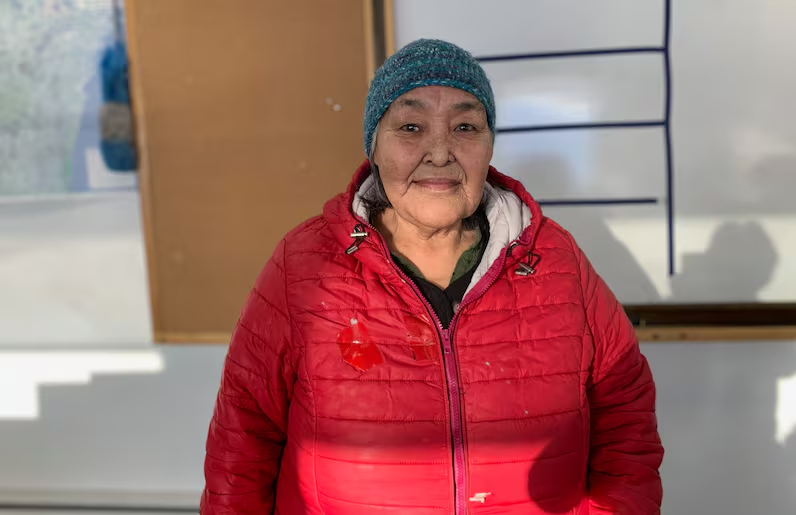
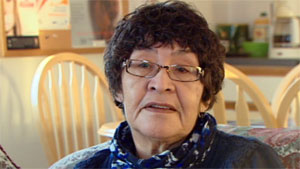
Cecilia Papak, an Inuk woman in Rankin Inlet, is among those coerced into sterilization after doctors told her in the late 1970s she needed to undergo a hysterectomy.
“I was so disappointed the way our government has to force people if they’re not healthy [enough] to have babies,” Papak said. “It’s like a threat that I want to live longer and if I don’t stop, if I keep having kids, then I won’t be able to live longer. So that kind of was scary to me. So I had no choice but to accept getting surgery and stop having kids.”
Papak says had she not been coerced, she likely would have had more children.
Learning from each others’ pasts
The Canadian government has not issued a formal apology regarding the practice of forced and coerced sterilization on Indigenous women. Still, Papak hopes the latest move by the Danish government encourages Ottawa to issue its own apology and compensation.
To date, there have been a number of class-actions lawsuits filed in Canada, with at least four against the federal government, over the practice.
In June, the Canadian government added forced and coerced sterilization to the criminal code.
Høegh-Dam says, given the shared injustice of forced and coerced sterilization in both Greenland and Canada, it is important for both countries to learn from one another on how best to go forward.
“My advice here is that we learn from each other, and have the communication lines open, because this is a common struggle and this is something that happened. I don’t know the reason, but it happened worldwide.”
Related stories from around the North:
Canada: For the first time, Yukon’s Legislative Assembly will have more women than men, CBC News
Finland: Finland’s shortest life expectancy for women in Lapland, Yle News
Greenland: Forced birth control in Greenland violated women’s rights but didn’t constitute genocide, experts find, Reuters
Sweden: Estrogen shortage sends women in northern Sweden to Finland, Radio Sweden
United States: Missing and Murdered Indigenous Women awareness week observed in the U.S., Eye on the Arctic