The ins and outs of the Yukon’s biggest proposed mine
By TJ Dhir
The proposed Casino mine could be a major boon to the Yukon’s economy — if it actually moves ahead.
Located between Carmacks and Dawson City, and owned by Western Copper and Gold, the mine would produce approximately 4.27 billion pounds of copper and 346 million pounds of molybdenum over its estimated 27-year life.
Both minerals are on Ottawa’s list of 34 critical minerals essential for weapons manufacturing and green technology.
The Casino project is currently undergoing an environmental assessment, but concerns about its environmental impacts — on fish, caribou, and other wildlife across several First Nation territories — mean it will not be easy to move ahead.
A ‘generational’ project
Shena Shaw, vice-president of environmental and community affairs with Western Copper and Gold, said the long-term outlook for critical minerals is, for the moment, “very positive.”
The Casino mine site also contains gold and silver deposits. Shaw said that will allow the mine to be more resilient in the face of changes to global demand.
“No one can control how those prices will fluctuate,” she said. “Sometimes copper is going to be the stronger metal, and sometimes it’s going to be gold.”
The benefits could be immense. The mine’s owners say the project will create up to 1,400 jobs during construction. During operation, the company says 700 jobs will be created during the mine’s operating life, and the project will contribute about $1.3 billion per year to the Yukon’s economy.
Jonas Smith, the executive director of the Yukon Chamber of Mines, said Casino could be a “generational” project.
“I could potentially work there before my career concludes, and my grandchildren could [still] work there,” said Smith.
‘Still in flux’
That would require the Casino mine to pass a rigorous environmental assessment.
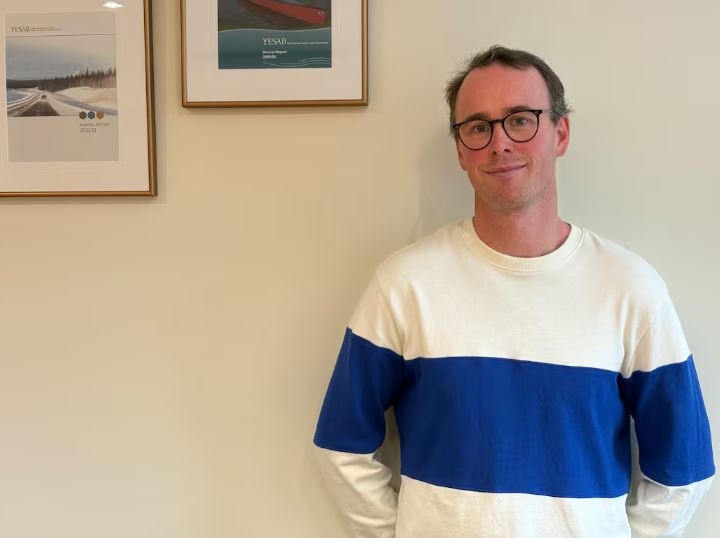
Casino is still in the early stages of the first-ever panel review by the Yukon Environmental and Socio-Economic Assessment Board (YESAB).
“The biggest victim of this project is likely to be the Klaza caribou herd,” said Sebastian Jones, a fish, wildlife, and habitat analyst with the Yukon Conservation Society. “Plunking the biggest mine ever proposed in the Yukon right down through the heart of its key habitat is obviously not going to be good for the caribou herd.”
Along with the potential impact to caribou, the size of the tailings dam and the use of heap leaching have also been raised as concerns.
Heap leaching, a process using cyanide to separate gold ore from rock, has come under scrutiny after the Eagle gold mine’s heap leach system failed two years ago, triggering a poisonous landslide.
The legacy of Yukon’s Faro mine, closed in the 1990s and today a massive contaminated site, also looms large in any environmental review.
At the moment, there is no timeline for a decision on Casino from the review board. The board’s executive director, Kent Bretzlaff, refused to speculate on when the panel to review the project will be struck and when hearings will begin.
“It’s still in flux,” Bretzlaff said. “There’s still the opportunity for us to ask for more supplementary information.”
The entire Casino project is on the traditional territory of five different Yukon First Nations.
“First Nations absolutely want to see mining done responsibly,” said Math’ieya Alatini, grand chief of the Council of Yukon First Nations. “We’re dealing with two major environmental disasters in our territory as a backdrop to this dialogue.”
Alatini’s comments came at Friday’s Yukon Forum in Carcross, where the Yukon government cabinet met with First Nations leaders from across the territory.
“It’s even more important that we are at the table looking at how we design legislation that takes those histories into account,” she said.
Pitched to investors
Those concerns didn’t stop executives from pitching the project at last week’s high-profile Canada Investment Summit in Toronto. The Casino project was one of five proposed Yukon mines included in the pitchbook.
“There was a lot of interest in the mining industry across the board,” Yukon Premier Currie Dixon said at the Yukon Forum. “There was a lot of discussion… about Canada needing to get more serious about economic development… to stand on our own two feet economically.”
Yukon Energy, Mines, and Resources Minister Ted Laking said the territory has 25 of the 34 minerals on the federal government’s critical minerals list.
Those minerals are used in the energy and technology industries, and are also used in weapons manufacturing.
“Our NATO allies are very keen on having access to this right now,” Laking said.
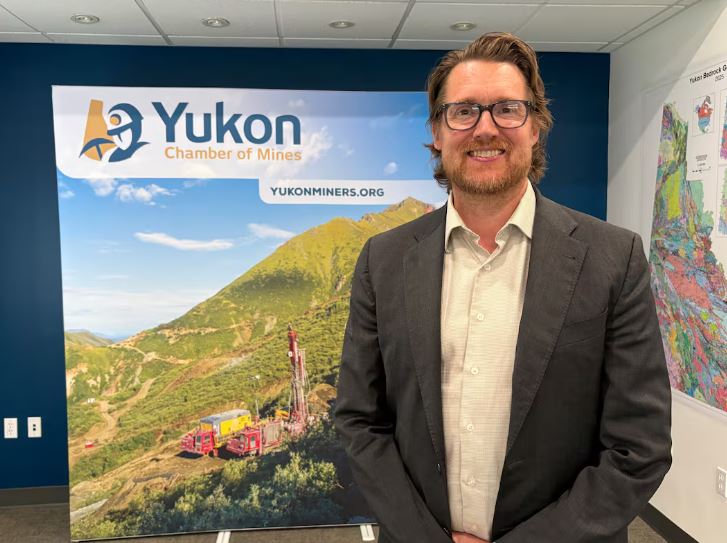
Smith, with the Yukon Chamber of Mines, said supportive governments in Whitehorse and Ottawa are helping to make the economic case for the industry.
In August, Prime Minister Mark Carney told Politico that his government had signed $50 billion worth of deals regarding critical minerals in the past 12 months. He mentioned Canada’s critical mineral potential again in a speech to the European Union’s parliament on Thursday.
‘Hard to predict’
Chris Yakymchuk, an expert in critical minerals at the University of Waterloo, said Casino could make a major contribution to the global supply of copper and molybdenum — but not enough to satisfy a growing need for these minerals.
“It’s a good example of a big-enough project to make a dent in what we need,” he said. “But we need a lot more of these if we’re going to keep up.”
Yakymchuk said he’s skeptical on whether the project will actually go ahead, saying there are many other prospective mining projects across the country.
“It doesn’t always come down to the rocks and the ore,” he said. Commodity prices, market demand, local buy-in, and socioeconomic considerations all play a role in whether a mining project moves ahead. “It’s hard to predict the future,” he said.
For her part, Shaw, with Western Copper and Gold, hasn’t lost her optimism.
“It really behooves us as Yukoners to take advantage of the opportunity,” she said. “When we work through the process, develop the right relationships, demonstrate our environmental rigor with what we’re doing, we have the opportunity to contribute to really positive global change in some respects, while also creating a really great opportunity here in the Yukon.”
Related stories from around the North:
Canada: Unseasonably mild weather wreaking havoc on N.W.T. winter roads, CBC News
Finland: Finland’s roads remain hazardous following first winter storm, including Lapland, Yle News
Greenland: Greenland rules out winter 2026-27 drilling for Nunap Qeqqa/Jameson Land oil project, Eye on the Arctic
Russia: Europe boosts LNG trade ahead of the ban, The Independent Barents Observer
Sweden: Electricity prices climb in Sweden as Russian gas pipeline goes offline, Radio Sweden