Arctic air attacks worry northerners, but navy, coast guard top spending picks: survey
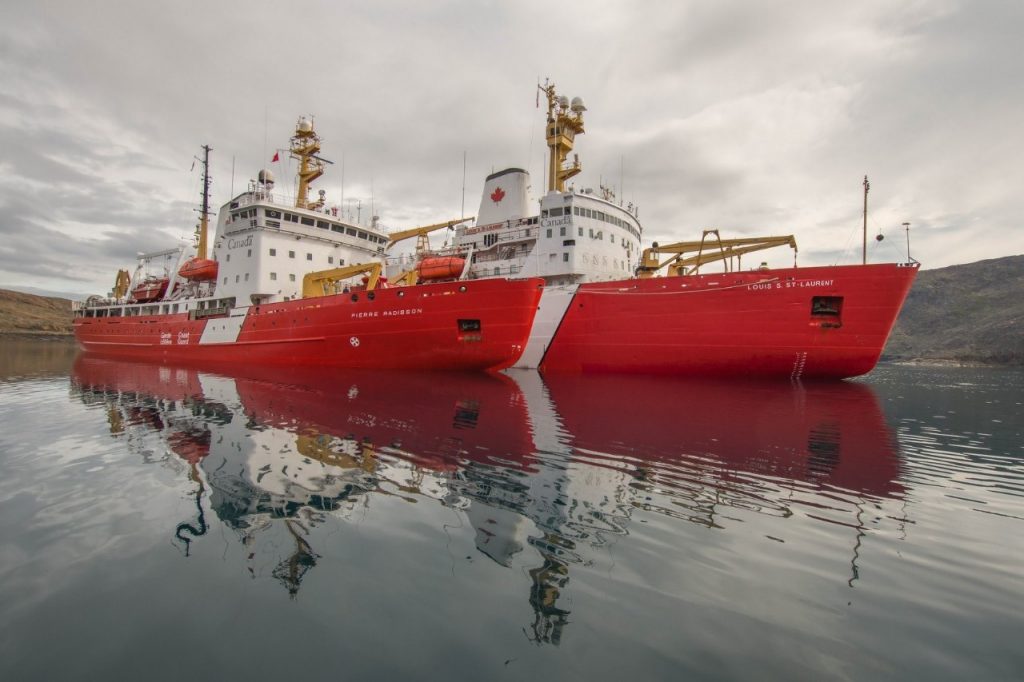
Half of northerners in a recent survey said they felt only slightly safe or not safe at all against a possible air or space attack in the Canadian Arctic. But when asked where extra defence dollars should go, they put the navy and coast guard ahead of air defence.
“Counter-intuitively, respondents did not prioritize investments in the air force to meet this threat assessment,” the 2026 Canadian Arctic Survey said.
“This points in the direction of a branch of the Canadian Armed Forces that offers practical and visible support to communities, especially the Coast Guard, but also anxious assessment about the perceived future of maritime traffic in the region.”
In addition, 74 per cent of respondents said they supported arming the Canadian Coast Guard.

Eighty-five per cent of respondents expected shipping traffic in the Arctic to increase in the coming years, with cargo ships seen as posing the greatest security risk.
Perceived threat from Russia, China down
The survey was done from May 4 to 30 this year before the September agreement between the U.S., Denmark and Greenland. Respondents were made up from a random sample of 650 Canadians aged 18 and over living in Nunavut, Northwest Territories, Yukon, and Nunavik, in northern Quebec.
When it came to perceived threats, 48 per cent of those surveyed said the U.S. was the biggest threat to the Canadian Arctic, up from 37 per cent last year.
At the same time, the perceived threat coming from Russia declined to 30 per cent, from 35 per cent, while only 12 per cent of respondents saw China as the main threat, down from 17 per cent last year.
The Canadian Arctic Survey was conducted by the Observatory on Politics and Security in the Arctic (OPSA).
It received funding from MINDS, a Department of National Defence program that funds Arctic and security research, as well as from the Quebec government.
Comments, tips or story ideas? Contact Eilís at eilis.quinn(at)cbc.ca
Related stories from around the North:
Canada: Cold reality: Canadian troops struggle in Alaska as military relearns Arctic warfare, CBC News
Denmark: Trump touts ‘permanent control’ in Greenland deal as Denmark, Nuuk stress sovereignty, self-determination, Eye on the Arctic
Finland: Lapland—President Stubb names Finland’s first F-35 ‘Sisu’, Yle News
Greenland: U.S. gains broad land, air and sea access under Greenland defence deal, Reuters
Iceland: Rubio seeks to reassure Iceland on Arctic, North Atlantic security cooperation, The Associated Press
Russia: Gas-producing region of Yamalo-Nenets in Arctic Russia is ready to pay locals generously for downed drones, The Independent Barents Observer
Sweden: Sweden welcomes Greenland deal — but US rhetoric hurting trust within NATO, minister says, Radio Sweden
United States: New Greenland military bases will expand U.S. Arctic footprint, enhance NATO, Trump tells UN, Eye on the Arctic