How should Yellowknife support arts and culture? Candidates discuss
Promoting Indigenous art, city’s current master plan, growing art with tourism among themes at Thursday forum
Some candidates running in the Yellowknife municipal election discussed where arts and culture should fit in the city’s decision-making at a public forum Thursday evening.
Out of the 21 candidates running for a seat on city council, 16 were in attendance, along with both mayoral candidates.
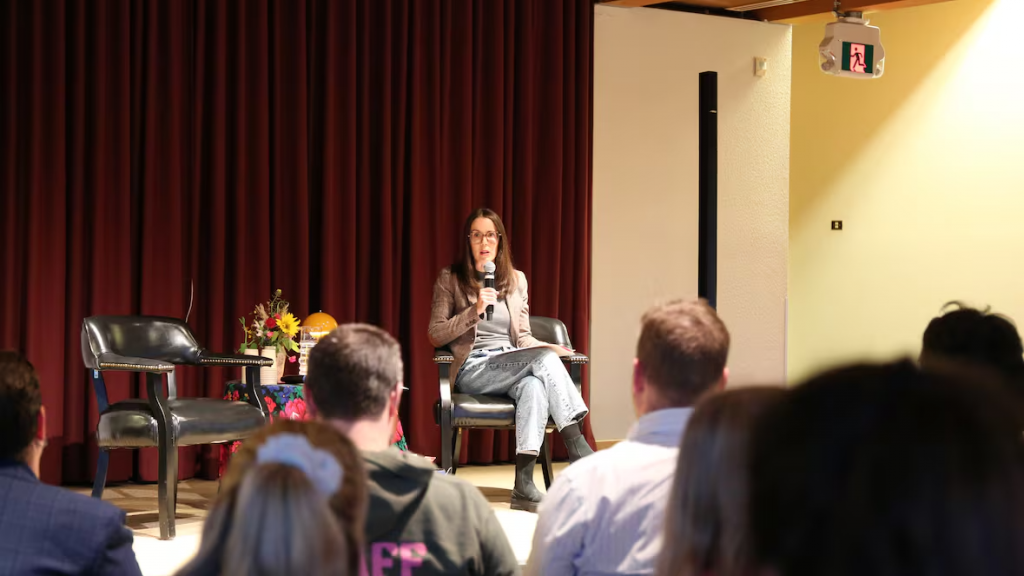
The forum was hosted by the N.W.T. Art Centre Initiative and moderated by Sarah Swan, a Yellowknife-based curator and art writer.
Swan started the evening with a reflection on support for the arts and whether it competes with public needs.
“What we’re asking for now, this election, is for city government to have an improved and more holistic view of the arts,” she said. “In the next term, the arts should be considered as a strategy for shaping and improving local economy and as both a goal and a precondition for civic life.”
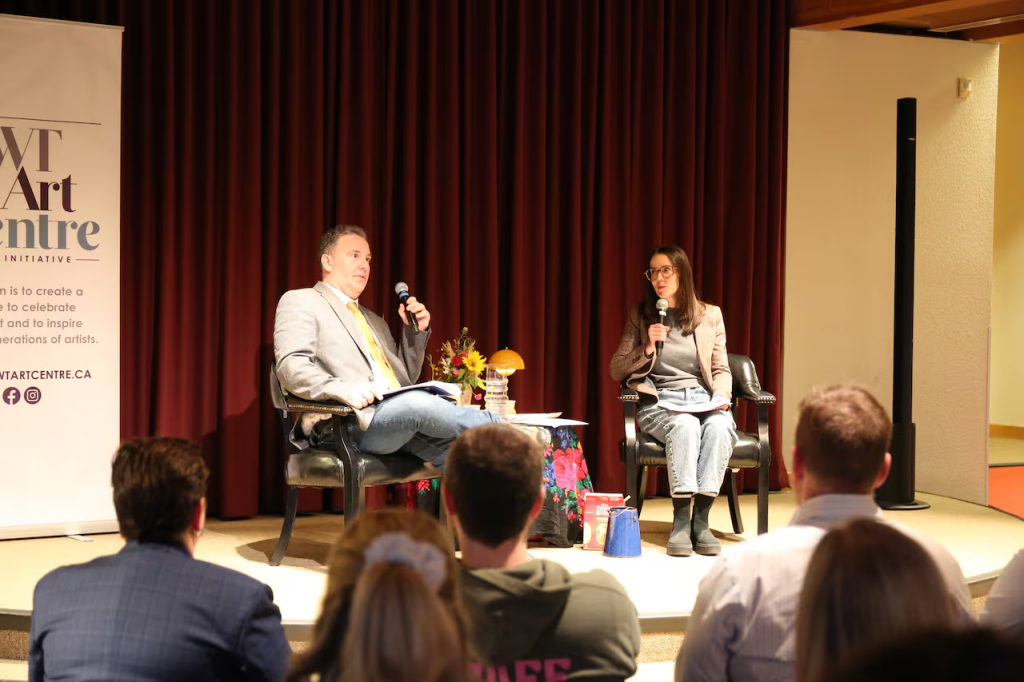
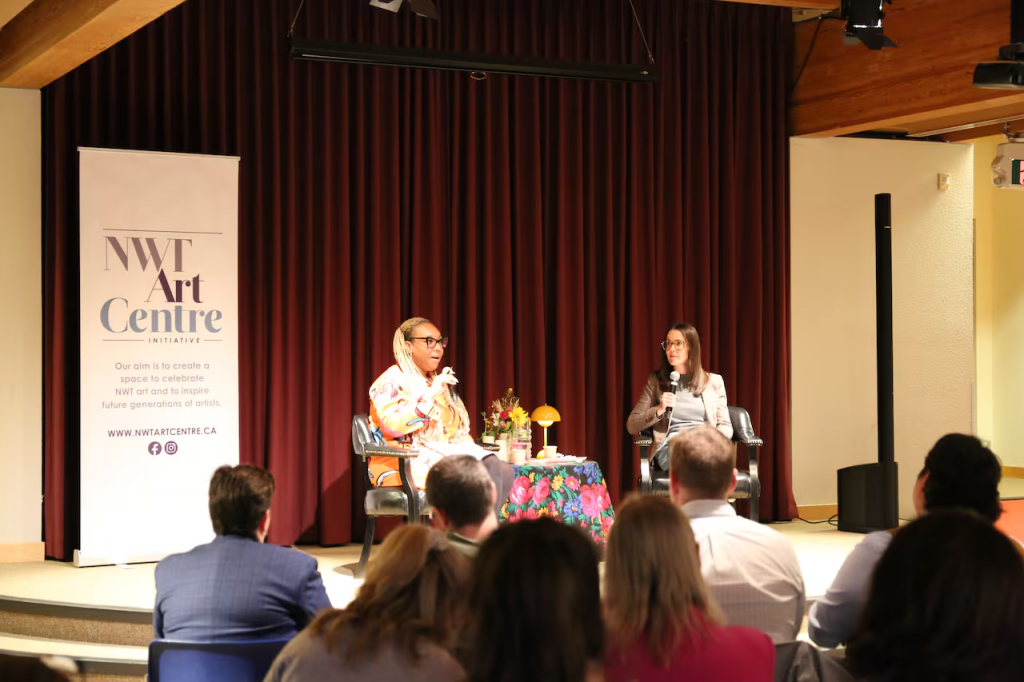
Candidates joined Swan onstage one at a time based on a random draw to describe themselves in one word, describe art in five words, and answer one question pertaining to the role of arts and culture at the municipal level. Candidates had been able to prepare from a list of potential questions in writing ahead of the forum.
Some of the answers had common threads, like promoting Indigenous art, what to do about the city’s arts and culture master plan, and how tourism and the arts could grow together.
Indigenous art
Council candidate Simon Whitehouse chose the word “wild” to describe himself. He argued that Yellowknife should feel more like the capital of the territory.
“And I just feel, going through the city, you just don’t get a sense that you’re getting the full scope of Indigeneity for a capital city,” he said.
He said he felt there ought to be more representation of Gwich’in, Inuvialuit and Sahtu Dene arts and culture, for example.
Council candidate Cody Drygeese, who is a member of the Yellowknives Dene First Nation and called himself “culturally relevant”, said that Yellowknife needs more spaces and opportunities for Indigenous artists to perform and sell their artwork.
He also said that he wanted to see more opportunities for Indigenous women artists.
Arts and culture plan
The city’s arts and culture master plan was adopted in 2022 just before the election of a new council, and since then has largely been left unimplemented.
Council candidate Gerri Whiteford, who described herself as “thoughtful,” said that she thought not enough people had been engaged to create it, and that it should be revisited with new methodologies.
“The arts community in Yellowknife is quite big, quite extensive and quite powerful,” she said.
Mayoral candidate Garett Cochrane, who chose the word “character” to describe himself, said he did not think the city needed a new arts and culture plan, but rather that the existing one could be amended by city council and added to its work plan.
Cochrane also said he’d like to see the city’s heritage committee reformed into a heritage, arts and recreation committee, and that the city’s special events co-ordinator could become an arts and special events co-ordinator.
Tourism and the arts
Some candidates also discussed how tourism and the arts could be approached together from a municipal perspective.
Council candidate Keneisha Buddoo, who described herself as “scintillating,” said she saw an opportunity to “marry” the two sectors.
“The tourists come for the Northern Lights,” she said. “What if they also stayed for the show, a burlesque show and a drag show and a [Northern Arts and Cultural Centre] show, so that we can add to the economy?”
There was also talk of appropriating some funds from the Tourist Accommodation Tax, which went into effect on April 1, 2025 and is meant to be reallocated to grow the tourism sector, to fund arts and culture in the city.
Council candidate Rylund Johnson, whose self-describing word was “weird,” talked about the need to find a predictable revenue stream to fund arts and culture, and suggested the tax, though he acknowledged most of the money would need to go to a destination marketing organization.
Mayoral candidate Melissa Syer, who picked the word “tenacious” to represent herself, noted that the tax was exceeding expectations and bringing in somewhere between $1.5 and $1.8 million a year, compared to the $1 million it was meant to bring in.
“Because it’s exceeding that, I think there’s a way to look at it and say, is there a way to reorganize that money and spend it differently in the arts and culture, and Yellowknife is in need of that,” she said.
Thursday’s forum was the last scheduled ahead of election day on Monday, Oct. 19.
Related stories from around the North:
Canada: 1,500 km and $1,500 later: Yellowknifers head south for blockbusters, CBC News
Finland : Sami joik, symphonic music fusion from Finland makes int’l debut in Ottawa, Eye on the Arctic
Greenland: New exhibition features 2000 years of Inuit art from Canada, Alaska, Greenland & Siberia, Eye on the Arctic
Norway: Certification marks help both Sami artisans and consumers, says council, Eye on the Arctic
Sweden: Award-winning novel set in Sapmi to get Netflix treatment, Eye on the Arctic
United States: How Inuit culture helped unlock power of classical score for Inupiaq violinist, Eye on the Arctic