
N.W.T. minister says territory has few choices when it comes to ending net metering
Public Utilities Board reviewing submissions from NTPC and Naka Power, both pitch net billing instead
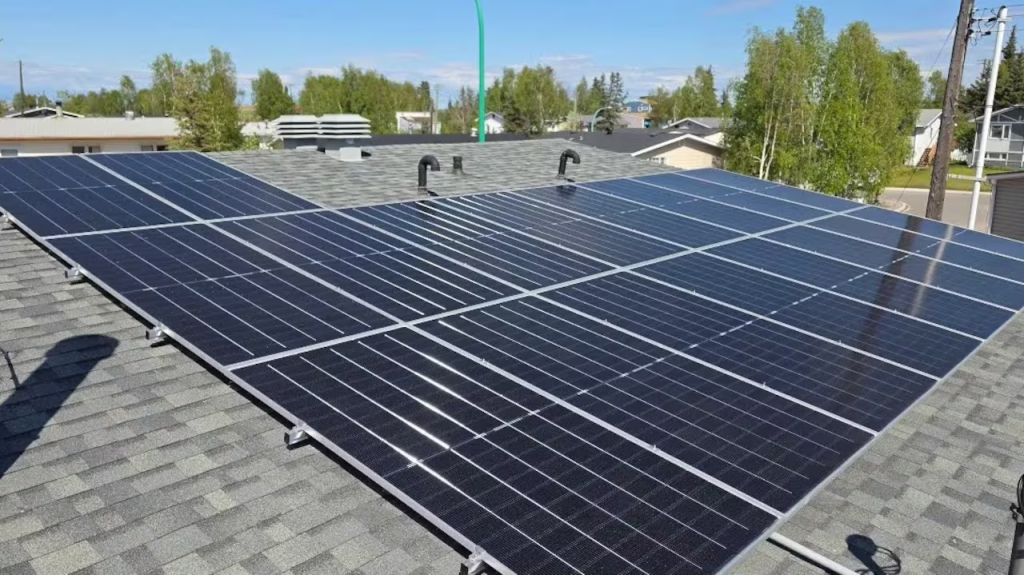
Net metering, an option Northwest Territories residents can use to save on their energy bills through solar power, could be replaced with a model some believe is worse.
Net metering decides how customers producing their own energy, typically with solar, are compensated for each unit of electricity they produce. Customers can “bank” energy during the sunny summer months, and then use that energy during the dark winter, when power bills are historically higher.
The Northwest Territories Power Corporation (NTPC) and Naka Power are attempting to introduce net billing instead. Under that structure, residents who have a solar system and generate more power than they need can send the excess power to the grid, and a utility provider would award credits as compensation.
The N.W.T. Public Utilities Board is the organization that ultimately decides if the change will take place. The Public Utilities Board has yet to make a decision.
Yellowknife Centre MLA Robert Hawkins raised the issue of net metering’s potential end in the Legislative Assembly on Monday.
Caroline Wawzonek, the minister responsible for the Northwest Territories Power Corporation, confirmed the corporation is trying to switch to net billing for independent power producers.
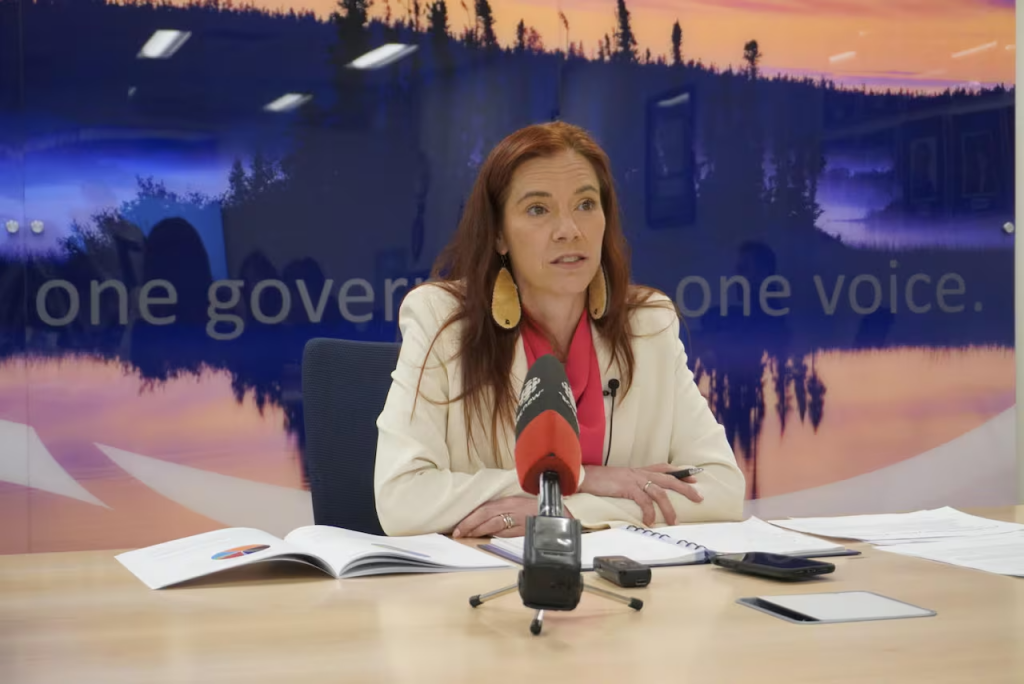
Asked if she’d direct the power corporation to change course, Wawzonek says the territory is “stuck.”
“Why this territory, at a time when diesel was cheap and when diamond mines were flourishing … couldn’t have made investments in energy? At this point in time, I can’t answer that question,” said Wawzonek.
She said the government is working to “modernize our policy”, which includes directives from the government to the Public Utilities Board, while also being “responsive” to the public.
“The NTPC has been moved to having a utility board that is more business focused,” she said.
Mitch Dentinger is the owner of N.W.T. Solar Solutions Ltd., which sells and installs solar systems throughout the territory.
He says people will spend on average between $30,000 and $40,000 to install solar panels for two main reasons: long-term savings on their power bills and reducing their environmental footprint. Dentinger says net metering incentivizes that.
But it can also cause utilities to lose money.
According to the territorial government, “under existing rules, annual net revenue loss for utilities would increase between $1.8 million and $2.7 million by 2030. Most of the loss is due to the net metering program (between $1.5 and $2.4 million).”
Net billing would offer bill credit model: Naka Power
Last year, the government told the territory’s Public Utilities Board to support renewable energy growth through a number of directives, including moving away from net metering.
The Public Utilities Board is currently reviewing submissions both NTPC and Naka Power have made; both have proposed transitioning to net billing.
In a statement to CBC News, Naka Power communications manager Erin Newell-Lupien said under a net billing model, if a customer generates more electricity than they need, the excess power is sent to the grid and they receive a credit on their electricity bill.
“The value of that credit depends on the electricity system the customer is connected to (hydro or thermal) and the value that excess power provides to that system.”

Naka Power’s office building in Yellowknife on Nov. 29, 2024. (Liny Lamberink/CBC)
Customers would receive bill credits rather than a direct cash payment, Newell-Lupien said. She also said Naka recommended that if net billing were approved, customers should have a 24-month transition period.
Doug Prendergast, communications manager with NTPC, told CBC News the corporation recommended a switch because it found the current net metering program paid a premium to net-metering customers “that resulted in higher rates for electricity customers not enrolled in the program.”
According to a response to the N.W.T. government’s policy directives from last year, NTPC says the territory “notes a concern that there is a gap where non-utility entities can independently produce their own electricity behind the meter and not fall under specific rules or programs.”
The corporation, in response to the territory’s policy direction, says the government considers people producing their own power as having an impact on electricity rates and grid stability “and therefore to ensure everyone is treated fairly with consistent rules, requires that all grid-connected self-generators should be part of an approved renewable generation program.”
‘We’re not going away’
Other jurisdictions in Canada also use net billing, where credits are worth a different amount than the regular electricity rate — generally, less.
Dentinger says that compensation structure would cut the financial viability of new solar installations throughout the territory, and mean fewer benefits to the environment by extension. He also says it wouldn’t entirely save utilities from financial bleeding.
“The solar systems that are existing are not going away. That revenue loss is gone forever,” said Dentinger, adding that homeowners would likely pivot to installing smaller systems that don’t overproduce so they still get their return on investment.
“No matter what the utility does here, there’s going to be revenue loss because we’re not going away.”
Related stories from around the North:
Canada: Q&A | Yukon energy minister says power bills could go up by 53% without federal help, CBC News
Russia: As gasoline crisis worsens, Russia boosts fuel imports through Murmansk, The Independent Barents Observer