Northerners want changes to programs across Inuit Nunangat – not just more federal money
Federal gov’t to announce changes to Inuit Child First Initiative in coming weeks
Ottawa’s new investments in supporting Inuit children and families has eased some concerns about the future of those programs, but some northerners say they want to see more than just funding for stop-gap measures.
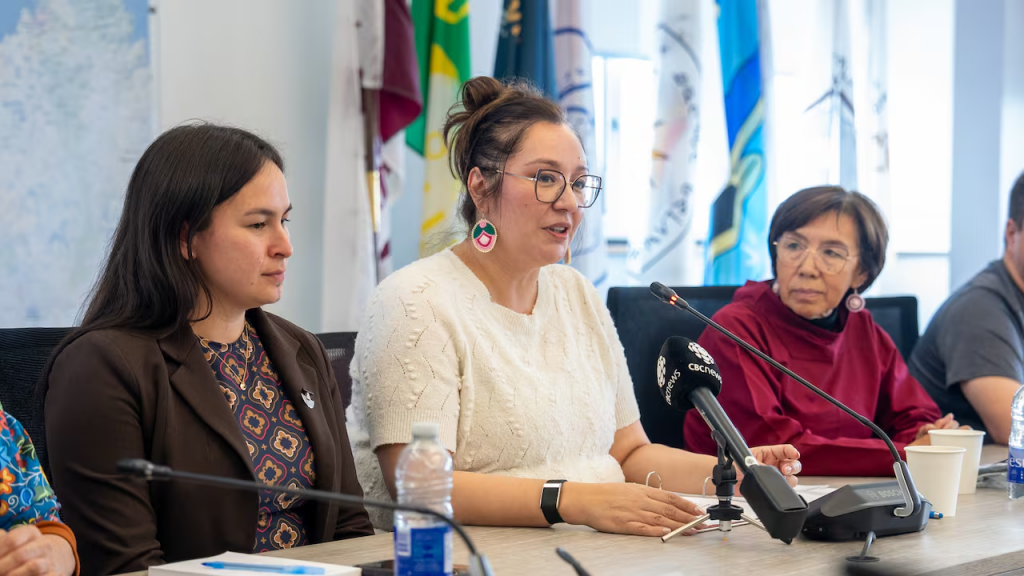
On Thursday, Indigenous Services Canada Minister Mandy Gull-Masty revealed $229 million for tuberculosis, food security, and child and family support in Inuit communities – allocations notably absent from the fall 2025 federal budget.
The new funding includes $115 million to renew the Inuit Child First Initiative, which is a temporary measure to ensure Inuit children have timely access to essential support and services while an Inuit-specific framework is being developed.
But this announcement is yet another one-year extension to the program set up in 2018, and not the long-term funding model for Inuit children that Inuit leaders have been collaborating with the federal government.
In an interview with CBC North, Gull-Masty acknowledges this announcement is a stopgap arrangement while discussions continue about the long-term plan, though she’s remaining tight-lipped about what’s still to be worked out.
“I want to be extremely respectful of what Inuit communities, organizations and families are looking to achieve,” she said.
CBC North reached out to several Inuit organizations that are involved in the development of this program for comment. Inuit Tapiriit Kanatami, the national body representing Inuit in Canada, declined an interview request, and Nunavut Tunngavik Inc. didn’t respond.
Changes to applications coming
Statistics Canada shows more than three-quarters of Inuit children in Inuit Nunangat experienced food insecurity in 2022.
In Nunavut, many families know the Inuit Child First Initiative by the distribution of monthly food vouchers, which were discontinued last year. At the time, Indigenous Services Canada said the initiative was structured to provide temporary relief, rather than to displace government income assistance through “universal” programs like food vouchers.
The government also ushered in other changes such as the need for families to submit individual applications and adhere to specific requirements.
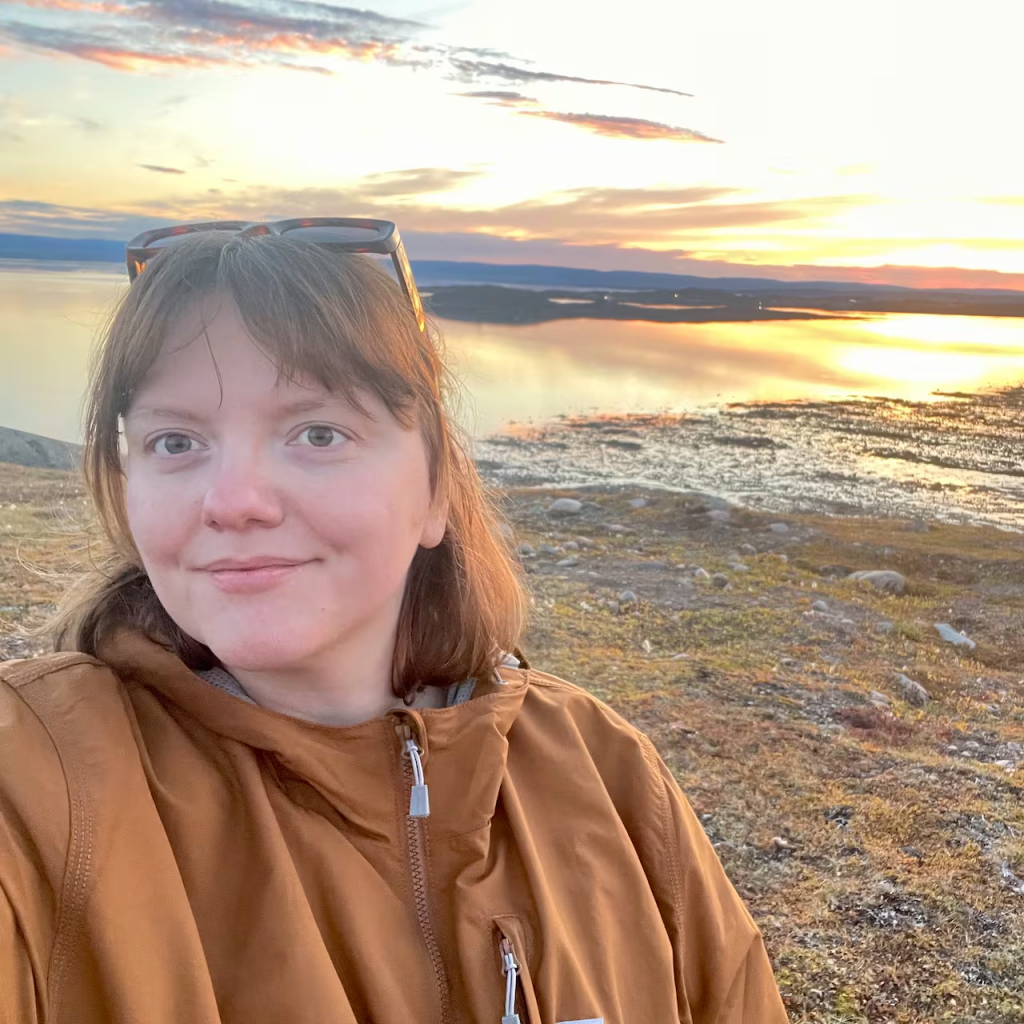
Qupanuaq’s operations director Jeneca Fanjoy says the changes have made the program far more inaccessible. The non-profit organization helps people with their applications in the Qikiqtaaluk region of Nunavut.
“Many families used to see six month approvals or multi-year hamlet-wide programs. Now the majority of families are seeing one month approvals or denials,” she said.
Gull-Masty says she will be announcing changes to the program in the coming weeks in an attempt to remove barriers.
But Nunavut NDP MP Lori Idlout is disappointed those details weren’t already worked out.
“While she’s taking her time learning about [the possible changes], she’s doing it at the cost of keeping children in poverty.”
Right now, there are 7,000 outstanding funding requests that have not been adjudicated by Indigenous Services Canada, figures provided by the federal department to Inuit Tapiriit Kanatami show.
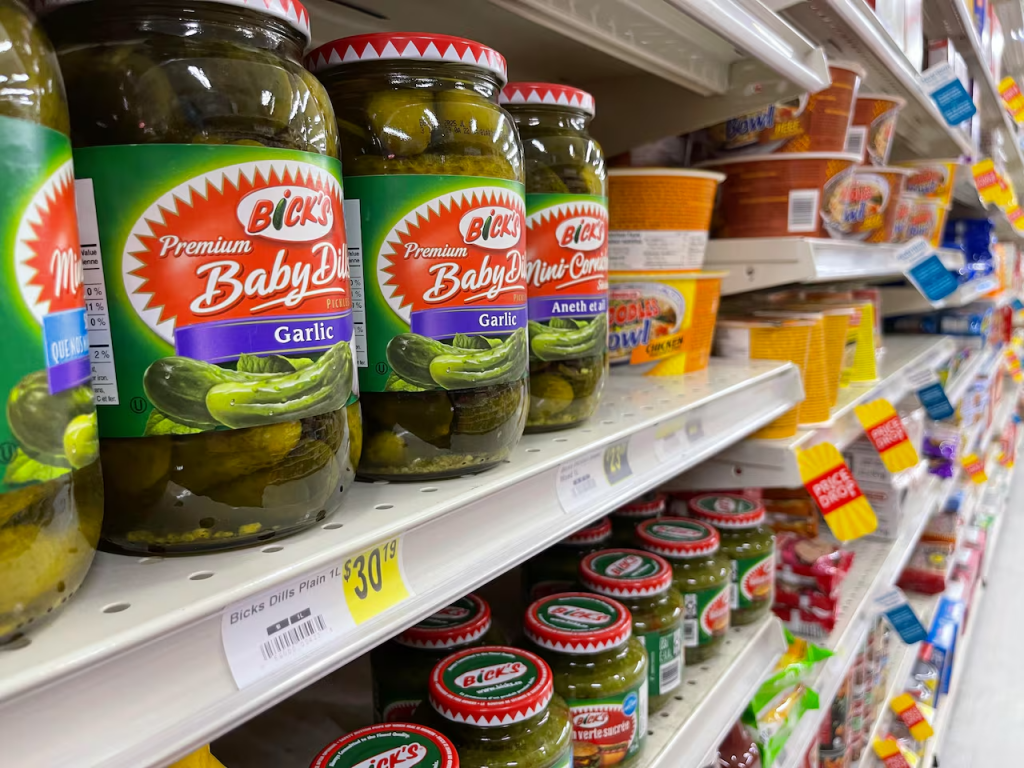
Federal figures indicate there were nearly 12,000 requests under the child first initiative across the country in 2024 – worth $167 million – and nearly two-thirds of the applications were in the North.
The 2025 fall budget came with two per cent budget cuts for both Indigenous Services Canada and Crown-Indigenous Relations and Northern Affairs Canada.
A universal basic income
Thursday’s announcement also included $30 million for the Nutrition North Canada subsidy – a program that’s undergone numerous reviews, with one being conducted right now by former Nunavut Tunngavik Inc. president Aluki Kotierk.
That review is expected to be finished this year, but Idlout isn’t pleased there hasn’t been any preliminary findings released.
“I’ve been telling them for years that Nutrition North is not working,” Idlout said.
Fanjoy says she hoped families had more purchasing power such as a universal basic income.
Taking a multi-faceted approach towards tuberculosis
The federal government has set aside $27 million over five years to support Inuit-led, community-specific efforts to be rid of tuberculosis by supporting better prevention, screening, diagnosis and treatment.
In 2018, the federal government and Inuit Tapiriit Kanatami pledged to eliminate tuberculosis across Inuit Nunangat by 2030. Since then, the federal government has put in $44 million though that money was also set to expire next month.
Data from the Public Health Agency of Canada reveals the rate of tuberculosis among Inuit in Inuit Nunangat in 2023 was over 37 times that of the overall Canadian population.
Nunavik, in particular, is struggling with one of the highest rates of tuberculosis in the world, after recording a record high number of cases in 2025.
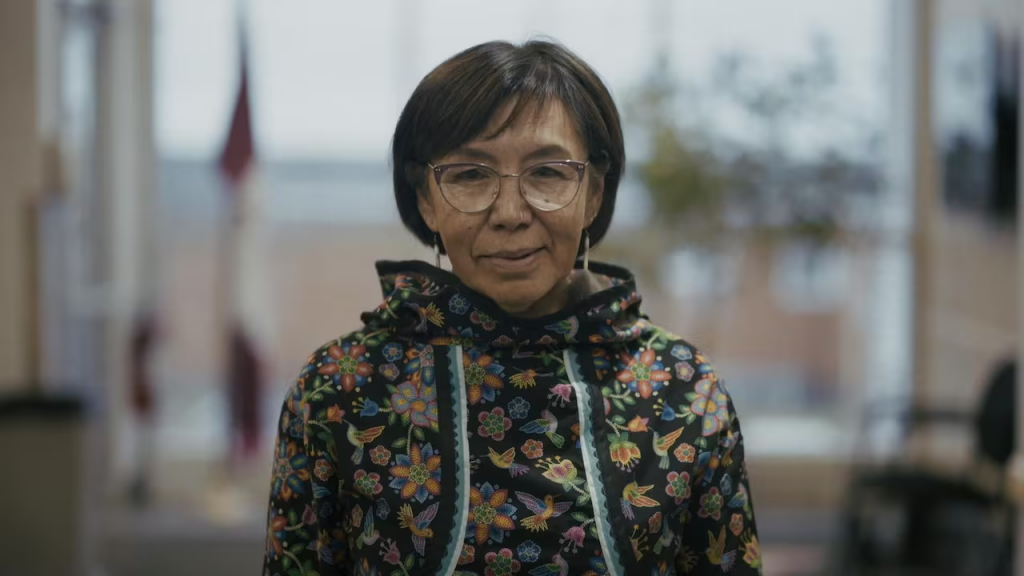
After Gull-Masty delivered the announcement at the Kativik Regional Government meeting in Kuujjuaq, chairperson Maggie Emudluk expressed her gratitude for the funding.
“We have a very fragile population,” she said, adding that tuberculosis should not exist in a country like Canada in this day and age.
In November, Inuit Tapiriit Kanatami told CBC North it had originally requested $131.6 million to tackle tuberculosis in Inuit Nunangat. Gull-Masty says efforts to eliminate the disease also comes with investments in other components of health.
“Nutrition also plays a part in ensuring that you’re able to reduce tuberculosis, but a huge part of the need is also housing. So this is something that we’re going to continue working [on] with my other colleagues.”
Related stories from around the North:
Canada: Ottawa will fund first Inuit-led university as part of major announcement for Inuit communities, CBC News
Finland: Everyone encouraged to boost Sami language visibility in Finland, Norway and Sweden this week, Eye on the Arctic
Norway: Indigenous and minority language names for Norway now have official status, The Independent Barents Observer
Russia: German project to house everything published in Siberian and Arctic languages to seek new funding, Eye on the Arctic
Sweden: Can cross-border cooperation help decolonize Sami-language education, Eye on the Arctic
United States: Inuit leaders applaud UN move to designate International Decade of Indigenous Languages, Eye on the Arctic