Gjoa Haven heritage centre is preserving Nattilik Inuit history

By Samuel Wat
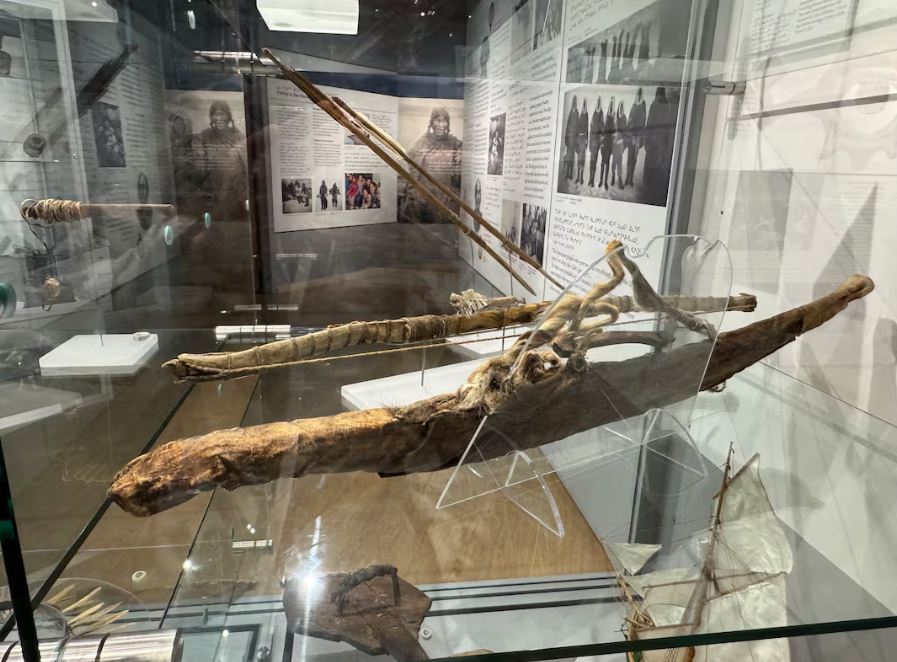
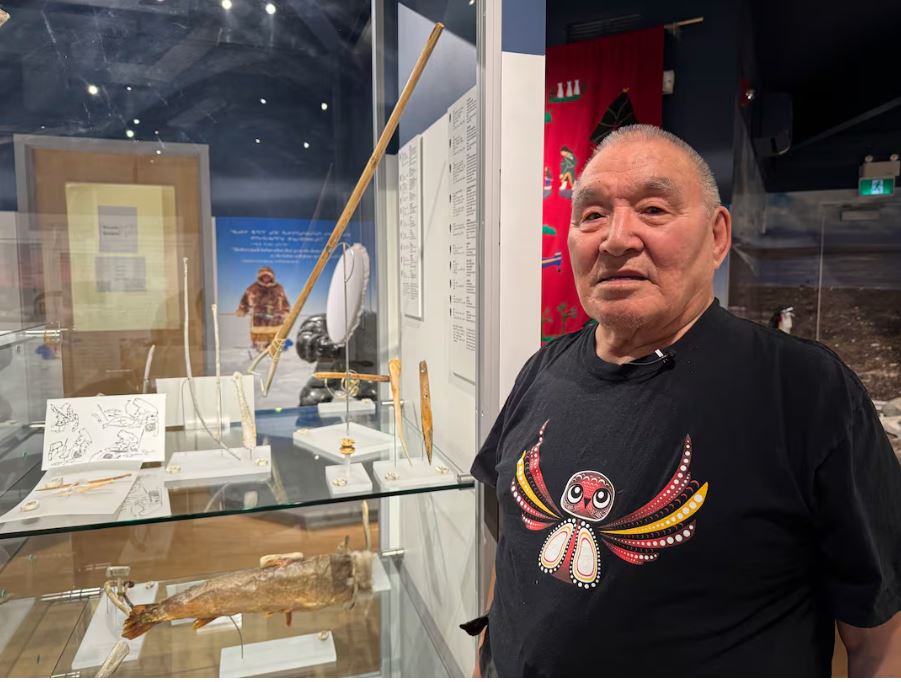
Behind a glass cabinet, Peter Akkikungnaq points to a centuries-old bow and arrow made by lashing together pieces of caribou antler and muskox horn.
“My ancestors used them for survival, to catch any type of animal. Seal, robin, ptarmigan, caribou, polar bear … you name it,” Akkikungnaq said.
The vice president of the Nattilik Heritage Centre in Gjoa Haven, Nunavut, said his father told him many stories of life for Inuit in the area, and being part of the museum is a way for him to honour his family’s history.
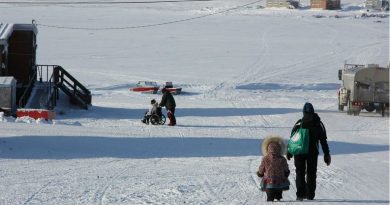
Gjoa Haven, a hamlet of 1,500 people, is situated on the southeast coast of King William Island and at the heart of the Northwest Passage – a corridor of the Arctic under increasing international attention.
Akkikungnaq sees that as an opportune moment for him to showcase – and preserve – more of Nattilik Inuit history.
“The Franklin story will be coming around, so we feel that we need some addition,” he said.
He’s referring to Sir John Franklin’s ill-fated quest to find the Northwest Passage in 1845, which has a dedicated section in the heritage centre as part of a $15.4m expansion project, managed by Four Peaks Consulting’s Campbell Cameron.
Cameron said the discoveries of the Franklin’s HMS Erebus in 2014 and HMS Terror in 2016 – situated roughly 125 kilometres from Gjoa Haven – built momentum to make the heritage centre expansion a reality.
The number of cruise ship visits in Gjoa Haven have increased between 2022 and 2024 according to the Nunavut government’s tourism act reports.
Through the heritage centre, Cameron hopes visitors can get a more rounded account of how Inuit were part of early European exploration in the Arctic – before that knowledge is lost.
“I think so many people know the Franklin story and the mystery around their disappearance, but they don’t necessarily know how that all affected the people of Gjoa Haven,” he said.
“The elders are starting to pass on and they’re the ones with the history and the knowledge … so being part of a project that is providing them a space to pass on that history, and that knowledge, is really gonna stick with me for a long time.”

The area is also infamous for being the wintering spot for Norwegian explorer Roald Amundsen between 1903 to 1905 during his navigation of the Northwest Passage.
Akkikungnaq said there are more artifacts he wants to bring to the heritage centre – including some taken in the Amundsen voyage – and reclaim that part of Inuit history.
“There were some materials my [grand]parents used for the tools … we began to feel that we can return them here,” he said.
Related stories from around the North:
Canada: Handcrafted kayak from Tuk donated to museum, reunited with granddaughter of creator, CBC News
United States: Alaska museum’s latest exhibit gives unique look at pingoes, Alaska Public Media
Greenland: Despite housing shortages, Greenland razes colonial apartment blocks, Blog by Mia Bennett