Yukon government axes engineer on Nisutlin Bay Bridge replacement project
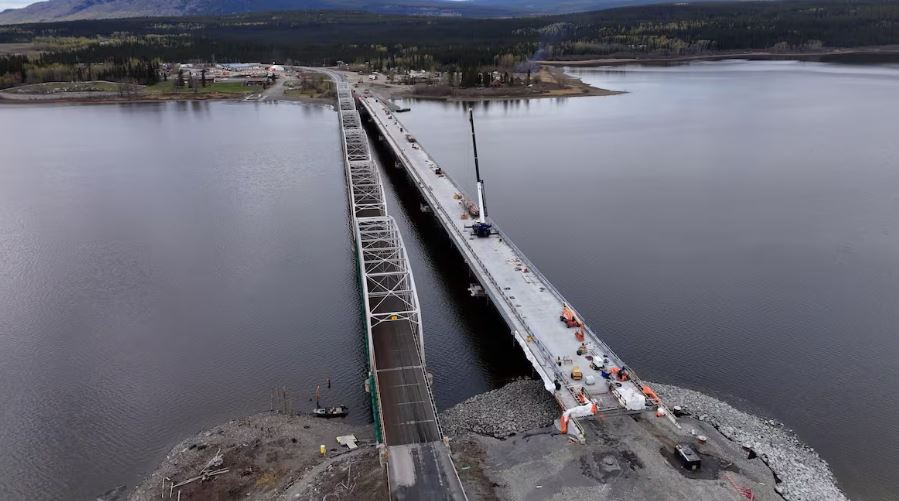
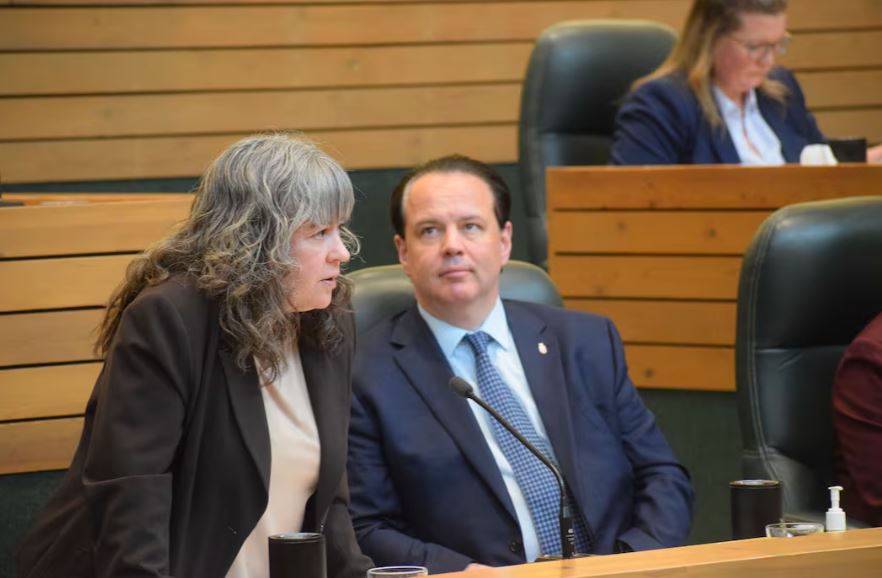
The Yukon government has axed the engineer on the Nisutlin Bay Bridge replacement, with the highways minister saying “different expertise” is needed to move the project forward.
A new engineer hasn’t been hired to replace the outgoing contractor, WSP, since Highways and Public Works Minister Linda Benoit said WSP’s contract has been terminated.
The bridge replacement project at Teslin was dubbed the “largest capital project in Yukon history” by the territorial government in 2022. The old Alaska Highway bridge, built by the Department of National Defence, opened to the public in the mid-1950s.
A new bridge is being built beside the old one, which Benoit reiterated remains safe and operational. Construction started in 2022.
The cost of the replacement bridge has risen to nearly $194 million.
The initial construction contract, awarded to Graham Infrastructure LP, came in at $160 million. That includes close to $84 million in federal contributions. Benoit said changing the Fisheries Act authorization increased the contract by almost $24 million, plus a $10-million change order.
The area remains an important migration route for chinook salmon. According to the Yukon government’s website, sonar technology is being used to monitor migration to ensure fish can get to their spawning grounds while the new bridge is under construction.
Benoit cited concerns raised last summer around soil conditions near the north and south ends of the new bridge. That required remediation work at both abutments. A news release says the government has worked with experts to come up with a long-term remediation plan.
Benoit said the remediation design needs to be done for the project to move ahead. She said releasing the engineer at this time will allow for the remediation work to happen.
“We’ve decided that taking this step now ensures the remediation work will be addressed properly, with appropriate expertise, and will reduce long-term risk and support a more reliable outcome for the project,” she told CBC News.
The opening of the new bridge will depend on the remediation design and regulatory approval, said Benoit.
WSP didn’t agree to an interview but provided an emailed statement.
“WSP continues to collaborate with the Government of Yukon to support next steps on the path forward for the project,” it reads.
Related stories from around the North:
Canada: Yukon gov’t torches Clean Energy Act, subsidies for EVs and e-bikes, CBC News
Finland: Brakes on Lapland health cuts a win for Arctic communities, says Sami Parliament, Eye on the Arctic
Norway: Arctic Norwegian city gets world’s northernmost electric post truck, The Independent Barents Observer
Russia: Mining boost in Russian central Arctic to feed electric vehicle market, The Independent Barents Observer